Professorship Measurement and Sensor Technology, Chemnitz University of Technology, 09111 Chemnitz, Germany.
Department of Physical Chemistry, "VINČA" Institute of Nuclear Sciences-National Institute of the Republic of Serbia, University of Belgrade, 11000 Belgrade, Serbia.
Sensors (Basel). 2021 Jun 16;21(12):4131. doi: 10.3390/s21124131.
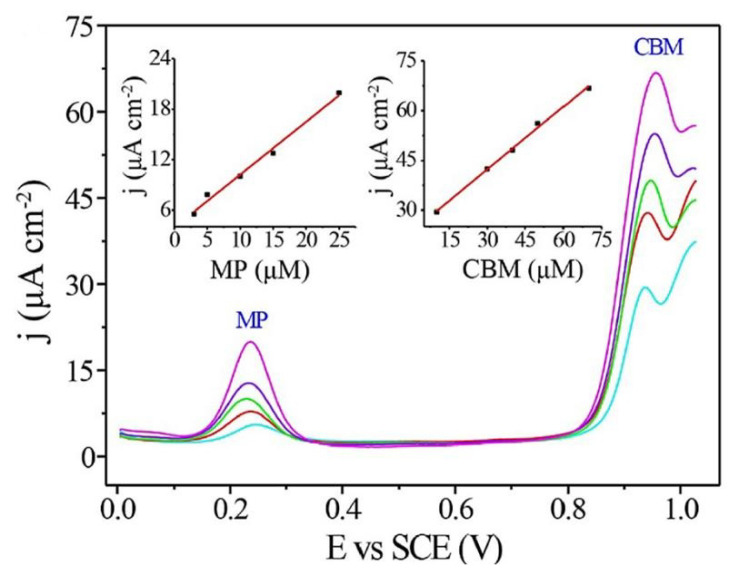
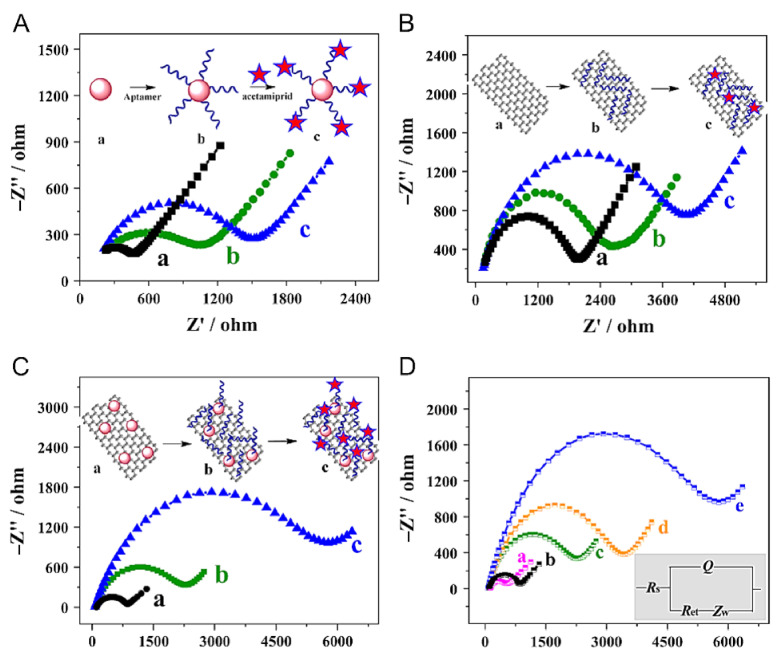
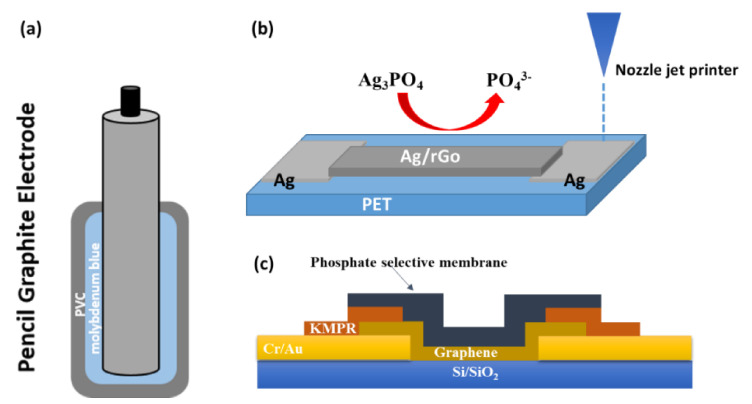
Electrochemical sensors play a significant role in detecting chemical ions, molecules, and pathogens in water and other applications. These sensors are sensitive, portable, fast, inexpensive, and suitable for online and in-situ measurements compared to other methods. They can provide the detection for any compound that can undergo certain transformations within a potential window. It enables applications in multiple ion detection, mainly since these sensors are primarily non-specific. In this paper, we provide a survey of electrochemical sensors for the detection of water contaminants, i.e., pesticides, nitrate, nitrite, phosphorus, water hardeners, disinfectant, and other emergent contaminants (phenol, estrogen, gallic acid etc.). We focus on the influence of surface modification of the working electrodes by carbon nanomaterials, metallic nanostructures, imprinted polymers and evaluate the corresponding sensing performance. Especially for pesticides, which are challenging and need special care, we highlight biosensors, such as enzymatic sensors, immunobiosensor, aptasensors, and biomimetic sensors. We discuss the sensors' overall performance, especially concerning real-sample performance and the capability for actual field application.
电化学传感器在检测水中的化学离子、分子和病原体以及其他应用中发挥着重要作用。与其他方法相比,这些传感器具有灵敏度高、便携、快速、价格低廉、适合在线和原位测量等优点。它们可以提供任何可以在一定电位窗口内发生某些转化的化合物的检测。这使得它们可以应用于多种离子的检测,主要是因为这些传感器主要是非特异性的。在本文中,我们对用于检测水中污染物(如农药、硝酸盐、亚硝酸盐、磷、水软化剂、消毒剂和其他新兴污染物(苯酚、雌激素、没食子酸等)的电化学传感器进行了综述。我们重点研究了通过碳纳米材料、金属纳米结构、印迹聚合物对工作电极进行表面修饰的影响,并评估了相应的传感性能。特别是对于具有挑战性且需要特别关注的农药,我们重点介绍了生物传感器,如酶传感器、免疫生物传感器、适体传感器和仿生传感器。我们讨论了传感器的整体性能,特别是关于实际样品性能和实际现场应用的能力。