Nordholm Sture
Department of Chemistry and Molecular Biology, The University of Gothenburg, SE-412 96 Göteborg, Sweden.
Molecules. 2021 Jun 16;26(12):3680. doi: 10.3390/molecules26123680.
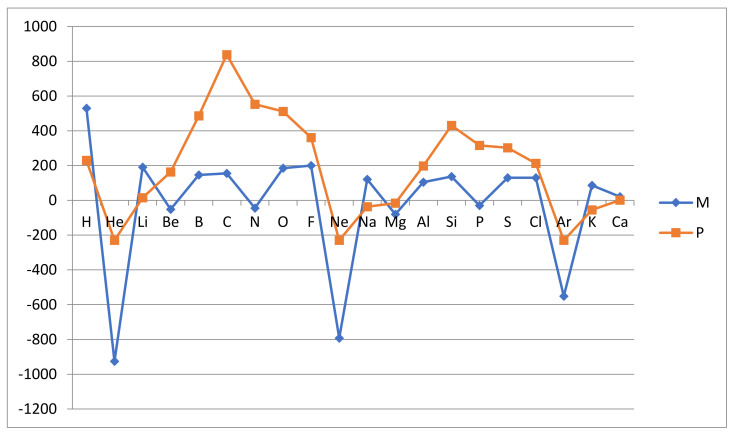
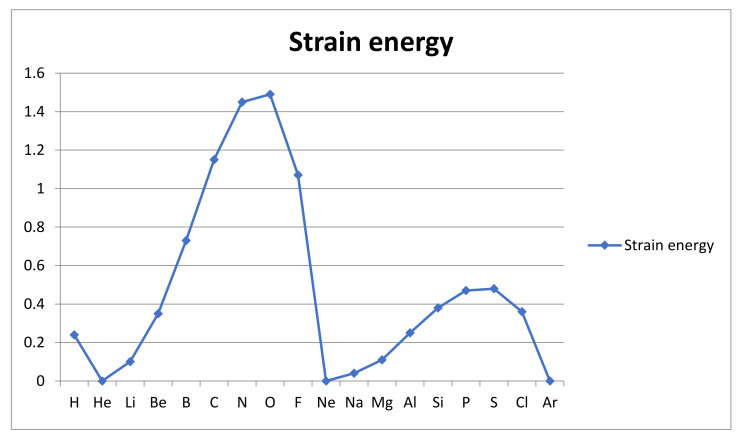
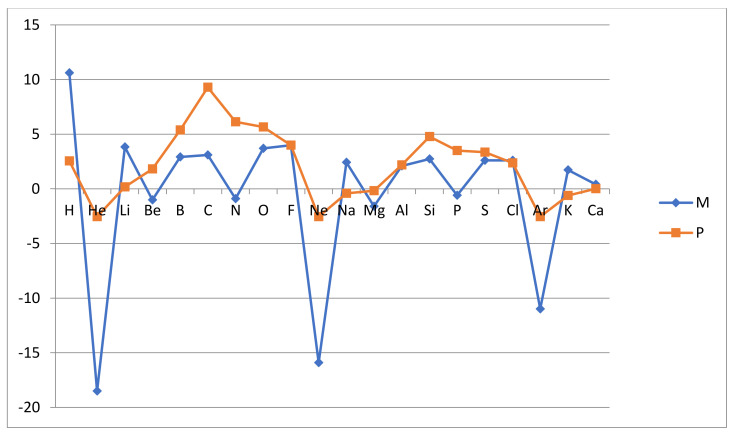
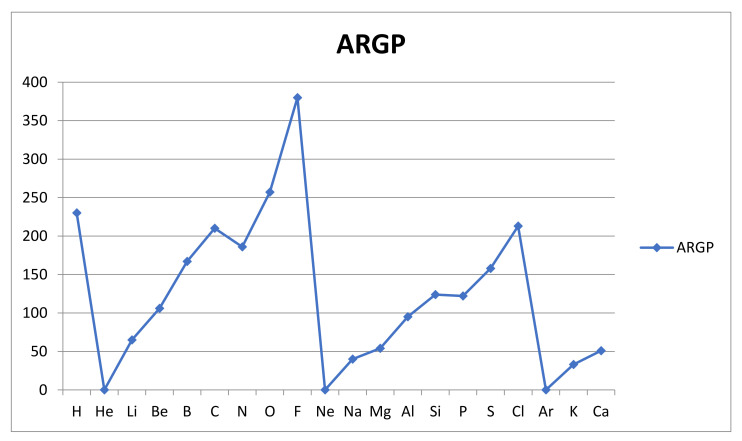
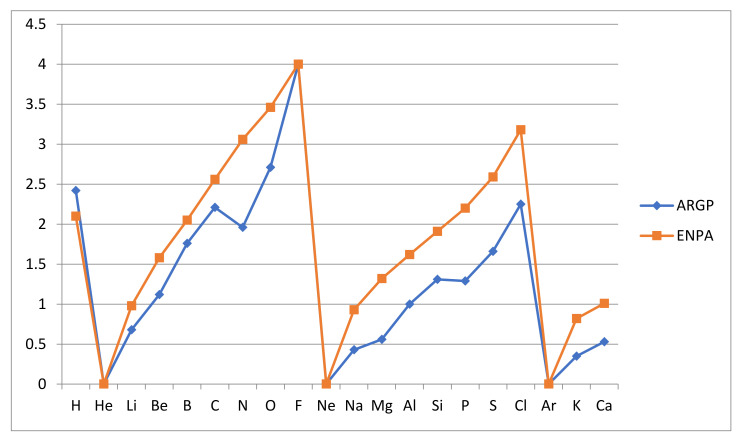
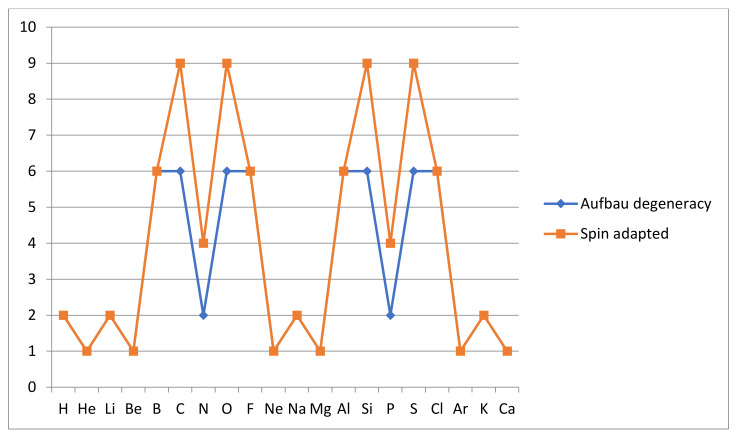
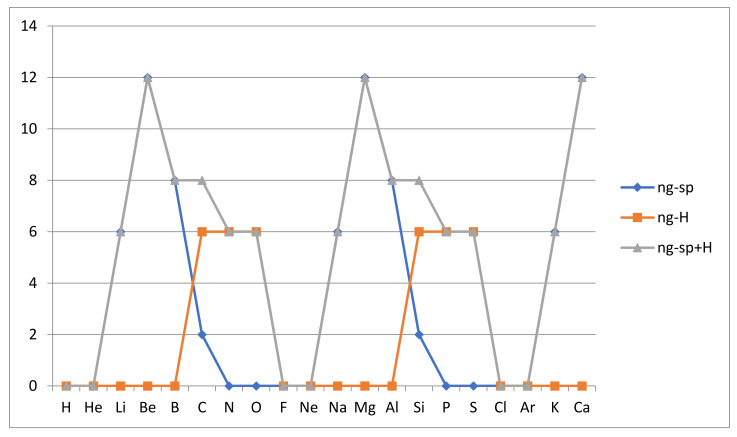
Pauling introduced the concept of electronegativity of an atom which has played an important role in understanding the polarity and ionic character of bonds between atoms. We set out to define a related concept of atomic reactivity in such a way that it can be quantified and used to predict the stability of covalent bonds in molecules. Guided by the early definition of electronegativity by Mulliken in terms of first ionization energies and Pauling in terms of bond energies, we propose corresponding definitions of atomic reactivity. The main goal of clearly distinguishing the inert gas atoms as nonreactive is fulfilled by three different proposed measures of atomic reactivity. The measure likely to be found most useful is based on the bond energies in atomic hydrides, which are related to atomic reactivities by a geometric average. The origin of the atomic reactivity is found in the symmetry of the atomic environment and related conservation laws which are also the origin of the shell structure of atoms and the periodic table. The reactive atoms are characterized by degenerate or nearly degenerate (several states of the same or nearly the same energy) ground states, while the inert atoms have nondegenerate ground states and no near-degeneracies. We show how to extend the use of the Aufbau model of atomic structure to qualitatively describe atomic reactivity in terms of ground state degeneracy. The symmetry and related conservation laws of atomic electron structures produce a strain (energy increase) in the structure, which we estimate by use of the Thomas-Fermi form of DFT implemented approximately with and without the symmetry and conservation constraints. This simplified and approximate analysis indicates that the total strain energy of an atom correlates strongly with the corresponding atomic reactivity measures but antibonding mechanisms prevent full conversion of strain relaxation to bonding.
鲍林引入了原子电负性的概念,这一概念在理解原子间键的极性和离子特性方面发挥了重要作用。我们着手定义一个相关的原子反应性概念,使其能够被量化并用于预测分子中共价键的稳定性。以穆利肯根据第一电离能对电负性的早期定义以及鲍林根据键能对电负性的定义为指导,我们提出了原子反应性的相应定义。通过三种不同的原子反应性提议度量,实现了将惰性气体原子明确区分为非反应性的主要目标。可能被发现最有用的度量是基于原子氢化物中的键能,这些键能通过几何平均值与原子反应性相关。原子反应性的起源在于原子环境的对称性以及相关的守恒定律,这些也是原子壳层结构和元素周期表的起源。反应性原子的特征是具有简并或近乎简并(几个能量相同或近乎相同的状态)的基态,而惰性原子具有非简并基态且没有近简并情况。我们展示了如何扩展原子结构的构造原理模型的应用,以便根据基态简并性定性地描述原子反应性。原子电子结构的对称性和相关守恒定律在结构中产生了一种应变(能量增加),我们通过使用密度泛函理论的托马斯 - 费米形式进行估计,该形式在有和没有对称性及守恒约束的情况下近似实现。这种简化且近似的分析表明,原子的总应变能与相应的原子反应性度量密切相关,但反键机制阻止了应变弛豫完全转化为键合。