• 文献检索
  • 文档翻译
  • 深度研究
  • 学术资讯
  • Suppr Zotero 插件Zotero 插件
  • 邀请有礼
  • 套餐&价格
  • 历史记录
应用&插件
Suppr Zotero 插件Zotero 插件浏览器插件Mac 客户端Windows 客户端微信小程序
定价
高级版会员购买积分包购买API积分包
服务
文献检索文档翻译深度研究API 文档MCP 服务
关于我们
关于 Suppr公司介绍联系我们用户协议隐私条款
关注我们

Suppr 超能文献

核心技术专利:CN118964589B侵权必究
粤ICP备2023148730 号-1Suppr @ 2026

文献检索

告别复杂PubMed语法,用中文像聊天一样搜索,搜遍4000万医学文献。AI智能推荐,让科研检索更轻松。

立即免费搜索

文件翻译

保留排版,准确专业,支持PDF/Word/PPT等文件格式,支持 12+语言互译。

免费翻译文档

深度研究

AI帮你快速写综述,25分钟生成高质量综述,智能提取关键信息,辅助科研写作。

立即免费体验

一种用于院外心脏骤停时无脉电活动预后的机器学习模型。

A Machine Learning Model for the Prognosis of Pulseless Electrical Activity during Out-of-Hospital Cardiac Arrest.

作者信息

Urteaga Jon, Aramendi Elisabete, Elola Andoni, Irusta Unai, Idris Ahamed

机构信息

Department of Communications Engineering, University of the Basque Country, 48013 Bilbao, Spain.

Biocruces Bizkaia Health Research Institute, Cruces University Hospital, 48903 Baracaldo, Spain.

出版信息

Entropy (Basel). 2021 Jun 30;23(7):847. doi: 10.3390/e23070847.

DOI:10.3390/e23070847
PMID:34209405
原文链接:https://pmc.ncbi.nlm.nih.gov/articles/PMC8307658/
Abstract

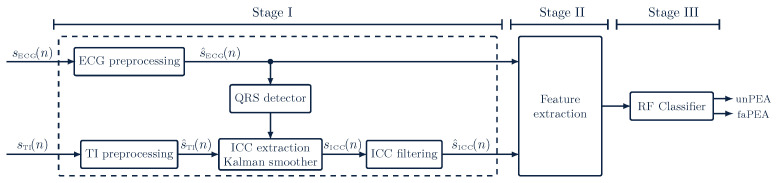
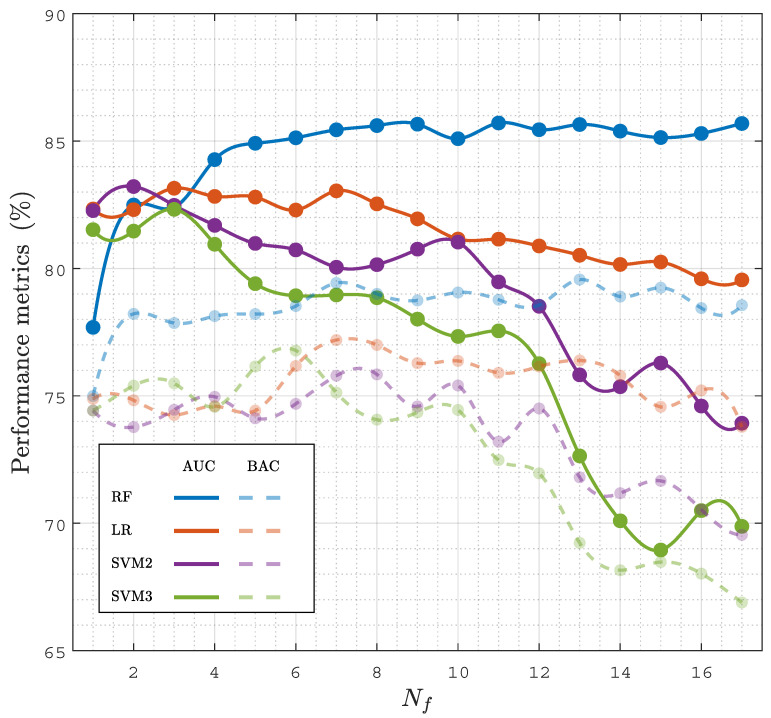
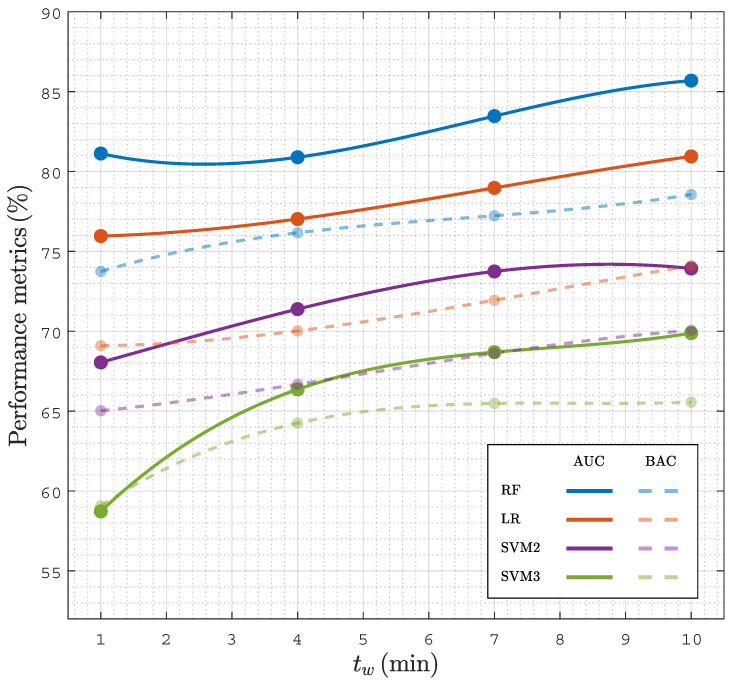
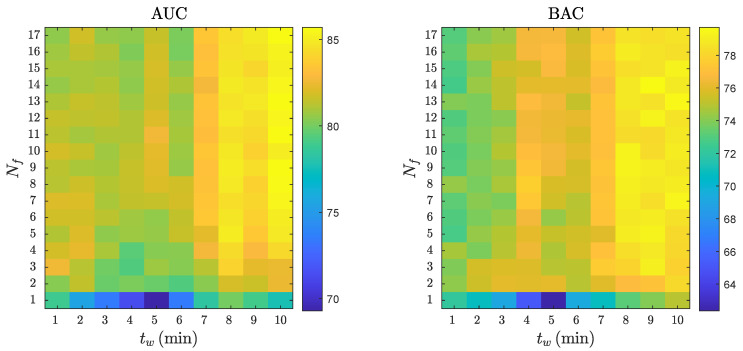
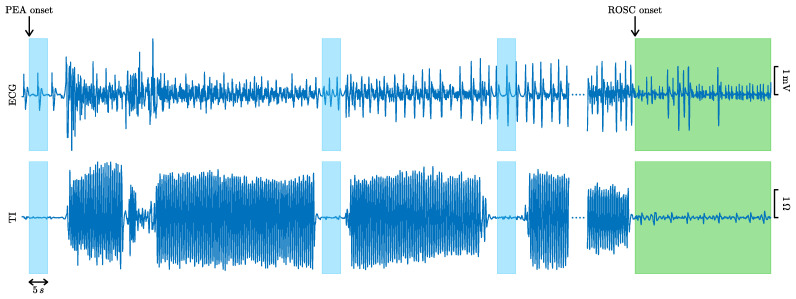
Pulseless electrical activity (PEA) is characterized by the disassociation of the mechanical and electrical activity of the heart and appears as the initial rhythm in 20-30% of out-of-hospital cardiac arrest (OHCA) cases. Predicting whether a patient in PEA will convert to return of spontaneous circulation (ROSC) is important because different therapeutic strategies are needed depending on the type of PEA. The aim of this study was to develop a machine learning model to differentiate PEA with unfavorable (unPEA) and favorable (faPEA) evolution to ROSC. An OHCA dataset of 1921 5s PEA signal segments from defibrillator files was used, 703 faPEA segments from 107 patients with ROSC and 1218 unPEA segments from 153 patients with no ROSC. The solution consisted of a signal-processing stage of the ECG and the thoracic impedance (TI) and the extraction of the TI circulation component (ICC), which is associated with ventricular wall movement. Then, a set of 17 features was obtained from the ECG and ICC signals, and a random forest classifier was used to differentiate faPEA from unPEA. All models were trained and tested using patientwise and stratified 10-fold cross-validation partitions. The best model showed a median (interquartile range) area under the curve (AUC) of 85.7(9.8)% and a balance accuracy of 78.8(9.8)%, improving the previously available solutions at more than four points in the AUC and three points in balanced accuracy. It was demonstrated that the evolution of PEA can be predicted using the ECG and TI signals, opening the possibility of targeted PEA treatment in OHCA.

摘要

无脉电活动(PEA)的特征是心脏机械活动与电活动分离,在20%-30%的院外心脏骤停(OHCA)病例中表现为初始心律。预测PEA患者是否会恢复自主循环(ROSC)很重要,因为根据PEA的类型需要不同的治疗策略。本研究的目的是开发一种机器学习模型,以区分发展为ROSC的可能性不佳(unPEA)和良好(faPEA)的PEA。使用了一个来自除颤器文件的包含1921个5秒PEA信号段的OHCA数据集,其中703个faPEA段来自107例恢复自主循环的患者,1218个unPEA段来自153例未恢复自主循环的患者。该解决方案包括心电图和胸阻抗(TI)的信号处理阶段以及与心室壁运动相关的TI循环成分(ICC)的提取。然后,从心电图和ICC信号中获得一组17个特征,并使用随机森林分类器区分faPEA和unPEA。所有模型均使用患者层面和分层的10折交叉验证分区进行训练和测试。最佳模型的曲线下面积(AUC)中位数(四分位间距)为85.7(9.8)%,平衡准确率为78.8(9.8)%,在AUC方面比之前可用的解决方案提高了四个多百分点,在平衡准确率方面提高了三个百分点。结果表明,使用心电图和TI信号可以预测PEA的发展情况,这为OHCA中针对性的PEA治疗开辟了可能性。
https://cdn.ncbi.nlm.nih.gov/pmc/blobs/4616/8307658/d1fe479ae349/entropy-23-00847-g008.jpg
https://cdn.ncbi.nlm.nih.gov/pmc/blobs/4616/8307658/0eb2df1c90ef/entropy-23-00847-g001.jpg
https://cdn.ncbi.nlm.nih.gov/pmc/blobs/4616/8307658/54eccdc92880/entropy-23-00847-g002.jpg
https://cdn.ncbi.nlm.nih.gov/pmc/blobs/4616/8307658/1cf21b023488/entropy-23-00847-g003.jpg
https://cdn.ncbi.nlm.nih.gov/pmc/blobs/4616/8307658/67045bc5db3c/entropy-23-00847-g004.jpg
https://cdn.ncbi.nlm.nih.gov/pmc/blobs/4616/8307658/abc70bfb4ff3/entropy-23-00847-g005.jpg
https://cdn.ncbi.nlm.nih.gov/pmc/blobs/4616/8307658/4e93b38150ac/entropy-23-00847-g006.jpg
https://cdn.ncbi.nlm.nih.gov/pmc/blobs/4616/8307658/18a97815c6e8/entropy-23-00847-g007.jpg
https://cdn.ncbi.nlm.nih.gov/pmc/blobs/4616/8307658/d1fe479ae349/entropy-23-00847-g008.jpg
https://cdn.ncbi.nlm.nih.gov/pmc/blobs/4616/8307658/0eb2df1c90ef/entropy-23-00847-g001.jpg
https://cdn.ncbi.nlm.nih.gov/pmc/blobs/4616/8307658/54eccdc92880/entropy-23-00847-g002.jpg
https://cdn.ncbi.nlm.nih.gov/pmc/blobs/4616/8307658/1cf21b023488/entropy-23-00847-g003.jpg
https://cdn.ncbi.nlm.nih.gov/pmc/blobs/4616/8307658/67045bc5db3c/entropy-23-00847-g004.jpg
https://cdn.ncbi.nlm.nih.gov/pmc/blobs/4616/8307658/abc70bfb4ff3/entropy-23-00847-g005.jpg
https://cdn.ncbi.nlm.nih.gov/pmc/blobs/4616/8307658/4e93b38150ac/entropy-23-00847-g006.jpg
https://cdn.ncbi.nlm.nih.gov/pmc/blobs/4616/8307658/18a97815c6e8/entropy-23-00847-g007.jpg
https://cdn.ncbi.nlm.nih.gov/pmc/blobs/4616/8307658/d1fe479ae349/entropy-23-00847-g008.jpg

相似文献

1
A Machine Learning Model for the Prognosis of Pulseless Electrical Activity during Out-of-Hospital Cardiac Arrest.一种用于院外心脏骤停时无脉电活动预后的机器学习模型。
Entropy (Basel). 2021 Jun 30;23(7):847. doi: 10.3390/e23070847.
2
Machine learning model to predict evolution of pulseless electrical activity during in-hospital cardiac arrest.用于预测院内心脏骤停期间无脉电活动演变的机器学习模型。
Resusc Plus. 2024 Mar 8;17:100598. doi: 10.1016/j.resplu.2024.100598. eCollection 2024 Mar.
3
Capnography: A support tool for the detection of return of spontaneous circulation in out-of-hospital cardiac arrest.心搏描记术:院外心脏骤停中自主循环恢复检测的辅助工具。
Resuscitation. 2019 Sep;142:153-161. doi: 10.1016/j.resuscitation.2019.03.048. Epub 2019 Apr 18.
4
Circulation detection using the electrocardiogram and the thoracic impedance acquired by defibrillation pads.使用心电图和除颤垫获取的胸阻抗进行循环检测。
Resuscitation. 2016 Feb;99:56-62. doi: 10.1016/j.resuscitation.2015.11.014. Epub 2015 Dec 17.
5
Utility of prehospital electrocardiogram characteristics as prognostic markers in out-of-hospital pulseless electrical activity arrests.院前心电图特征在院外无脉性电活动骤停中的预后标志物的作用。
Emerg Med J. 2018 Feb;35(2):89-95. doi: 10.1136/emermed-2017-206878. Epub 2017 Oct 21.
6
Reliable extraction of the circulation component in the thoracic impedance measured by defibrillation pads.可靠提取除颤电极片测量的胸腔阻抗中的循环分量。
Resuscitation. 2013 Oct;84(10):1345-52. doi: 10.1016/j.resuscitation.2013.05.020. Epub 2013 Jun 4.
7
Factors determining level of hospital care and its association with outcome after resuscitation from pre-hospital pulseless electrical activity.决定医院治疗水平的因素及其与院前无脉电活动复苏后结局的关系。
Scand J Trauma Resusc Emerg Med. 2018 Nov 19;26(1):98. doi: 10.1186/s13049-018-0568-0.
8
Multimodal Algorithms for the Classification of Circulation States During Out-of-Hospital Cardiac Arrest.多模态算法在院外心脏骤停循环状态分类中的应用。
IEEE Trans Biomed Eng. 2021 Jun;68(6):1913-1922. doi: 10.1109/TBME.2020.3030216. Epub 2021 May 21.
9
Factors affecting the course of resuscitation from cardiac arrest with pulseless electrical activity in children and adolescents.影响儿童和青少年心脏骤停无脉电活动复苏进程的因素。
Resuscitation. 2020 Jul;152:116-122. doi: 10.1016/j.resuscitation.2020.05.013. Epub 2020 May 17.
10
Deep Neural Networks for ECG-Based Pulse Detection during Out-of-Hospital Cardiac Arrest.用于院外心脏骤停期间基于心电图的脉搏检测的深度神经网络
Entropy (Basel). 2019 Mar 21;21(3):305. doi: 10.3390/e21030305.

引用本文的文献

1
Amplitude spectrum area is dependent on the electrocardiogram magnitude: evaluation of different normalization approaches.幅度谱面积取决于心电图幅度:不同归一化方法的评估。
Physiol Meas. 2024 Nov 25;45(11). doi: 10.1088/1361-6579/ad9233.
2
Machine learning model to predict evolution of pulseless electrical activity during in-hospital cardiac arrest.用于预测院内心脏骤停期间无脉电活动演变的机器学习模型。
Resusc Plus. 2024 Mar 8;17:100598. doi: 10.1016/j.resplu.2024.100598. eCollection 2024 Mar.
3
Evaluation of different machine learning algorithms for predicting the length of stay in the emergency departments: a single-centre study.

本文引用的文献

1
European Resuscitation Council Guidelines 2021: Adult advanced life support.欧洲复苏理事会指南 2021:成人高级生命支持。
Resuscitation. 2021 Apr;161:115-151. doi: 10.1016/j.resuscitation.2021.02.010. Epub 2021 Mar 24.
2
Towards the Prediction of Rearrest during Out-of-Hospital Cardiac Arrest.关于院外心脏骤停后再发骤停的预测
Entropy (Basel). 2020 Jul 9;22(7):758. doi: 10.3390/e22070758.
3
Rhythm Analysis during Cardiopulmonary Resuscitation Using Convolutional Neural Networks.使用卷积神经网络进行心肺复苏期间的节律分析
评估不同机器学习算法用于预测急诊科住院时间:一项单中心研究。
Front Digit Health. 2024 Jan 8;5:1323849. doi: 10.3389/fdgth.2023.1323849. eCollection 2023.
4
Artificial intelligence to support out-of-hospital cardiac arrest care: A scoping review.支持院外心脏骤停护理的人工智能:一项范围综述。
Resusc Plus. 2023 Nov 1;16:100491. doi: 10.1016/j.resplu.2023.100491. eCollection 2023 Dec.
5
Artificial intelligence and machine learning in prehospital emergency care: A scoping review.院前急救中的人工智能与机器学习:一项范围综述。
iScience. 2023 Jul 17;26(8):107407. doi: 10.1016/j.isci.2023.107407. eCollection 2023 Aug 18.
Entropy (Basel). 2020 May 27;22(6):595. doi: 10.3390/e22060595.
4
Deep Neural Networks for ECG-Based Pulse Detection during Out-of-Hospital Cardiac Arrest.用于院外心脏骤停期间基于心电图的脉搏检测的深度神经网络
Entropy (Basel). 2019 Mar 21;21(3):305. doi: 10.3390/e21030305.
5
Pulseless Electrical Activity: Detection of Underlying Causes in a Prehospital Setting.无脉性电活动:院前环境中潜在病因的检测。
Med Princ Pract. 2021;30(3):212-222. doi: 10.1159/000513431. Epub 2020 Nov 30.
6
Near-Infrared Spectroscopy Assessments of Regional Cerebral Oxygen Saturation for the Prediction of Clinical Outcomes in Patients With Cardiac Arrest: A Review of Clinical Impact, Evolution, and Future Directions.近红外光谱法评估心脏骤停患者局部脑氧饱和度以预测临床结局:临床影响、进展及未来方向综述
Front Med (Lausanne). 2020 Oct 29;7:587930. doi: 10.3389/fmed.2020.587930. eCollection 2020.
7
Multimodal Algorithms for the Classification of Circulation States During Out-of-Hospital Cardiac Arrest.多模态算法在院外心脏骤停循环状态分类中的应用。
IEEE Trans Biomed Eng. 2021 Jun;68(6):1913-1922. doi: 10.1109/TBME.2020.3030216. Epub 2021 May 21.
8
Occurrence of shockable rhythm in out-of-hospital cardiac arrest over time: A report from the COSTA group.院外心脏骤停时可电击心律随时间的发生情况:COSTA 组报告
Resuscitation. 2020 Jun;151:67-74. doi: 10.1016/j.resuscitation.2020.03.014. Epub 2020 Apr 8.
9
Survival after out-of-hospital cardiac arrest in Europe - Results of the EuReCa TWO study.欧洲院外心脏骤停后的生存率——EuReCa TWO研究结果
Resuscitation. 2020 Mar 1;148:218-226. doi: 10.1016/j.resuscitation.2019.12.042. Epub 2020 Feb 3.
10
A Robust Machine Learning Architecture for a Reliable ECG Rhythm Analysis during CPR.一种用于心肺复苏期间可靠心电图节律分析的稳健机器学习架构。
Annu Int Conf IEEE Eng Med Biol Soc. 2019 Jul;2019:1903-1907. doi: 10.1109/EMBC.2019.8856784.