Arbaga Ali, El-Bahrawy Amanallah, Elsify Ahmed, Khaled Hadeer, Hassan Hany Youssef, Kamr Ahmed
Department of Animal Medicine and Infectious Diseases, Faculty of Veterinary Medicine, University of Sadat City, Sadat City, Egypt.
Department of Veterinary Pathology, Faculty of Veterinary Medicine, University of Sadat City, Sadat City, Egypt.
Vet World. 2021 May;14(5):1354-1362. doi: 10.14202/vetworld.2021.1354-1362. Epub 2021 May 28.
Pyoderma is common in dogs, and its treatment requires a novel medication rather than antibiotic therapy. This study aimed to determine the biochemical and histopathological changes associated with the topical application of 20% and 40% ointments, compared with gentamicin 0.1% ointment, in dogs suffering from pyoderma.
Serum and skin samples were collected from a negative control group before inducing pyoderma and from other subdivided groups on the 3, 7, 10, and 14 days post-inoculation for biochemical and histopathology examination.
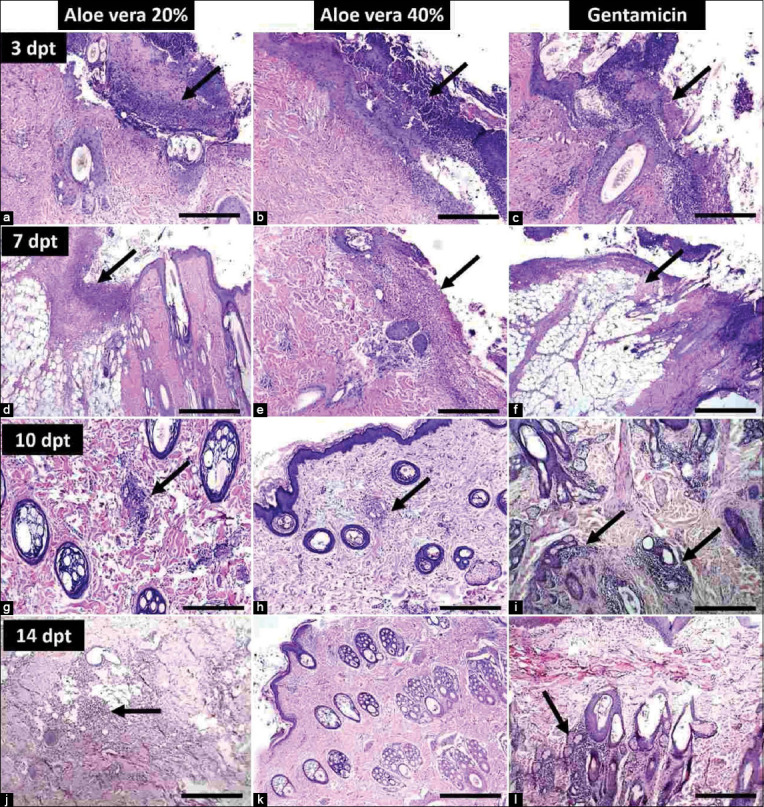
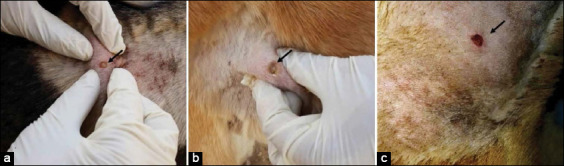
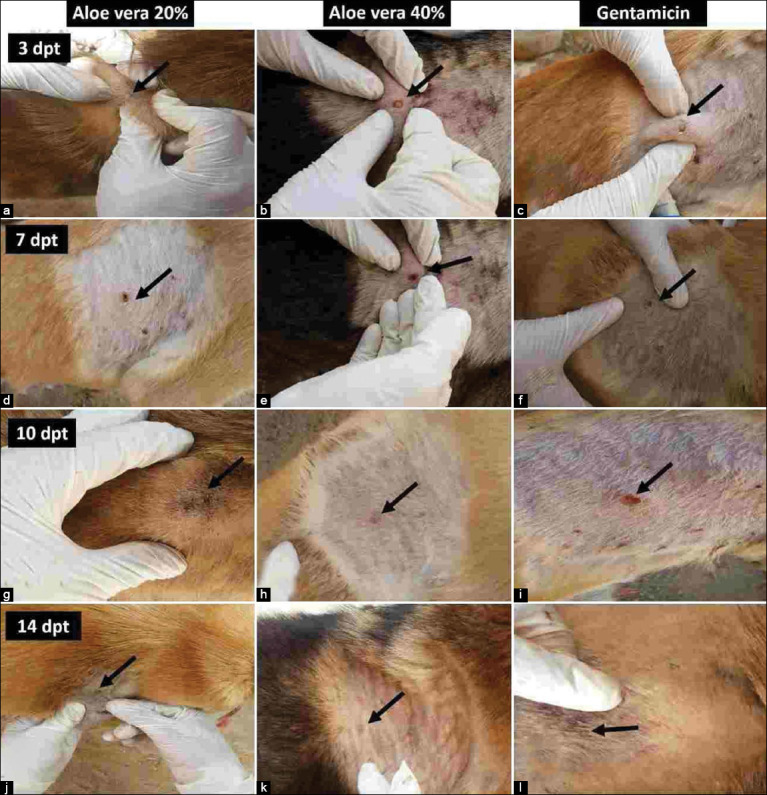
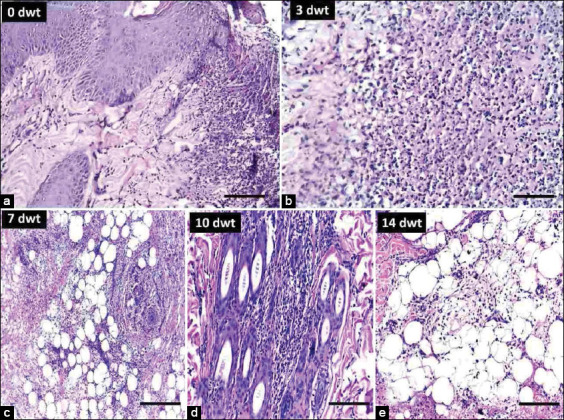
Serum aspartate aminotransferase, alanine aminotransferase (ALT), urea, and creatinine concentrations were higher in the positive control dogs on the 3 day without treatment (DWT) compared with the negative control dogs (p<0.05). Compared with the healthy control dogs, serum zinc concentrations were lower in the positive control group on the 3, 7, and 10 DWT and in dogs treated with 20% and gentamicin 0.1% ointments on the 3 and 7 days post-treatment (p<0.05). Grossly, skin had erythema, pruritus, and pus-filled pustules of the untreated group. Microscopically, skin showed epidermal necrosis and edema, dermal collagen necrosis, and severe neutrophilic infiltration.
Compared with 20% and gentamicin 0.1% ointments, the topical application of 40% ointment-induced quicker skin healing and decreased the inflammatory changes caused by inoculation, based on biochemical and histopathological changes reflective of its curative efficiency. 40% ointment may be a suitable alternative to antibiotics for the treatment of staphylococcal pyoderma in dogs.
脓皮病在犬类中很常见,其治疗需要新型药物而非抗生素疗法。本研究旨在确定与20%和40%软膏局部应用相关的生化和组织病理学变化,并与0.1%庆大霉素软膏进行比较,研究对象为患有脓皮病的犬类。
在诱导脓皮病之前,从阴性对照组采集血清和皮肤样本,并在接种后第3、7、10和14天从其他细分组采集样本,用于生化和组织病理学检查。
在未治疗的第3天(DWT),阳性对照犬的血清天冬氨酸转氨酶、丙氨酸转氨酶(ALT)、尿素和肌酐浓度高于阴性对照犬(p<0.05)。与健康对照犬相比,阳性对照组在第3、7和10天DWT时以及用20%和0.1%庆大霉素软膏治疗的犬在治疗后第3和7天的血清锌浓度较低(p<0.05)。肉眼可见,未治疗组的皮肤有红斑、瘙痒和充满脓液的脓疱。显微镜下,皮肤表现为表皮坏死和水肿、真皮胶原坏死以及严重的嗜中性粒细胞浸润。
基于反映其治疗效果的生化和组织病理学变化,与20%和0.1%庆大霉素软膏相比,40%软膏的局部应用能使皮肤愈合更快,并减少接种引起的炎症变化。40%软膏可能是治疗犬葡萄球菌性脓皮病的抗生素的合适替代品。