Division of Rheumatology, Department of Internal Medicine, Seoul National University College of Medicine, Seoul, South Korea.
Department of Molecular Medicine and Biopharmaceutical Sciences, Graduate School of Convergence Science and Technology, Seoul National University, Seoul, South Korea.
Arthritis Res Ther. 2021 Jul 5;23(1):177. doi: 10.1186/s13075-021-02561-4.
To investigate the effects of inhibiting histone deacetylase (HDAC) 6 on inflammatory responses and tissue-destructive functions of fibroblast-like synoviocytes (FLS) in rheumatoid arthritis (RA).
FLS from RA patients were activated with interleukin (IL)-1β in the presence of increasing concentrations of M808, a novel specific HDAC6 inhibitor. Production of ILs, chemokines, and metalloproteinases (MMPs) was measured in ELISAs. Acetylation of tubulin and expression of ICAM-1 and VCAM-1 were assessed by Western blotting. Wound healing and adhesion assays were performed. Cytoskeletal organization was visualized by immunofluorescence. Finally, the impact of HDAC6 inhibition on the severity of arthritis and joint histology was examined in a murine model of adjuvant-induced arthritis (AIA).
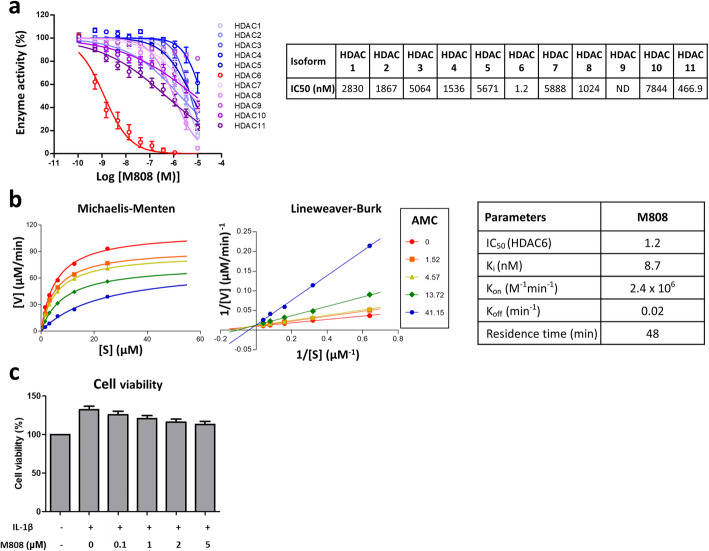
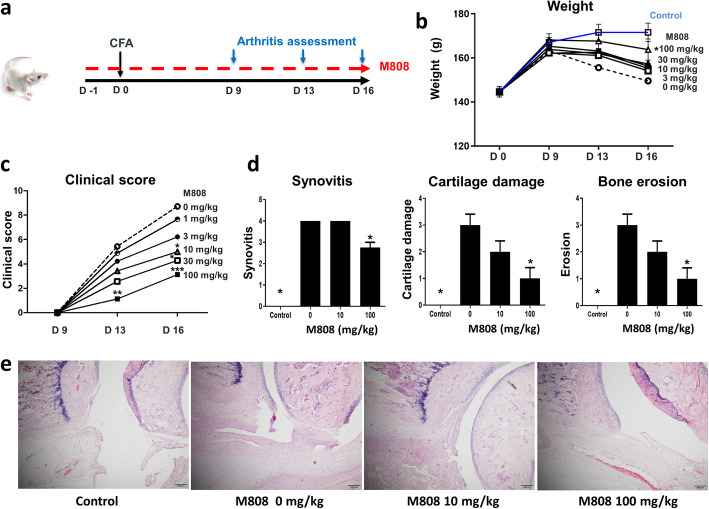
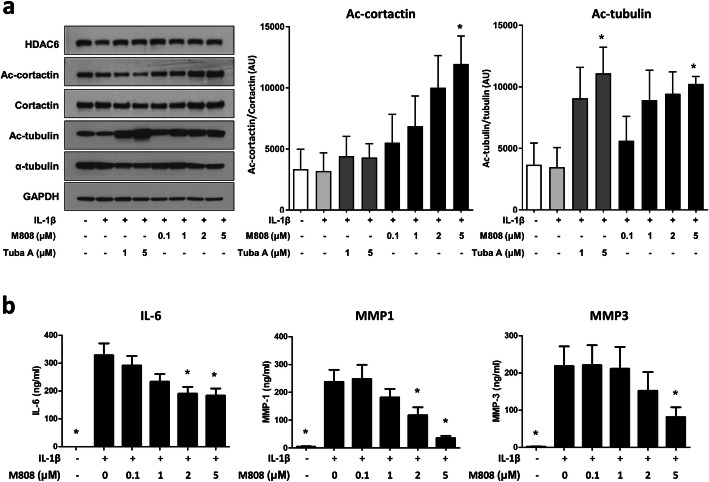
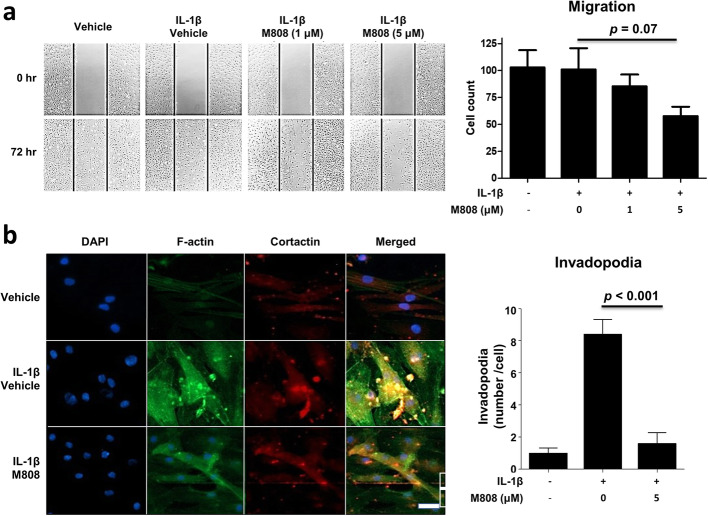
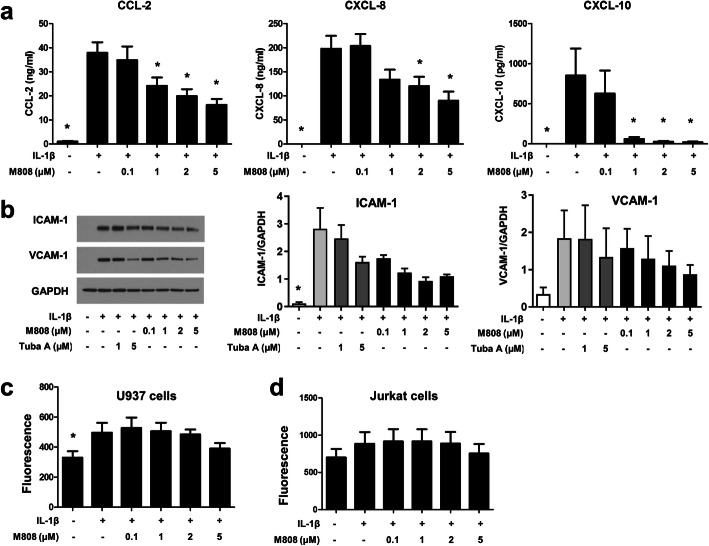
HDAC6 was selectively inhibited by M808. The HDAC6 inhibitor suppressed the production of MMP-1, MMP-3, IL-6, CCL2, CXCL8, and CXCL10 by RA-FLS in response to IL-1β. Increased acetylation of tubulin was associated with decreased migration of RA-FLS. Inhibiting HDAC6 induced cytoskeletal reorganization in RA-FLS by suppressing the formation of invadopodia following activation with IL-1β. In addition, M808 tended to decrease the expression of ICAM-1 and VCAM-1. In the AIA arthritis model, M808 improved the clinical arthritis score in a dose-dependent manner. Also, HDAC6 inhibition was associated with less severe synovial inflammation and joint destruction.
Inhibiting HDAC6 dampens the inflammatory and destructive activity of RA-FLS and reduces the severity of arthritis. Thus, targeting HDAC6 has therapeutic potential.
研究组旨在探讨组蛋白去乙酰化酶(HDAC)6 抑制剂对类风湿关节炎(RA)成纤维样滑膜细胞(FLS)炎症反应和组织破坏功能的影响。
采用白细胞介素(IL)-1β激活 RA 患者的 FLS,同时使用新型特异性 HDAC6 抑制剂 M808 处理,增加其药物浓度。采用酶联免疫吸附试验(ELISA)法检测白细胞介素(IL)、趋化因子和金属蛋白酶(MMP)的产生情况。通过 Western blot 法评估微管蛋白乙酰化和细胞间黏附分子(ICAM)-1、血管细胞黏附分子(VCAM)-1 的表达情况。进行划痕愈合和黏附实验。通过免疫荧光法观察细胞骨架的组织。最后,在佐剂诱导关节炎(AIA)的小鼠模型中研究了 HDAC6 抑制对关节炎严重程度和关节组织学的影响。
M808 可选择性抑制 HDAC6。HDAC6 抑制剂可抑制 RA-FLS 对 IL-1β的反应中 MMP-1、MMP-3、IL-6、CCL2、CXCL8 和 CXCL10 的产生。微管蛋白乙酰化增加与 RA-FLS 迁移增加有关。抑制 HDAC6 可通过抑制 IL-1β 激活后侵袭伪足的形成,诱导 RA-FLS 细胞骨架重新排列。此外,M808 还可降低 ICAM-1 和 VCAM-1 的表达。在 AIA 关节炎模型中,M808 呈剂量依赖性地改善临床关节炎评分。此外,HDAC6 抑制与更严重的滑膜炎和关节破坏有关。
抑制 HDAC6 可减弱 RA-FLS 的炎症和破坏活性,从而降低关节炎的严重程度。因此,靶向 HDAC6 具有治疗潜力。