Centre for Clinical Brain Sciences, University of Edinburgh, Chancellor's Building, 49 Little France Crescent, Edinburgh, EH16 4SB, UK.
Dementia Research Institute, University of Edinburgh, Chancellor's Building, 49 Little France Crescent, Edinburgh, EH16 4SB, UK.
Transl Psychiatry. 2021 Jul 6;11(1):376. doi: 10.1038/s41398-021-01495-4.
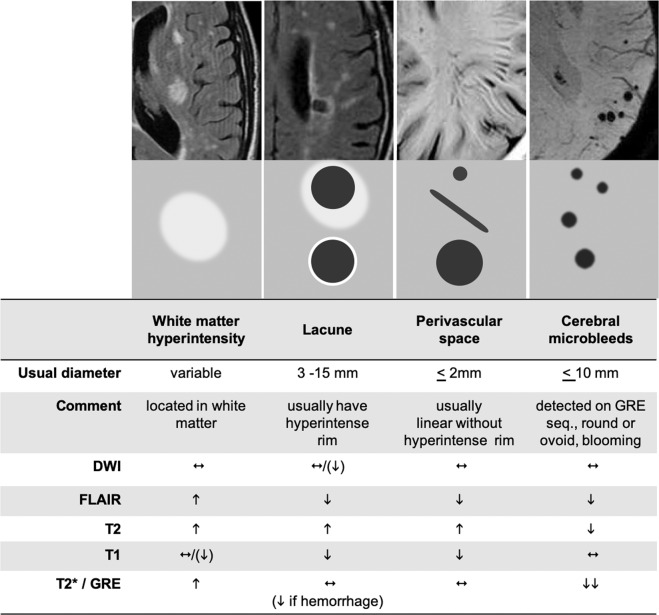
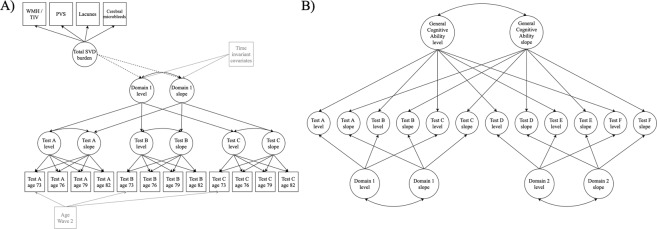
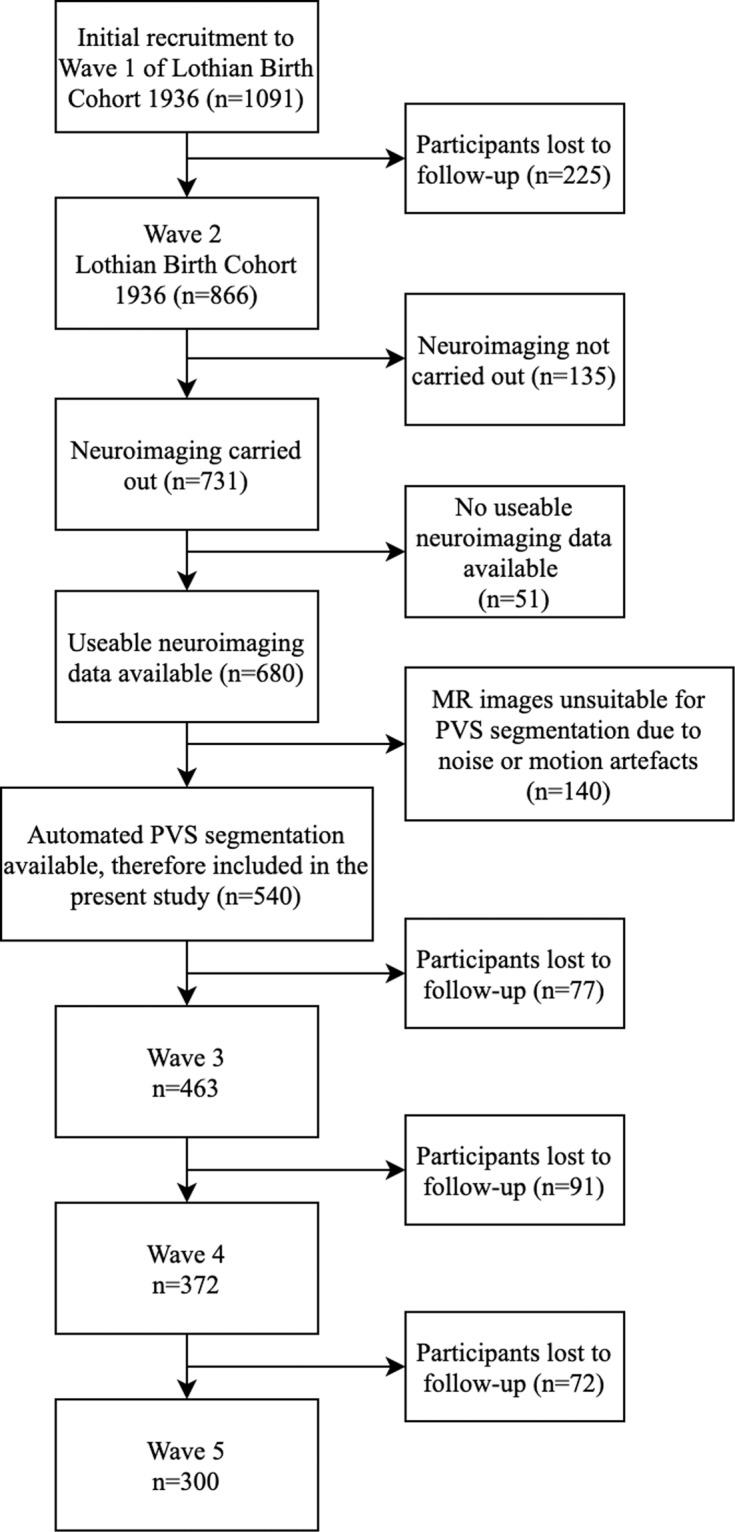
Slowed processing speed is considered a hallmark feature of cognitive decline in cerebral small vessel disease (SVD); however, it is unclear whether SVD's association with slowed processing might be due to its association with overall declining general cognitive ability. We quantified the total MRI-visible SVD burden of 540 members of the Lothian Birth Cohort 1936 (age: 72.6 ± 0.7 years; 47% female). Using latent growth curve modelling, we tested associations between total SVD burden at mean age 73 and changes in general cognitive ability, processing speed, verbal memory and visuospatial ability, measured at age 73, 76, 79 and 82. Covariates included age, sex, vascular risk and childhood cognitive ability. In the fully adjusted models, greater SVD burden was associated with greater declines in general cognitive ability (standardised β: -0.201; 95% CI: [-0.36, -0.04]; p = 0.022) and processing speed (-0.222; [-0.40, -0.04]; p = 0.022). SVD burden accounted for between 4 and 5% of variance in declines of general cognitive ability and processing speed. After accounting for the covariance between tests of processing speed and general cognitive ability, only SVD's association with greater decline in general cognitive ability remained significant, prior to FDR correction (-0.222; [-0.39, -0.06]; p = 0.008; p = 0.085). Our findings do not support the notion that SVD has a specific association with declining processing speed, independent of decline in general cognitive ability (which captures the variance shared across domains of cognitive ability). The association between SVD burden and declining general cognitive ability supports the notion of SVD as a diffuse, whole-brain disease and suggests that trials monitoring SVD-related cognitive changes should consider domain-specific changes in the context of overall, general cognitive decline.
处理速度减慢被认为是脑小血管病(SVD)认知能力下降的一个显著特征;然而,尚不清楚 SVD 与处理速度减慢的关联是否是由于其与整体认知能力下降的关联。我们对洛锡安出生队列 1936 年的 540 名成员(年龄:72.6±0.7 岁;47%为女性)的 SVD 总 MRI 可见负担进行了量化。使用潜在增长曲线模型,我们在平均年龄 73 岁时测试了 SVD 总负担与一般认知能力、处理速度、言语记忆和视空间能力变化之间的关系,这些变化是在 73 岁、76 岁、79 岁和 82 岁时测量的。协变量包括年龄、性别、血管风险和儿童认知能力。在完全调整的模型中,较大的 SVD 负担与一般认知能力的更大下降相关(标准化β:-0.201;95%CI:[-0.36,-0.04];p=0.022)和处理速度(-0.222;[-0.40,-0.04];p=0.022)。SVD 负担占一般认知能力和处理速度下降的 4%至 5%。在考虑处理速度和一般认知能力测试之间的协方差后,只有 SVD 与一般认知能力下降更大相关的关联在 FDR 校正前仍然显著(-0.222;[-0.39,-0.06];p=0.008;p=0.085)。我们的研究结果不支持这样的观点,即 SVD 与处理速度的下降有特定的关联,而与一般认知能力的下降无关(这反映了认知能力领域之间的共同变化)。SVD 负担与一般认知能力下降之间的关联支持 SVD 作为一种弥漫性全脑疾病的观点,并表明监测 SVD 相关认知变化的试验应考虑在整体一般认知下降的背景下,关注特定领域的变化。