Department of Molecular Biology and Institute of Genetics and Genomics in Geneva, Section of Biology, Faculty of Sciences, University of Geneva, Geneva, Switzerland.
Department of Cell Physiology and Metabolism and Institute of Genetics and Genomics in Geneva, Faculty of Medicine, University of Geneva, Geneva, Switzerland.
PLoS Biol. 2021 Jul 6;19(7):e3000968. doi: 10.1371/journal.pbio.3000968. eCollection 2021 Jul.
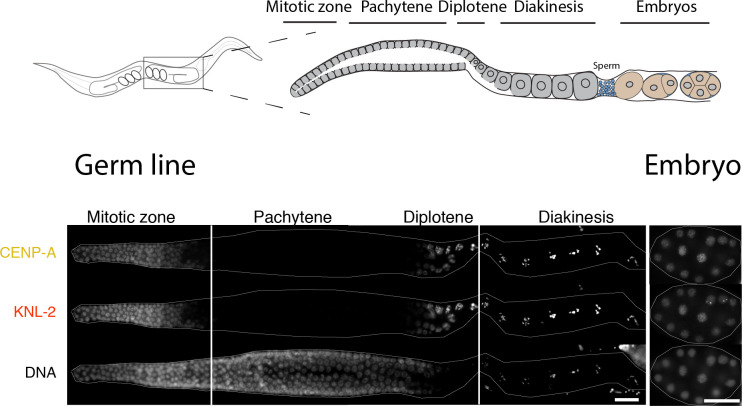
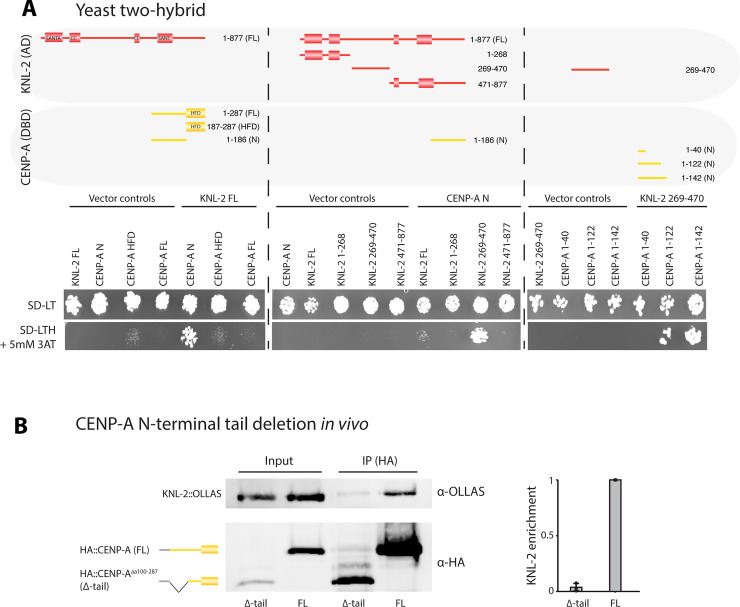
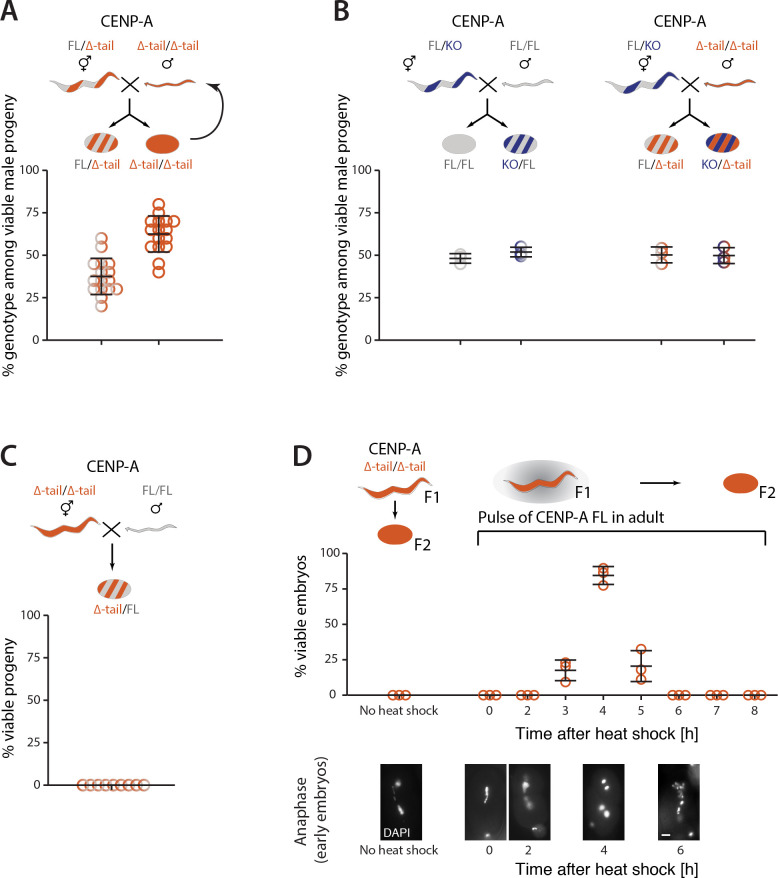
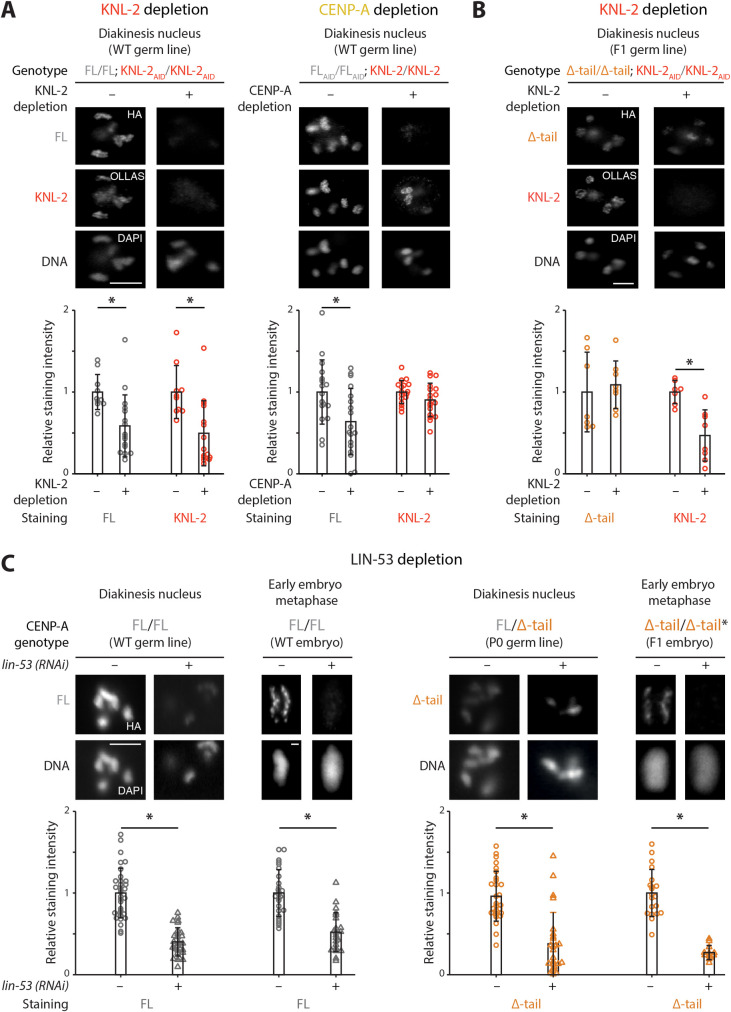
Centromere protein A (CENP-A) is a histone H3 variant that defines centromeric chromatin and is essential for centromere function. In most eukaryotes, CENP-A-containing chromatin is epigenetically maintained, and centromere identity is inherited from one cell cycle to the next. In the germ line of the holocentric nematode Caenorhabditis elegans, this inheritance cycle is disrupted. CENP-A is removed at the mitosis-to-meiosis transition and is reestablished on chromatin during diplotene of meiosis I. Here, we show that the N-terminal tail of CENP-A is required for the de novo establishment of centromeres, but then its presence becomes dispensable for centromere maintenance during development. Worms homozygous for a CENP-A tail deletion maintain functional centromeres during development but give rise to inviable offspring because they fail to reestablish centromeres in the maternal germ line. We identify the N-terminal tail of CENP-A as a critical domain for the interaction with the conserved kinetochore protein KNL-2 and argue that this interaction plays an important role in setting centromere identity in the germ line. We conclude that centromere establishment and maintenance are functionally distinct in C. elegans.
着丝粒蛋白 A(CENP-A)是一种组蛋白 H3 变体,它定义着丝粒染色质,对于着丝粒功能至关重要。在大多数真核生物中,CENP-A 富含的染色质通过表观遗传维持,着丝粒的身份从上一个细胞周期遗传到下一个细胞周期。在全着丝粒线虫秀丽隐杆线虫的生殖系中,这个遗传周期被打乱了。CENP-A 在有丝分裂到减数分裂的过渡时被去除,并在减数分裂 I 的双线期重新建立在染色质上。在这里,我们表明 CENP-A 的 N 端尾部对于从头建立着丝粒是必需的,但随后其存在对于发育过程中的着丝粒维持变得可有可无。CENP-A 尾部缺失的纯合子线虫在发育过程中保持功能性着丝粒,但由于它们不能在母体生殖系中重新建立着丝粒,因此产生了不可存活的后代。我们确定 CENP-A 的 N 端尾部是与保守的着丝粒蛋白 KNL-2 相互作用的关键结构域,并认为这种相互作用在生殖系中设定着丝粒身份方面起着重要作用。我们得出结论,在秀丽隐杆线虫中,着丝粒的建立和维持在功能上是不同的。