Center of Treatment of Myasthenia Gravis, People's Hospital of Shijiazhuang affiliated to Hebei Medical University, Shijiazhuang, China.
Hebei Provincial Key Laboratory of Myasthenia Gravis, Shijiazhuang, China.
BMC Med. 2021 Jul 8;19(1):159. doi: 10.1186/s12916-021-02034-0.
Myasthenia gravis (MG) is an acquired immune-mediated disorder of the neuromuscular junction that causes fluctuating skeletal muscle weakness and fatigue. Pediatric MG and adult MG have many different characteristics, and current MG diagnostic methods for children are not quite fit. Previous studies indicate that alterations in the gut microbiota may be associated with adult MG. However, it has not been determined whether the gut microbiota are altered in pediatric MG patients.
Our study recruited 53 pediatric MG patients and 46 age- and gender-matched healthy controls (HC). We sequenced the fecal samples of recruited individuals using whole-genome shotgun sequencing and analyzed the data with in-house bioinformatics pipeline.
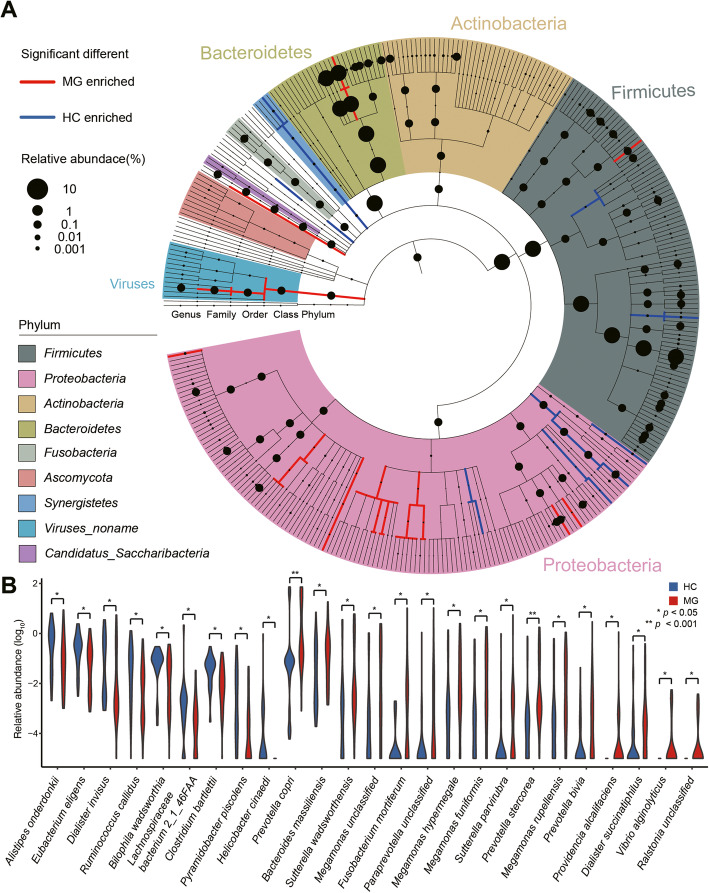
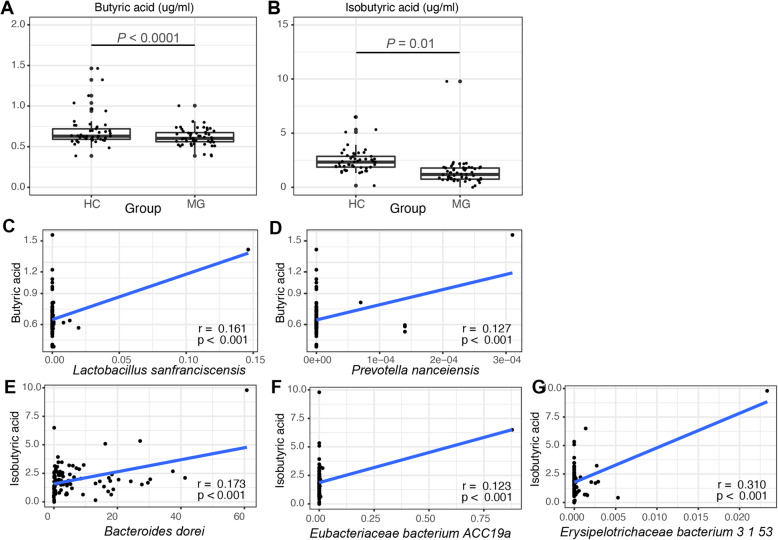
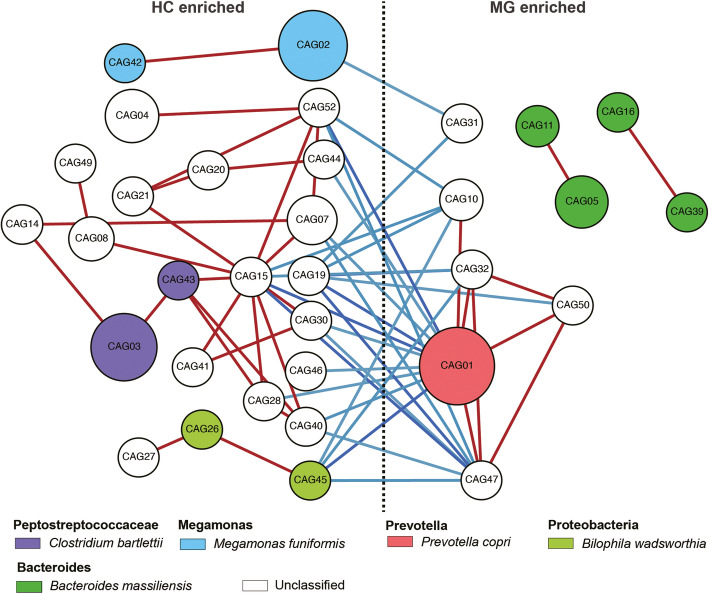
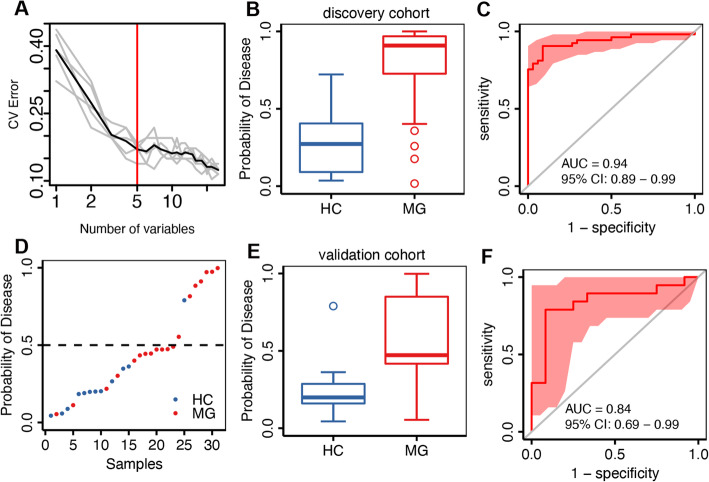
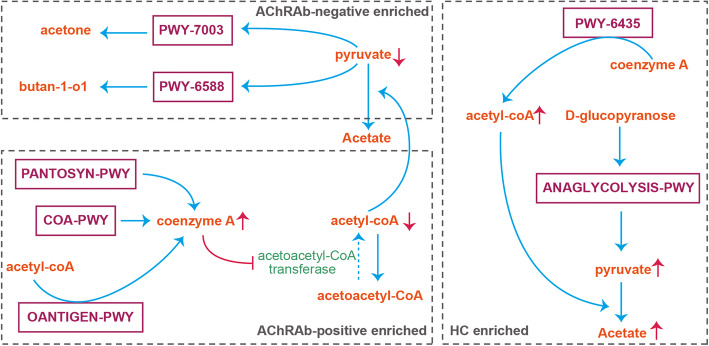
We built an MG disease classifier based on the abundance of five species, Fusobacterium mortiferum, Prevotella stercorea, Prevotella copri, Megamonas funiformis, and Megamonas hypermegale. The classifier obtained 94% area under the curve (AUC) in cross-validation and 84% AUC in the independent validation cohort. Gut microbiome analysis revealed the presence of human adenovirus F/D in 10 MG patients. Significantly different pathways and gene families between MG patients and HC belonged to P. copri, Clostridium bartlettii, and Bacteroides massiliensis. Based on functional annotation, we found that the gut microbiome affects the production of short-chain fatty acids (SCFAs), and we confirmed the decrease in SCFA levels in pediatric MG patients via serum tests.
The study indicated that altered fecal microbiota might play vital roles in pediatric MG's pathogenesis by reducing SCFAs. The microbial markers might serve as novel diagnostic methods for pediatric MG.
重症肌无力(MG)是一种获得性免疫介导的神经肌肉接头疾病,导致骨骼肌波动性无力和疲劳。儿科 MG 和成人 MG 有许多不同的特征,目前用于儿童的 MG 诊断方法不太合适。先前的研究表明,肠道微生物群的改变可能与成人 MG 有关。然而,尚未确定儿科 MG 患者的肠道微生物群是否发生改变。
我们的研究招募了 53 名儿科 MG 患者和 46 名年龄和性别匹配的健康对照者(HC)。我们使用全基因组鸟枪法对招募个体的粪便样本进行测序,并使用内部生物信息学管道分析数据。
我们基于 Fusobacterium mortiferum、Prevotella stercorea、Prevotella copri、Megamonas funiformis 和 Megamonas hypermegale 这 5 种物种的丰度构建了一个 MG 疾病分类器。该分类器在交叉验证中获得了 94%的曲线下面积(AUC),在独立验证队列中获得了 84%的 AUC。肠道微生物组分析显示,在 10 名 MG 患者中存在人类腺病毒 F/D。MG 患者和 HC 之间存在显著差异的途径和基因家族属于 Prevotella copri、Clostridium bartlettii 和 Bacteroides massiliensis。基于功能注释,我们发现肠道微生物群会影响短链脂肪酸(SCFA)的产生,并且我们通过血清检测证实了儿科 MG 患者 SCFA 水平降低。
该研究表明,改变的粪便微生物群可能通过减少 SCFA 在儿科 MG 的发病机制中起重要作用。微生物标志物可能作为儿科 MG 的新型诊断方法。