Professor Alborzi Clinical Microbiology Research Center, Shiraz University of Medical Sciences, Shiraz, Iran.
Head of Infection Control Unit, Amir Medical Oncology Hospital, Shiraz University of Medical Sciences, Shiraz, Iran.
Sci Rep. 2021 Jul 8;11(1):14099. doi: 10.1038/s41598-021-93421-3.
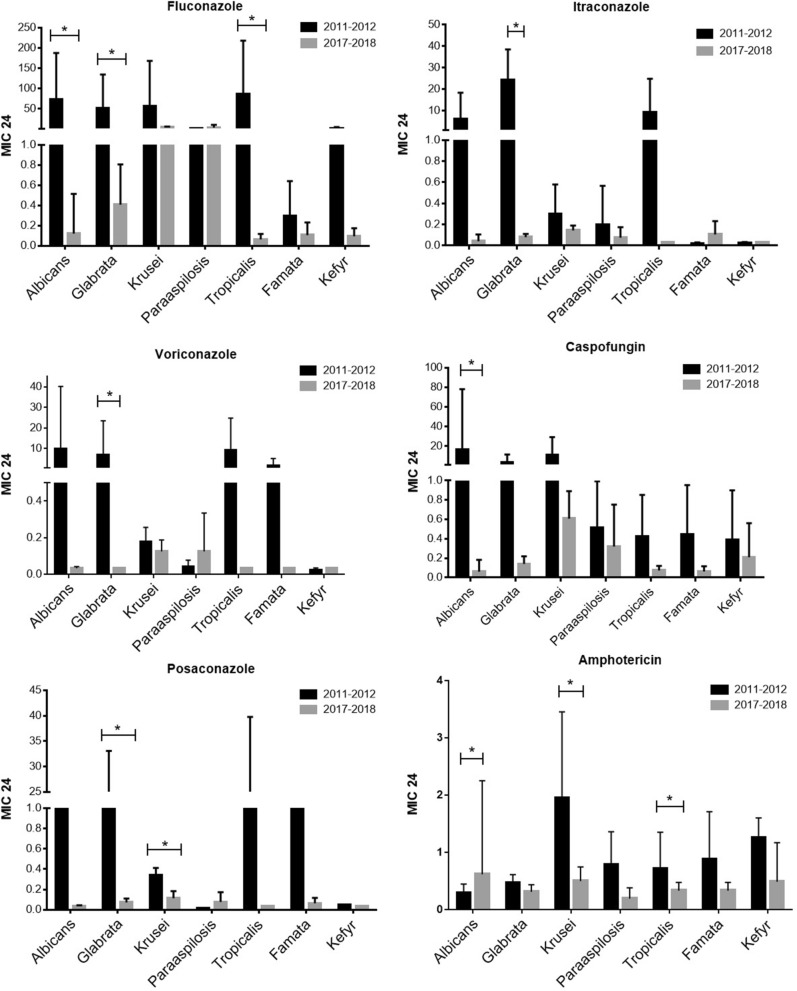
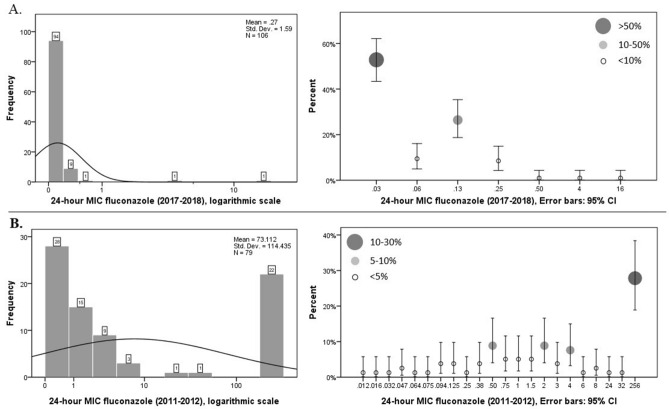
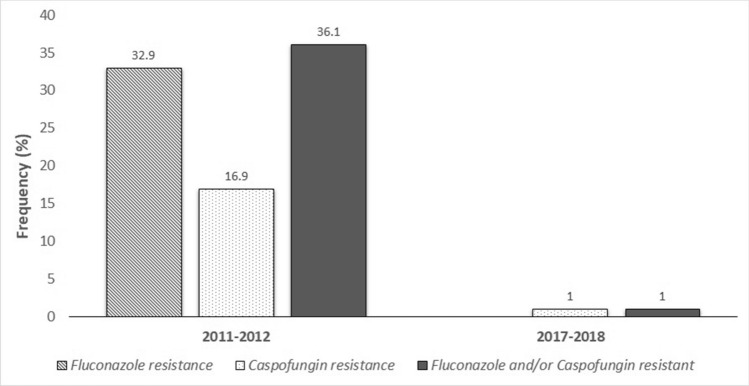
There is a worldwide concern regarding the antimicrobial resistance and the inappropriate use of antifungal agents, which had led to an ever-increasing antifungal resistance. This study aimed to identify the antifungal susceptibility of colonized Candida species isolated from pediatric patients with cancer and evaluate the clinical impact of antifungal stewardship (AFS) interventions on the antifungal susceptibility of colonized Candida species. Candida species colonization was evaluated among hospitalized children with cancer in a tertiary teaching hospital, Shiraz 2017-2018. Samples were collected from the mouth, nose, urine, and stool of the patients admitted to our center and cultured on sabouraud dextrose agar. The isolated yeasts identified by polymerase chain reaction-restriction fragment length polymorphisms (PCR-RFLP). DNA Extracted and PCR amplification was performed using the ITS1 and ITS4 primer pairs and Msp I enzyme. The broth microdilution method was used to determine the minimum inhibitory concentrations (MICs) for amphotericin B, caspofungin, and azoles. The prevalence of Candida albicans in the present study was significantly higher than other Candida species. Candida albicans species were completely susceptible to the azoles. The susceptibility rate of C. albicans to amphotericin B and caspofungin was 93.1% and 97.1%, respectively. The fluconazole MIC values of Candida albicans decreased significantly during the post-AFS period (P < 0.001; mean difference: 72.3; 95% CI of the difference: 47.36-98.62). We found that 52.5% (53/117) of the isolated C. albicans were azole-resistant before AFS implementation, while only 1.5% (2/102) of the isolates were resistant after implementation of the AFS program (P < 0.001). C. albicans fluconazole and caspofungin resistant rate also decreased significantly (P < 0.001) after implementation of the AFS program [26 (32.9%) versus 0 (0.0%) and 11 (10.9%) versus 1 (0.9%), respectively]. Besides, fluconazole use (p < 0.05) and fluconazole expenditure reduced significantly (about one thousand US$ per year) after the AFS program. Our results confirm the positive effect of optimized antifungal usage and bedside intervention on the susceptibility of Candida species after the implementation of the AFS program. C. albicans and C. glabrata exhibited a significant increase in susceptibility after the execution of the AFS program.
全球范围内都在关注抗微生物药物耐药性和抗真菌药物的不当使用问题,这导致抗真菌药物耐药性日益增加。本研究旨在确定分离自儿科癌症患者的定植念珠菌的抗真菌药敏性,并评估抗真菌药物管理(AFS)干预对定植念珠菌抗真菌药敏性的临床影响。在 2017-2018 年,我们在设拉子的一家三级教学医院评估了住院癌症儿童的念珠菌定植情况。从入住我院的患者的口腔、鼻腔、尿液和粪便中采集样本,并在沙氏葡萄糖琼脂上培养。通过聚合酶链反应-限制性片段长度多态性(PCR-RFLP)鉴定分离出的酵母。提取 DNA 并使用 ITS1 和 ITS4 引物对和 Msp I 酶进行 PCR 扩增。采用肉汤微量稀释法测定两性霉素 B、卡泊芬净和唑类药物的最低抑菌浓度(MICs)。本研究中,白色念珠菌的流行率明显高于其他念珠菌种。白色念珠菌对唑类药物完全敏感。白色念珠菌对两性霉素 B 和卡泊芬净的敏感性率分别为 93.1%和 97.1%。氟康唑 MIC 值在 AFS 后明显降低(P<0.001;平均差值:72.3;差值的 95%置信区间:47.36-98.62)。我们发现,在实施 AFS 之前,52.5%(53/117)分离的白色念珠菌对唑类药物耐药,而在实施 AFS 方案后,只有 1.5%(2/102)的分离株耐药(P<0.001)。氟康唑和卡泊芬净耐药率在实施 AFS 方案后也明显降低(P<0.001)[分别为 26 株(32.9%)对 0 株(0.0%)和 11 株(10.9%)对 1 株(0.9%)]。此外,AFS 方案实施后,氟康唑的使用(p<0.05)和氟康唑的支出(约每年 1000 美元)明显减少。我们的结果证实了优化抗真菌药物使用和床边干预对抗真菌药物管理方案实施后念珠菌敏感性的积极影响。AFS 方案实施后,白色念珠菌和光滑念珠菌的敏感性显著增加。