Graduate School, Beijing University of Chinese Medicine, Beijing 100029, China.
Department of Gastroenterology, China-Japan Friendship Hospital, Beijing 100029, China.
World J Gastroenterol. 2021 Jun 28;27(24):3609-3629. doi: 10.3748/wjg.v27.i24.3609.
Gut microbiota and its metabolites may be involved in the pathogenesis of inflammatory bowel disease. Several clinical studies have recently shown that patients with ulcerative colitis (UC) have altered profiles of fecal bile acids (BAs). It was observed that BA receptors Takeda G-protein-coupled receptor 5 (TGR5) and vitamin D receptor (VDR) participate in intestinal inflammatory responses by regulating NF-ĸB signaling. We hypothesized that altered profiles of fecal BAs might be correlated with gut microbiota and inflammatory responses in patients with UC.
To investigate the changes in fecal BAs and analyze the relationship of BAs with gut microbiota and inflammation in patients with UC.
The present study used 16S rDNA sequencing technology to detect the differences in the intestinal flora between UC patients and healthy controls (HCs). Fecal BAs were measured by targeted metabolomics approaches. Mucosal TGR5 and VDR expression was analyzed using immunohistochemistry, and serum inflammatory cytokine levels were detected by ELISA.
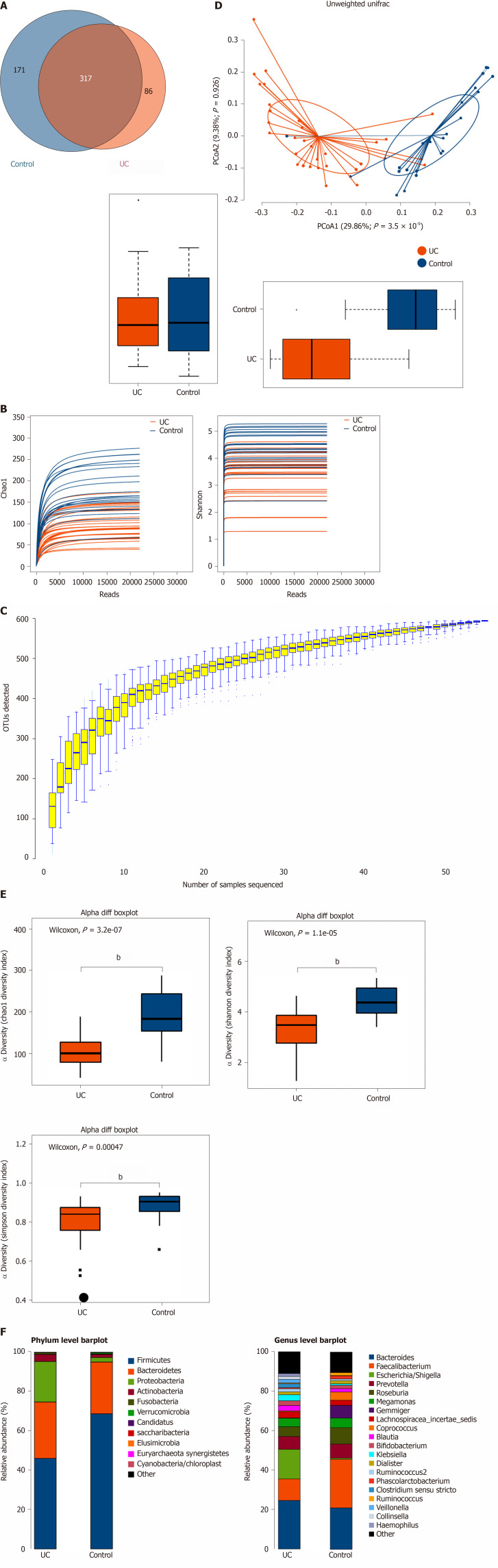
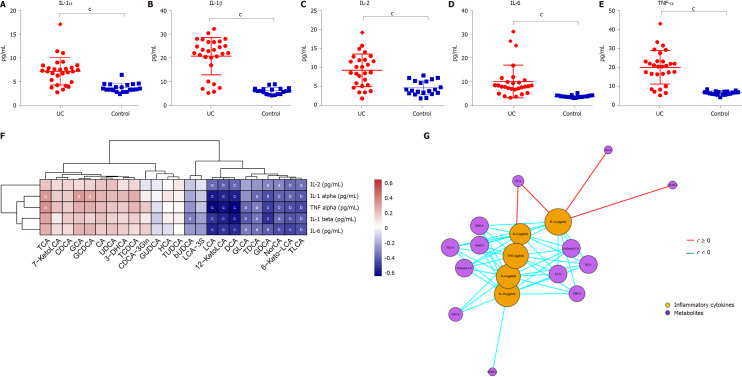
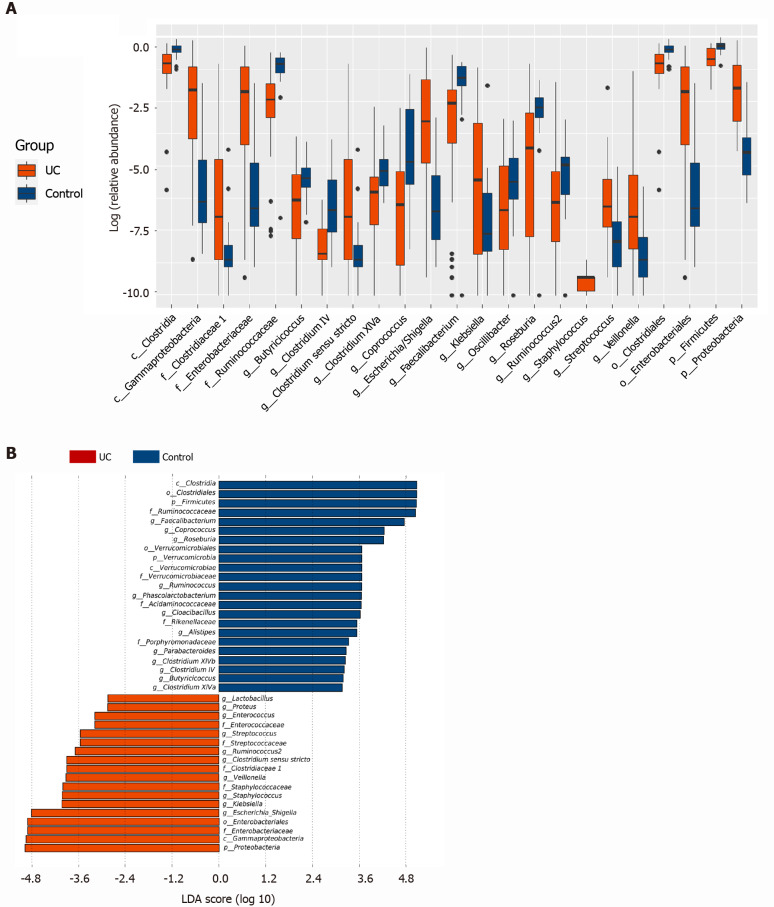
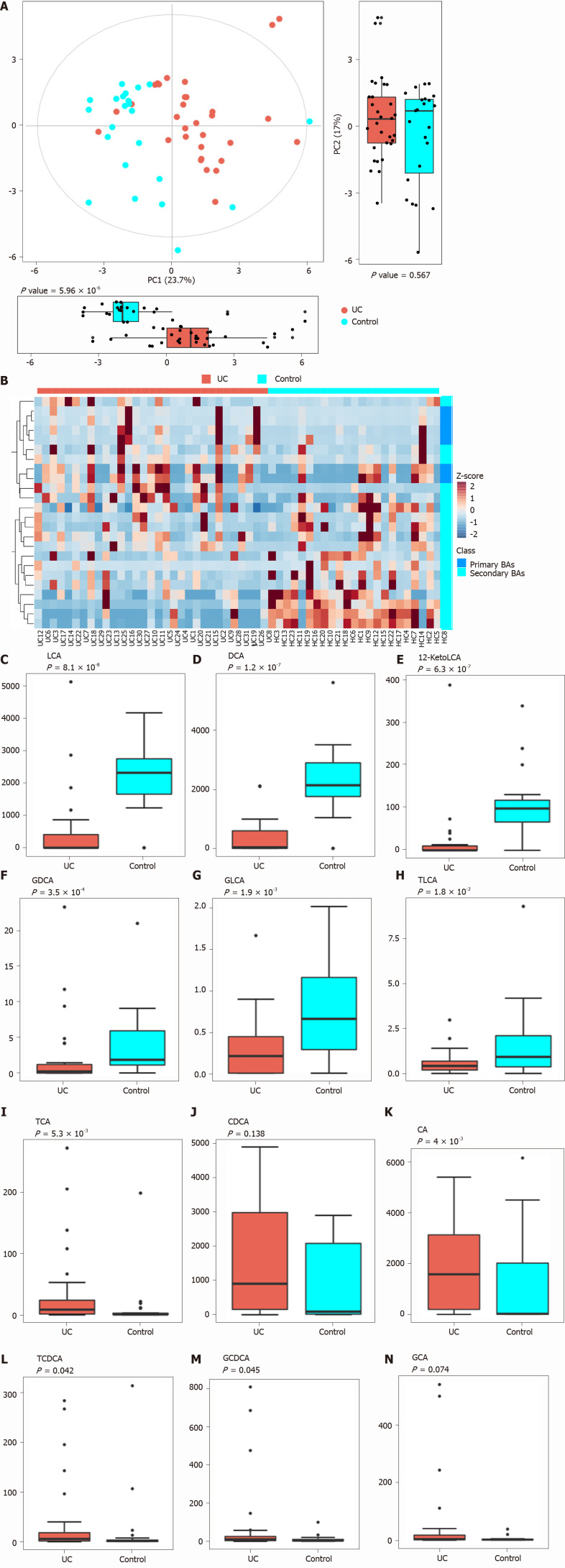
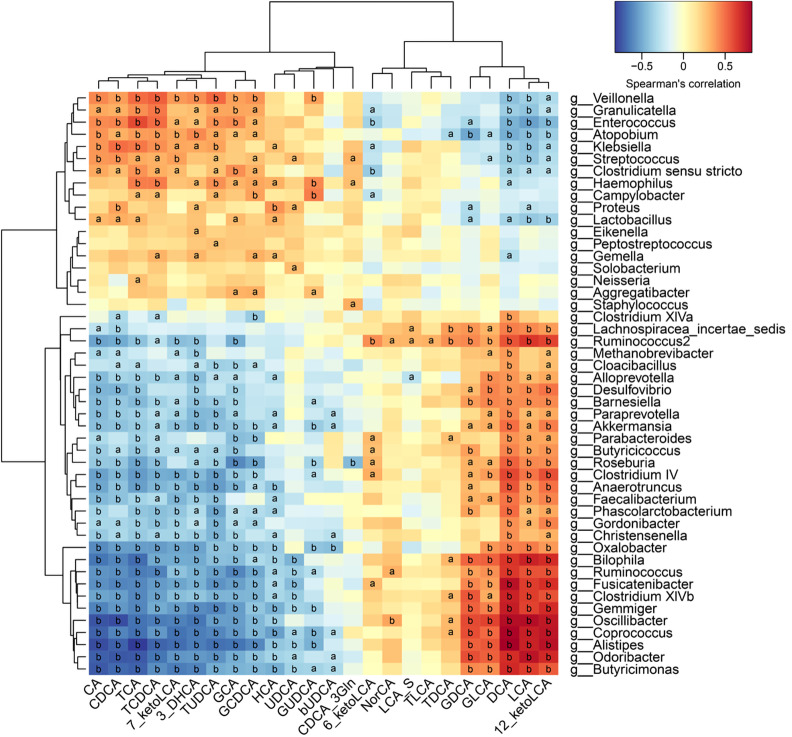
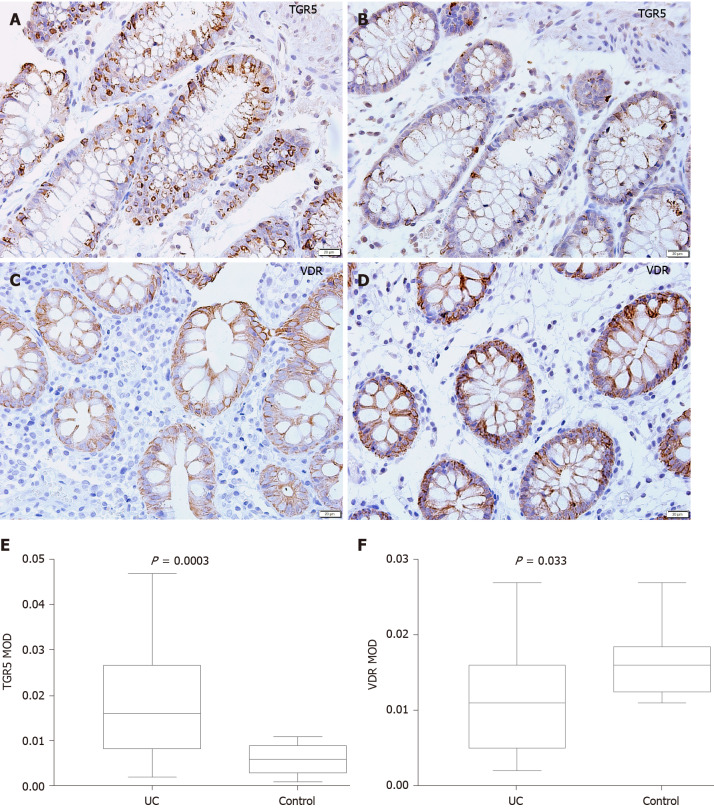
Thirty-two UC patients and twenty-three HCs were enrolled in this study. It was found that the diversity of gut microbiota in UC patients was reduced compared with that in HCs. , , , , , and were significantly decreased in patients with UC ( = 3.75E-05, = 8.28E-07, = 0.0002, = 0.003, = 0.0003, and = 0.0004, respectively). , , , , and were significantly enriched in the UC group ( = 2.99E-09, = 3.63E-05, = 8.59E-05, 0.003, and = 0.016, respectively). The concentrations of fecal secondary BAs, such as lithocholic acid, deoxycholic acid, glycodeoxycholic acid, glycolithocholic acid, and taurolithocholate, in UC patients were significantly lower than those in HCs ( = 8.1E-08, = 1.2E-07, = 3.5E-04, = 1.9E-03, and = 1.8E-02, respectively) and were positively correlated with , , , , and ( < 0.01). The concentrations of primary BAs, such as taurocholic acid, cholic acid, taurochenodeoxycholate, and glycochenodeoxycholate, in UC patients were significantly higher than those in HCs ( = 5.3E-03, = 4E-02, = 0.042, and = 0.045, respectively) and were positively related to , , , and pro-inflammatory cytokines ( < 0.01). The expression of TGR5 was significantly elevated in UC patients (0.019 ± 0.013 0.006 ± 0.003, 0.0003). VDR expression in colonic mucosal specimens was significantly decreased in UC patients (0.011 ± 0.007 0.016 ± 0.004, = 0.033).
Fecal BA profiles are closely related to the gut microbiota and serum inflammatory cytokines. Dysregulation of the gut microbiota and altered constitution of fecal BAs may participate in regulating inflammatory responses the BA receptors TGR5 and VDR.
肠道微生物群及其代谢物可能与炎症性肠病的发病机制有关。最近的几项临床研究表明,溃疡性结肠炎(UC)患者的粪便胆汁酸(BA)谱发生了改变。有人观察到,BA 受体 Takeda G 蛋白偶联受体 5(TGR5)和维生素 D 受体(VDR)通过调节 NF-ĸB 信号参与肠道炎症反应。我们假设 UC 患者粪便 BA 谱的改变可能与肠道微生物群和炎症反应有关。
研究粪便 BA 的变化,并分析 BA 与 UC 患者肠道微生物群和炎症的关系。
本研究采用 16S rDNA 测序技术检测 UC 患者和健康对照(HCs)肠道菌群的差异。采用靶向代谢组学方法检测粪便 BA。采用免疫组织化学法分析黏膜 TGR5 和 VDR 表达,采用 ELISA 法检测血清炎症细胞因子水平。
本研究纳入了 32 例 UC 患者和 23 例 HCs。结果发现,UC 患者肠道微生物群的多样性较 HCs 降低。 、 、 、 、 在 UC 患者中显著降低( = 3.75E-05, = 8.28E-07, = 0.0002, = 0.003, = 0.0003,和 = 0.0004,分别)。 、 、 、 、 和 在 UC 组中显著富集( = 2.99E-09, = 3.63E-05, = 8.59E-05, 0.003,和 = 0.016,分别)。UC 患者粪便次级 BA,如石胆酸、脱氧胆酸、甘氨脱氧胆酸、甘氨石胆酸和牛磺石胆酸的浓度明显低于 HCs( = 8.1E-08, = 1.2E-07, = 3.5E-04, = 1.9E-03,和 = 1.8E-02,分别),与 、 、 、 和 呈正相关( < 0.01)。UC 患者粪便初级 BA,如牛磺胆酸、胆酸、牛磺鹅脱氧胆酸和甘氨鹅脱氧胆酸的浓度明显高于 HCs( = 5.3E-03, = 4E-02, = 0.042,和 = 0.045,分别),与 、 、 、 和促炎细胞因子呈正相关( < 0.01)。UC 患者 TGR5 表达明显升高(0.019 ± 0.013 0.006 ± 0.003, 0.0003)。UC 患者结肠黏膜标本中 VDR 表达明显降低(0.011 ± 0.007 0.016 ± 0.004, = 0.033)。
粪便 BA 谱与肠道微生物群和血清炎症细胞因子密切相关。肠道微生物群失调和粪便 BA 组成改变可能通过调节 BA 受体 TGR5 和 VDR 参与调节炎症反应。