Brooke Army Medical Center, Department of Emergency Medicine, 3841 Roger Brooke Dr, Fort Sam Houston, TX 78234, United States.
Divisions of Emergency Medicine and Infectious Diseases, Washington University School of Medicine, 660 S. Euclid Ave, St. Louis, MO 63110, United States.
Am J Emerg Med. 2021 Nov;49:352-359. doi: 10.1016/j.ajem.2021.06.074. Epub 2021 Jul 3.
High flow nasal cannula (HFNC) is a noninvasive ventilation (NIV) system that has demonstrated promise in the emergency department (ED) setting.
This narrative review evaluates the utility of HFNC in adult patients with acute hypoxemic respiratory failure in the ED setting.
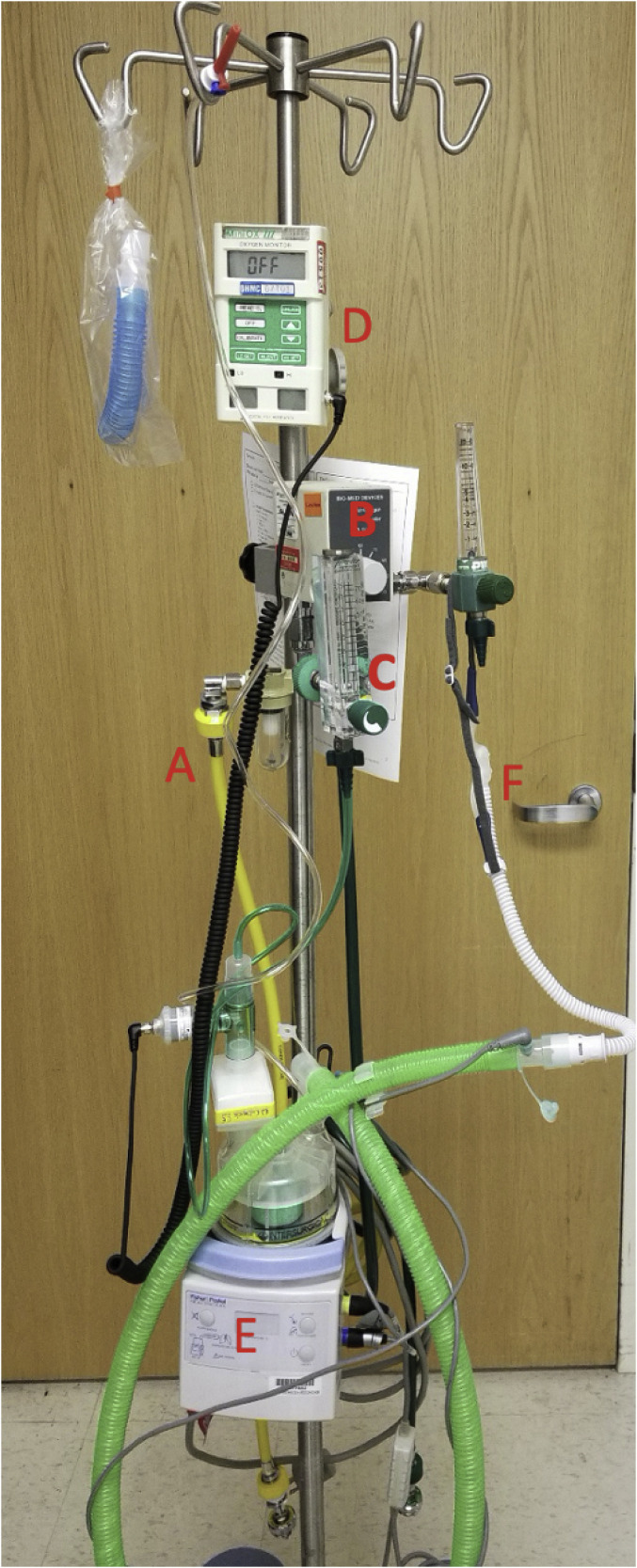
HFNC provides warm (37 °C), humidified (100% relative humidity) oxygen at high flows with a reliable fraction of inspired oxygen (FiO). HFNC can improve oxygenation, reduce airway resistance, provide humidified flow that can flush anatomical dead space, and provide a low amount of positive end expiratory pressure. Recent literature has demonstrated efficacy in acute hypoxemic respiratory failure, including pneumonia, acute respiratory distress syndrome (ARDS), coronavirus disease 2019 (COVID-19), interstitial lung disease, immunocompromised states, the peri-intubation state, and palliative care, with reduced need for intubation, length of stay, and mortality in some of these conditions. Individual patient factors play an important role in infection control risks with respect to the use of HFNC in patients with COVID-19. Appropriate personal protective equipment, adherence to hand hygiene, surgical mask placement over the HFNC device, and environmental controls promoting adequate room ventilation are the foundation for protecting healthcare personnel. Frequent reassessment of the patient placed on HFNC is necessary; those with severe end organ dysfunction, thoracoabdominal asynchrony, significantly increased respiratory rate, poor oxygenation despite HFNC, and tachycardia are at increased risk of HFNC failure and need for further intervention.
HFNC demonstrates promise in several conditions requiring respiratory support. Further randomized trials are needed in the ED setting.
高流量鼻导管(HFNC)是一种非侵入性通气(NIV)系统,已在急诊科(ED)环境中显示出良好的应用前景。
本综述评估了 HFNC 在 ED 环境中治疗成人急性低氧性呼吸衰竭的效果。
HFNC 以高流量提供温暖(37°C)、加湿(100%相对湿度)的氧气,具有可靠的吸入氧分数(FiO)。HFNC 可改善氧合,降低气道阻力,提供可冲洗解剖死腔的加湿气流,并提供低水平的呼气末正压。最近的文献表明,HFNC 在急性低氧性呼吸衰竭,包括肺炎、急性呼吸窘迫综合征(ARDS)、2019 冠状病毒病(COVID-19)、间质性肺病、免疫功能低下状态、插管期和姑息治疗中均具有疗效,可降低某些情况下的插管需求、住院时间和死亡率。在 COVID-19 患者中使用 HFNC 时,个体患者因素在感染控制风险方面发挥着重要作用。适当的个人防护设备、遵守手部卫生、将手术口罩置于 HFNC 设备上以及促进充分室内通风的环境控制措施是保护医护人员的基础。需要对接受 HFNC 治疗的患者进行频繁的重新评估;那些存在严重终末器官功能障碍、胸腹不同步、呼吸频率显著增加、HFNC 治疗后仍严重缺氧以及心动过速的患者,HFNC 治疗失败和需要进一步干预的风险增加。
HFNC 在需要呼吸支持的多种情况下显示出良好的应用前景。ED 环境中还需要进一步的随机试验。