Small Animal Clinic-Neurosurgery, Neuroradiology and Clinical Neurology, Justus Liebig University-Giessen, Frankfurterstrasse 114, 35392, Giessen, Germany.
Acta Vet Scand. 2021 Jul 10;63(1):27. doi: 10.1186/s13028-021-00593-z.
Steroid responsive meningitis-arteritis (SRMA) is an immune-mediated disease of the leptomeninges and its associated blood vessels, typically responsive to corticosteroids. Clinically relevant haemorrhage is a rare finding in such patients and for this reason surgical decompression of the spinal cord is normally not considered. The diagnosis of SRMA is supported by serum C-reactive protein (CRP) increase, cerebrospinal fluid (CSF) examination, including cytology (polymorphonuclear pleocytosis in the acute form), nucleated cell-, red blood cell- and protein count, as well as by evaluating CSF and serum IgA concentrations. D-dimer concentrations in serum and CSF should be elevated as well and therefore can be also evaluated as a further diagnostic tool.
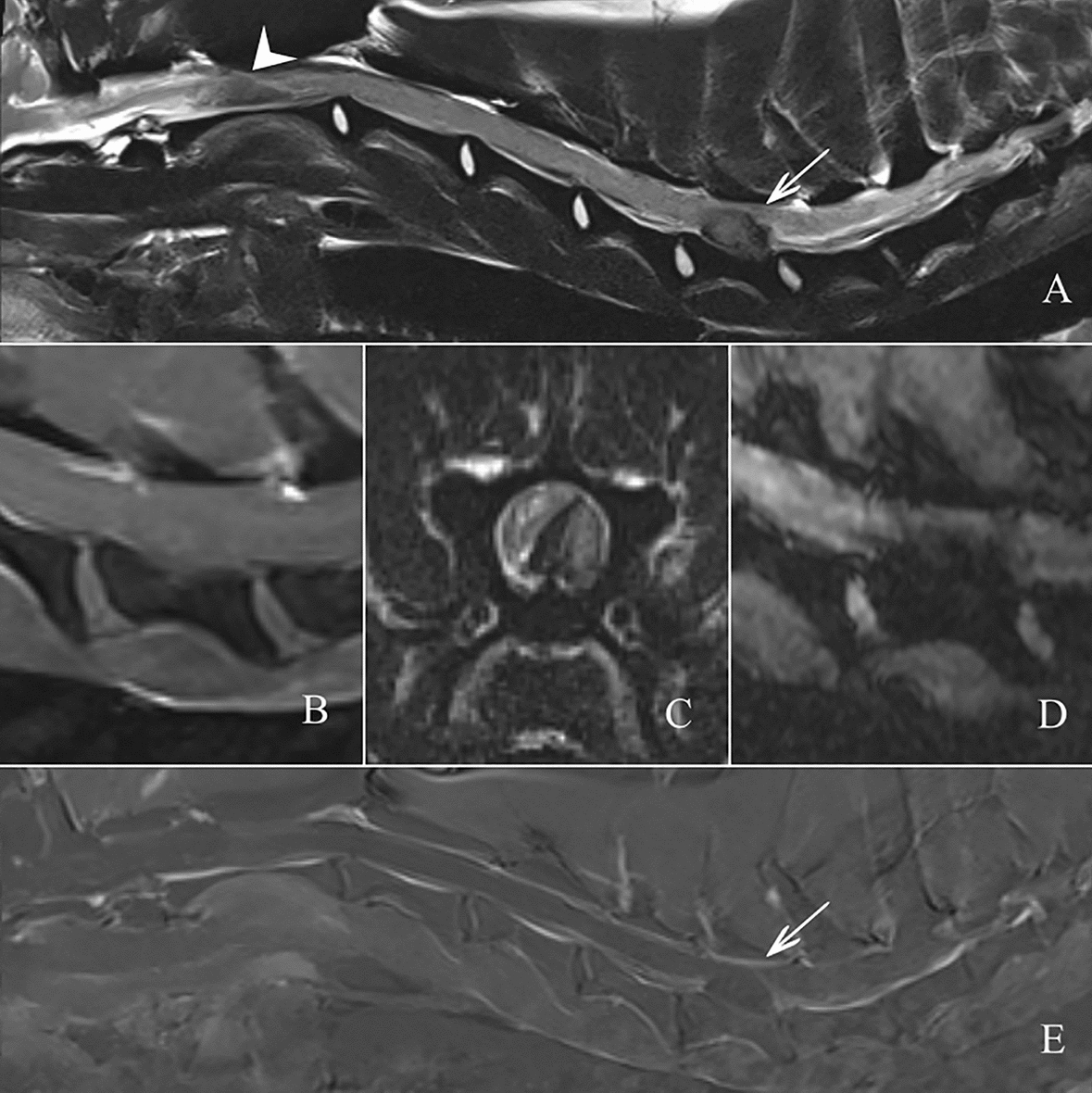
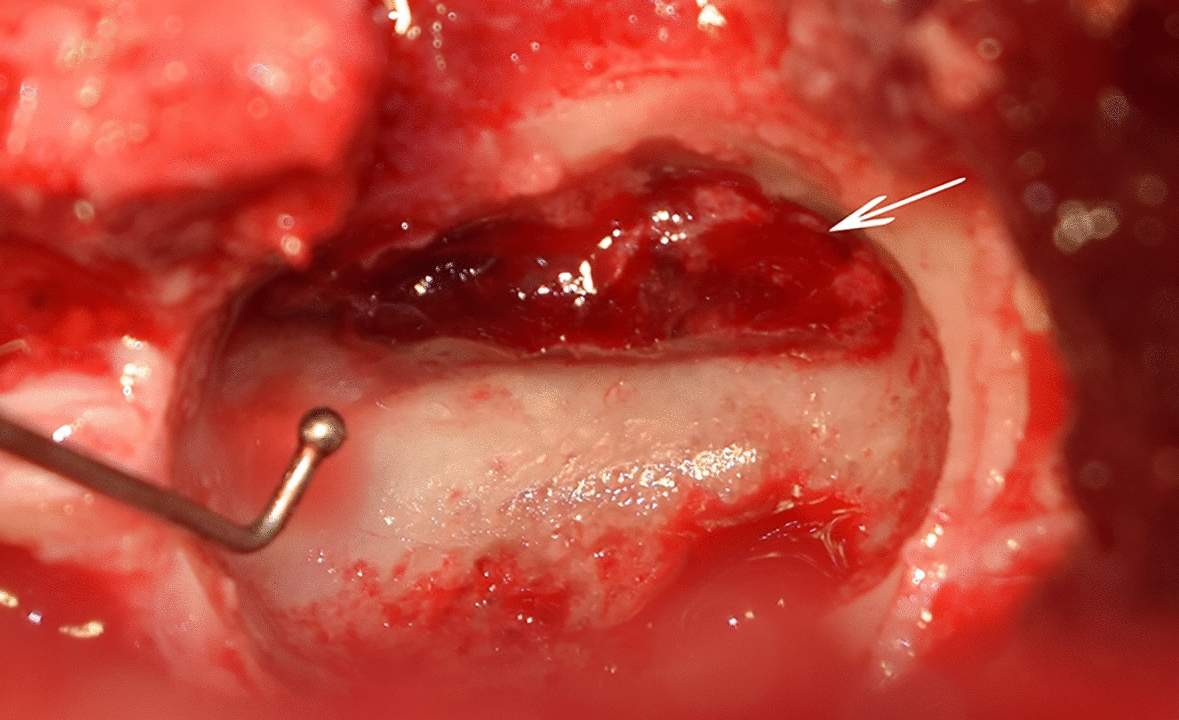
A 1.5-year-old mixed breed dog was presented with pyrexia, cervical pain and acute tetraparesis. Magnetic resonance imaging revealed an extradural mass lesion at the level of the sixth cervical vertebra, consistent with a subacute epidural haemorrhage, causing severe compression of the spinal cord. Based on the dog's signalment, clinical history and results of the blood and CSF analyses (incl. D-dimer determination), SRMA with secondary epidural haemorrhage was suspected. Decompressive surgery was performed through a right sided partial dorsal laminectomy. Post-surgical immunosuppressive treatment was started with cytarabine and then continued with prednisolone after completion of wound healing.
This is the first report in which medical and surgical treatment were combined in a patient with SRMA and it highlights the possibility of performing a successful surgical intervention despite the need for immunosuppressive therapy. Moreover, while SRMA diagnosis is normally based on CSF analysis and CSF and serum IgA concentrations, D-dimer concentrations in serum and CSF were also useful in this patient.
类固醇反应性脑膜炎-动脉炎(SRMA)是一种脑膜及其相关血管的免疫介导性疾病,通常对皮质类固醇有反应。在这种患者中,临床相关的出血是一种罕见的发现,因此通常不考虑对脊髓进行减压手术。SRMA 的诊断支持血清 C 反应蛋白(CRP)增加、脑脊液(CSF)检查,包括细胞学(急性形式的多形核白细胞增多)、有核细胞、红细胞和蛋白计数,以及评估 CSF 和血清 IgA 浓度。血清和 CSF 中的 D-二聚体浓度也应该升高,因此也可以作为进一步的诊断工具进行评估。
一只 1.5 岁的混种犬表现出发热、颈部疼痛和急性四肢瘫痪。磁共振成像显示第六颈椎水平的硬膜外肿块病变,符合亚急性硬膜外出血,导致脊髓严重受压。根据犬的品种、临床病史以及血液和 CSF 分析(包括 D-二聚体测定)的结果,怀疑患有 SRMA 伴继发性硬膜外出血。通过右侧部分背侧椎板切除术进行减压手术。手术后开始进行免疫抑制治疗,使用阿糖胞苷,在伤口愈合后继续使用泼尼松龙。
这是首例报道将医学和手术治疗相结合治疗 SRMA 的病例,它强调了在需要免疫抑制治疗的情况下,进行成功手术干预的可能性。此外,虽然 SRMA 的诊断通常基于 CSF 分析和 CSF 和血清 IgA 浓度,但在该患者中,血清和 CSF 中的 D-二聚体浓度也很有用。