Department of Thoracic Surgery, Harbin Medical University Cancer Hospital, Harbin, China.
Department of Oncology, Harbin Medical University Cancer Hospital, Harbin, China.
Pathol Oncol Res. 2021 Apr 9;27:632531. doi: 10.3389/pore.2021.632531. eCollection 2021.
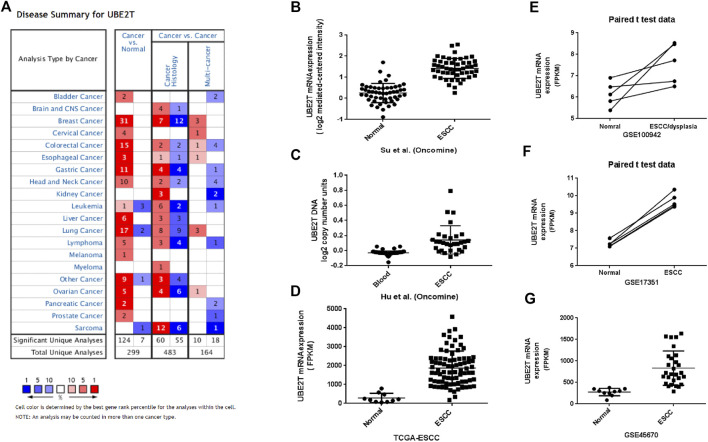
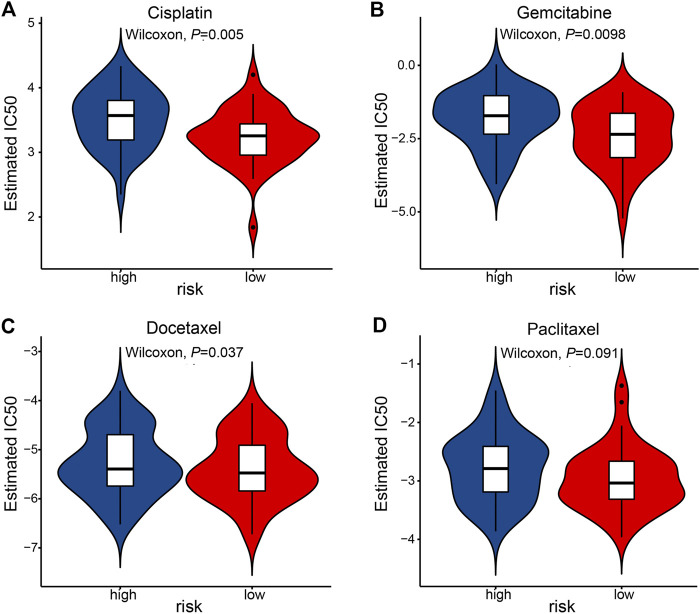
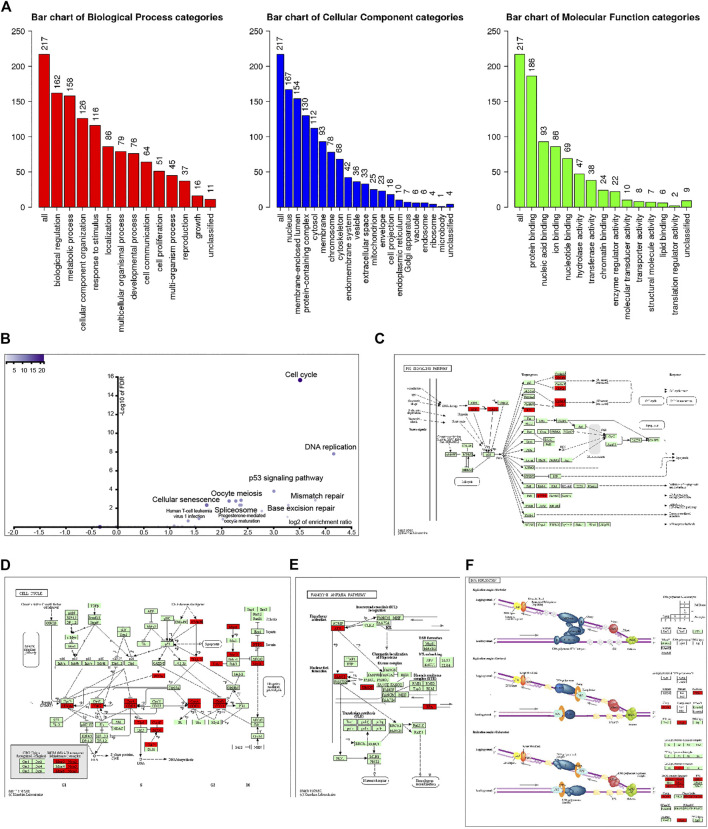
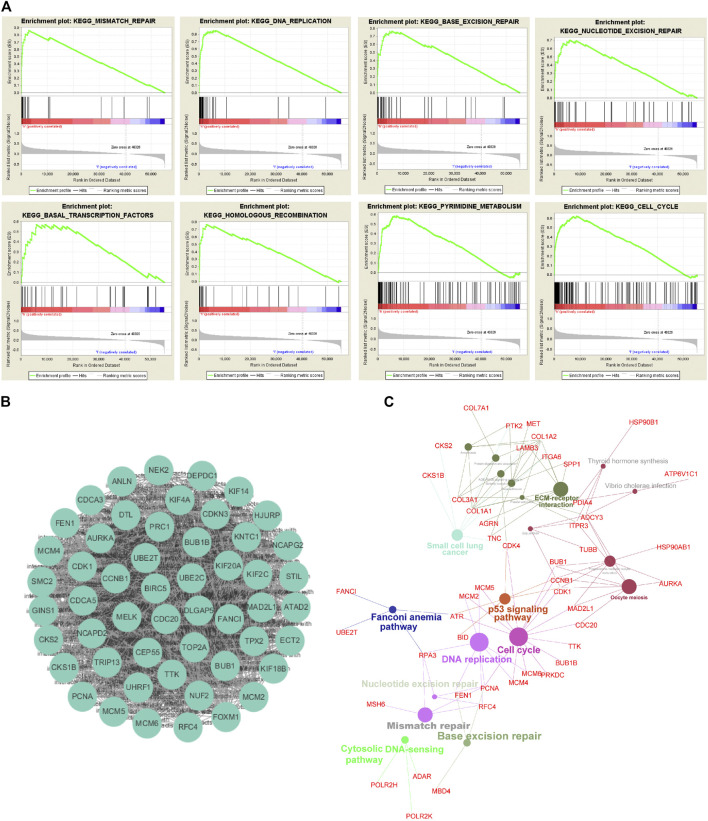
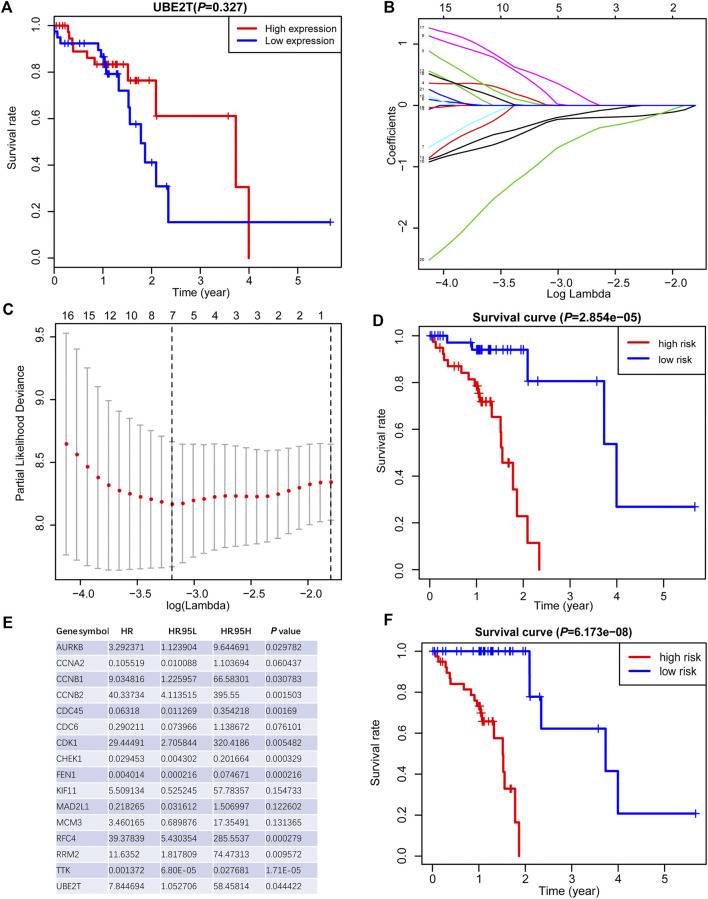
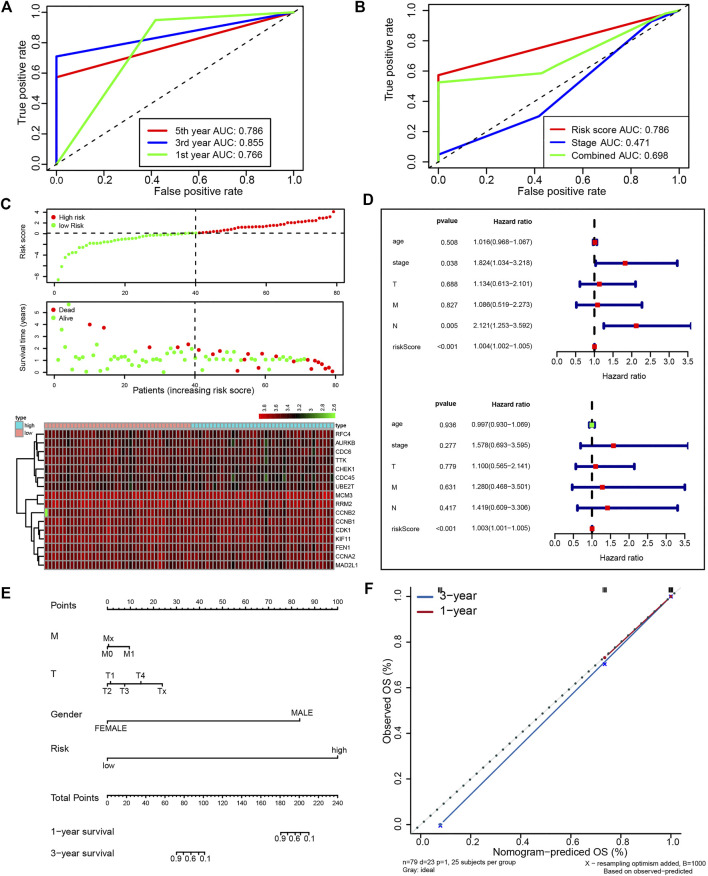
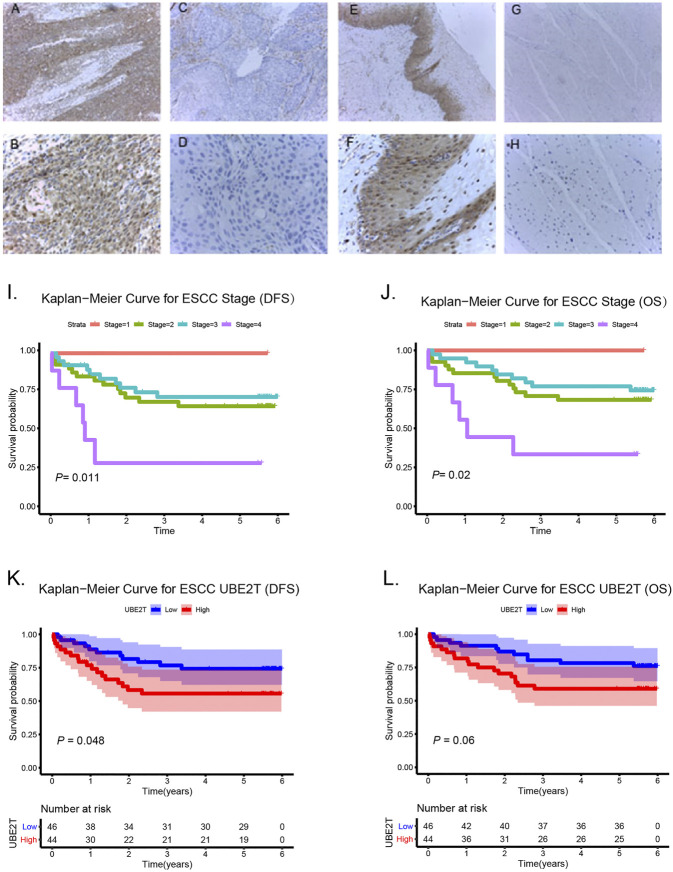
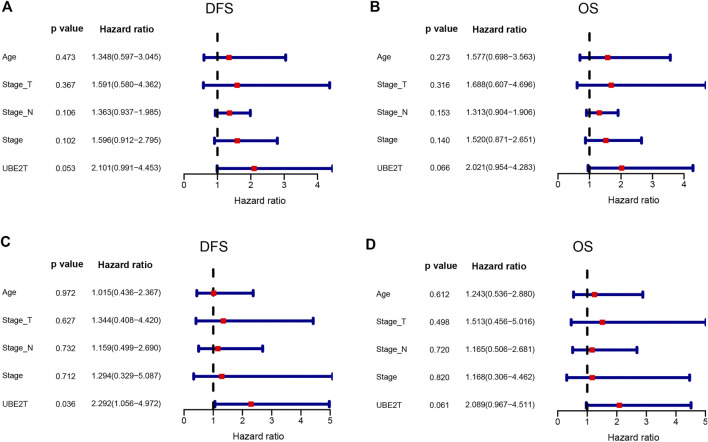
The ubiquitin-conjugating enzyme E2 T (UBE2T) has been shown to contribute to several types of cancer. However, no publication has reported its implication in esophageal squamous cell cancer (ESCC). We explored several public databases, including The Cancer Genome Atlas (TCGA), Oncomine, and gene expression Omnibus (GEO). Gene Ontology (GO), Kyoto Encyclopedia of Genes and Genomes (KEGG) pathway enrichment analysis, and gene set enrichment analysis (GSEA) were adopted to explore involved signaling pathways. We used R software to develop prognostic gene signatures with the LASSO and stepwise Cox regression analysis, separately. Immunohistochemistry staining was performed to detect UBE2T in 90 ESCC patients, followed by survival analysis. We also used an R package pRRophetic to evaluate chemotherapy sensitivity for the TCGA-ESCC cohort. We found significantly increased transcript levels and DNA copy numbers in ESCC tissues. UBE2T was associated with the p53 signaling pathway, cell cycle, Fanconi anemia pathway, and DNA replication, as indicated by Go, KEGG pathway enrichment analysis. These pathways were also upregulated in ESCC. The prognostic signatures with UBE2T-associated genes could stratify ESCC patients into low- and high-risk groups with significantly different overall survival in the TCGA-ESCC cohort. We also validated the association of UBE2T with unfavorable survival in 90 ESCC patients recruited for this study. Moreover, we found that the low-risk group was significantly more sensitive to chemotherapy than the high-risk group. UBE2T is involved in the development of ESCC, and gene signatures derived from UBE2T-associated genes are predictive of prognosis in ESCC.
泛素结合酶 E2 T(UBE2T)已被证明与多种类型的癌症有关。然而,尚无文献报道其在食管鳞状细胞癌(ESCC)中的作用。我们探索了几个公共数据库,包括癌症基因组图谱(TCGA)、Oncomine 和基因表达综合数据库(GEO)。采用基因本体论(GO)、京都基因与基因组百科全书(KEGG)通路富集分析和基因集富集分析(GSEA)来探讨涉及的信号通路。我们使用 R 软件分别采用 LASSO 和逐步 Cox 回归分析开发预后基因特征。对 90 例 ESCC 患者进行 UBE2T 的免疫组织化学染色,并进行生存分析。我们还使用 R 包 pRRophetic 评估 TCGA-ESCC 队列的化疗敏感性。我们发现 ESCC 组织中 UBE2T 的转录水平和 DNA 拷贝数显著增加。UBE2T 与 p53 信号通路、细胞周期、范可尼贫血途径和 DNA 复制有关,GO、KEGG 通路富集分析也表明这些通路在 ESCC 中上调。UBE2T 相关基因的预后特征可将 TCGA-ESCC 队列中的 ESCC 患者分为低危和高危组,两组总生存率有显著差异。我们还在招募的 90 例 ESCC 患者中验证了 UBE2T 与不良生存的相关性。此外,我们发现低危组对化疗的敏感性明显高于高危组。UBE2T 参与 ESCC 的发生,UBE2T 相关基因的基因特征可预测 ESCC 的预后。