Sandberg John Tyler, Varnaitė Renata, Christ Wanda, Chen Puran, Muvva Jagadeeswara R, Maleki Kimia T, García Marina, Dzidic Majda, Folkesson Elin, Skagerberg Magdalena, Ahlén Gustaf, Frelin Lars, Sällberg Matti, Eriksson Lars I, Rooyackers Olav, Sönnerborg Anders, Buggert Marcus, Björkström Niklas K, Aleman Soo, Strålin Kristoffer, Klingström Jonas, Ljunggren Hans-Gustaf, Blom Kim, Gredmark-Russ Sara
Department of Medicine Huddinge, Center for Infectious Medicine Karolinska Institutet Stockholm Sweden.
Department of Infectious Diseases Karolinska University Hospital Stockholm Sweden.
Clin Transl Immunology. 2021 Jul 5;10(7):e1306. doi: 10.1002/cti2.1306. eCollection 2021.
Humoral and cellular immunity to SARS-CoV-2 following COVID-19 will likely contribute to protection from reinfection or severe disease. It is therefore important to characterise the initiation and persistence of adaptive immunity to SARS-CoV-2 amidst the ongoing pandemic.
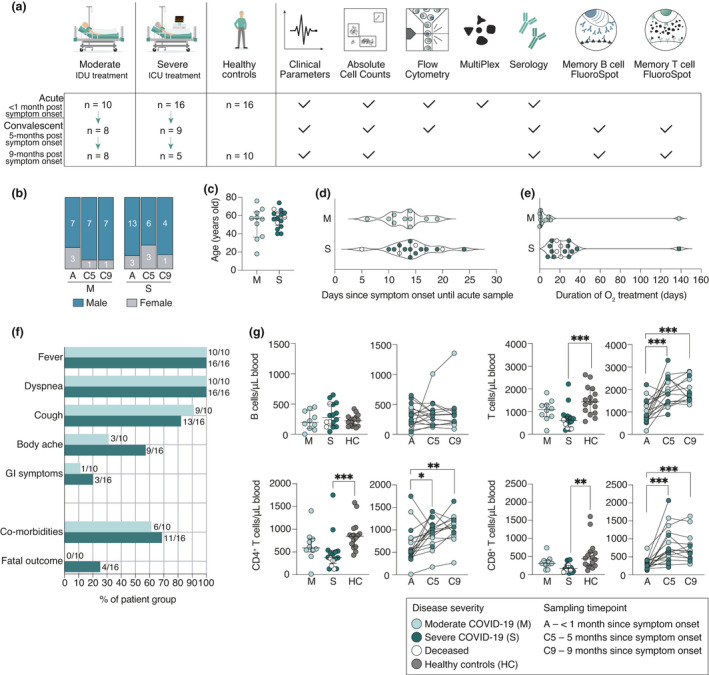
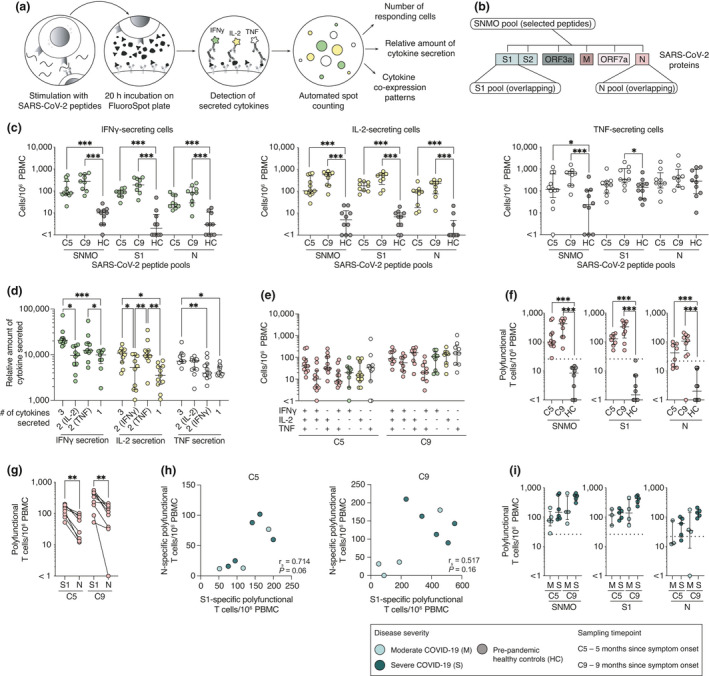
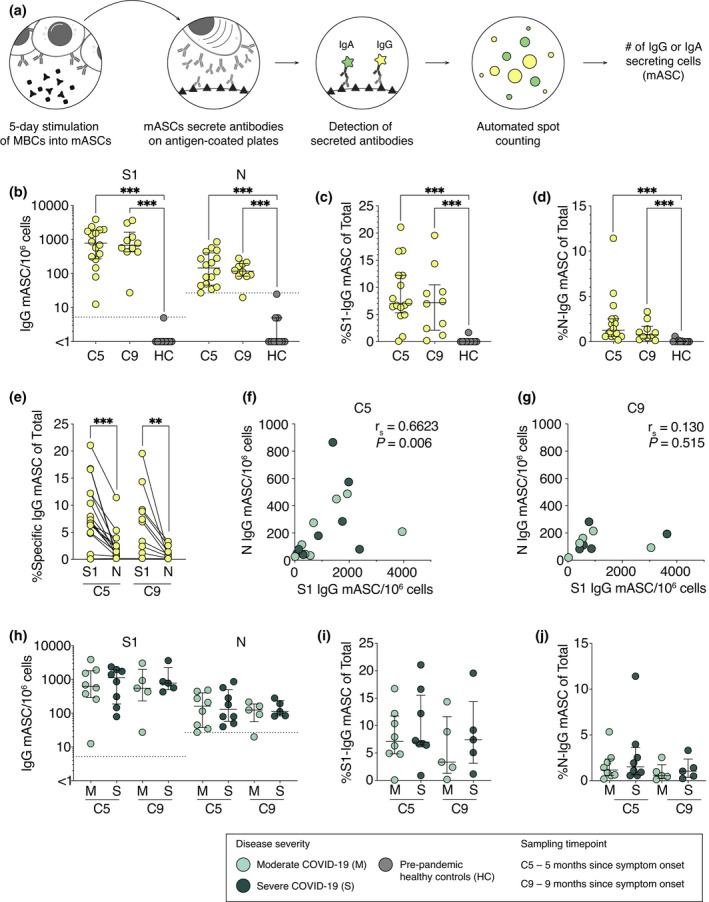
Here, we conducted a longitudinal study on hospitalised moderate and severe COVID-19 patients from the acute phase of disease into convalescence at 5 and 9 months post-symptom onset. Utilising flow cytometry, serological assays as well as B cell and T cell FluoroSpot assays, we assessed the magnitude and specificity of humoral and cellular immune responses during and after human SARS-CoV-2 infection.
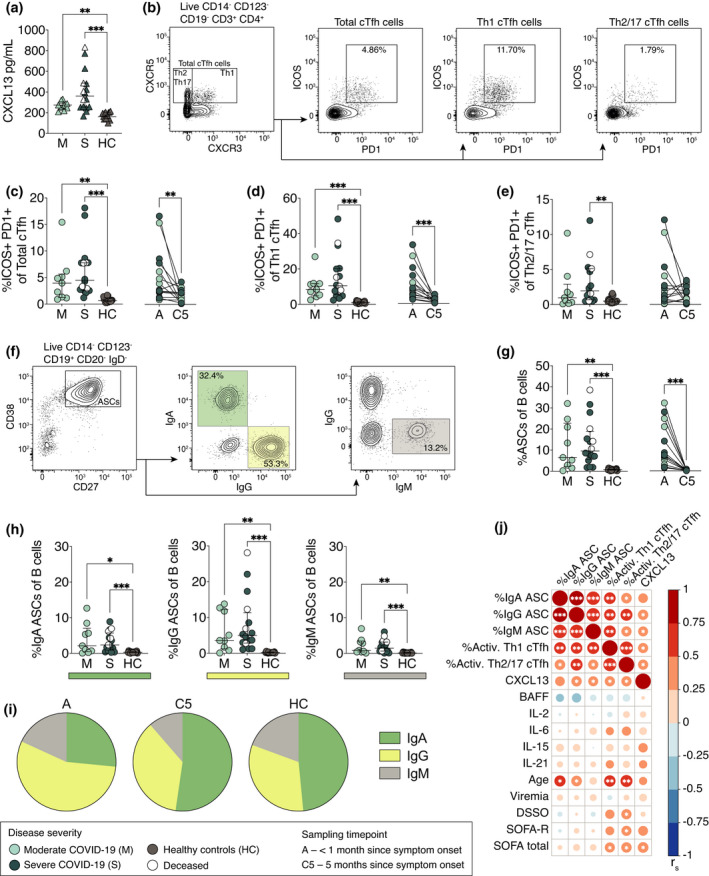
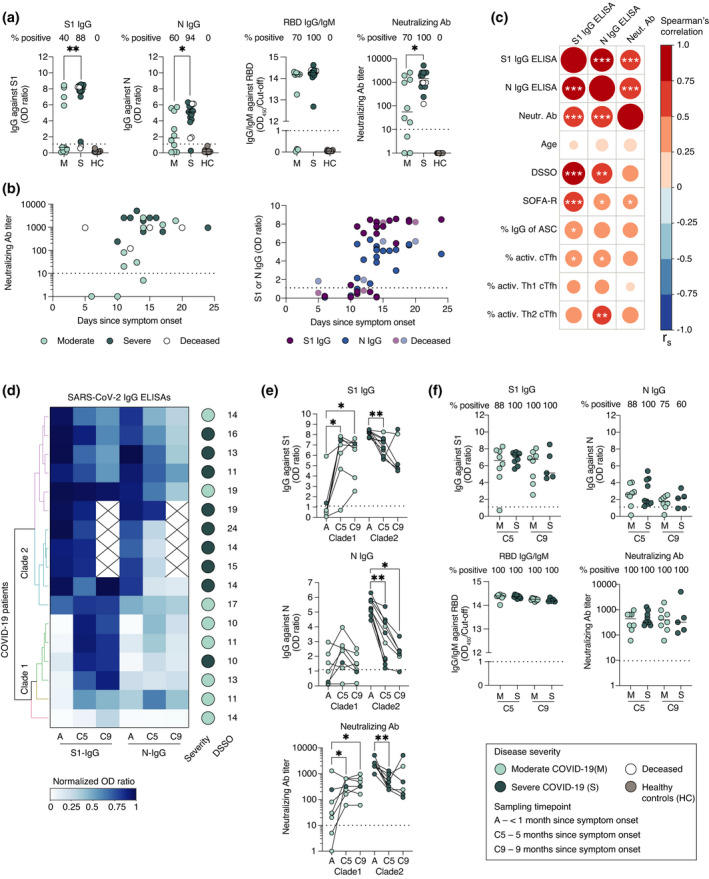
During acute COVID-19, we observed an increase in germinal centre activity, a substantial expansion of antibody-secreting cells and the generation of SARS-CoV-2-neutralising antibodies. Despite gradually decreasing antibody levels, we show persistent, neutralising antibody titres as well as robust specific memory B cell responses and polyfunctional T cell responses at 5 and 9 months after symptom onset in both moderate and severe COVID-19 patients.
Our findings describe the initiation and, importantly, persistence of cellular and humoral SARS-CoV-2-specific immunological memory in hospitalised COVID-19 patients long after recovery, likely contributing towards protection against reinfection.
新型冠状病毒肺炎(COVID-19)康复后,针对严重急性呼吸综合征冠状病毒2(SARS-CoV-2)的体液免疫和细胞免疫可能有助于预防再次感染或重症疾病。因此,在当前大流行期间,明确对SARS-CoV-2适应性免疫的启动和持续情况非常重要。
在此,我们对住院的中度和重度COVID-19患者进行了一项纵向研究,从疾病急性期开始,直至症状出现后5个月和9个月的恢复期。我们利用流式细胞术、血清学检测以及B细胞和T细胞荧光斑点检测,评估了人类SARS-CoV-2感染期间及之后体液免疫和细胞免疫反应的强度和特异性。
在急性COVID-19期间,我们观察到生发中心活性增加、抗体分泌细胞大量扩增以及SARS-CoV-2中和抗体的产生。尽管抗体水平逐渐下降,但我们发现中度和重度COVID-19患者在症状出现后5个月和9个月时,中和抗体滴度持续存在,同时伴有强大的特异性记忆B细胞反应和多功能T细胞反应。
我们的研究结果描述了住院COVID-19患者康复后很长时间内,细胞和体液SARS-CoV-2特异性免疫记忆的启动情况,重要的是,其持续性可能有助于预防再次感染。