Department of Paediatrics and Adolescent Medicine, Li Ka Shing Faculty of Medicine, The University of Hong Kong, Hong Kong, Hong Kong SAR, China.
State Key Laboratory for Emerging Infectious Diseases, Carol Yu Centre for Infection, Department of Microbiology, Li Ka Shing Faculty of Medicine, The University of Hong Kong, Hong Kong, Hong Kong SAR, China.
Front Immunol. 2021 Dec 17;12:797919. doi: 10.3389/fimmu.2021.797919. eCollection 2021.
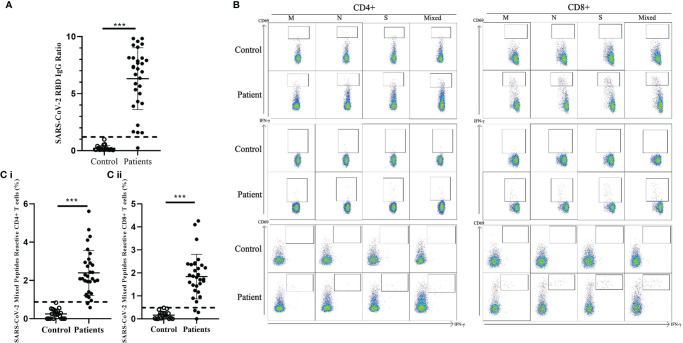
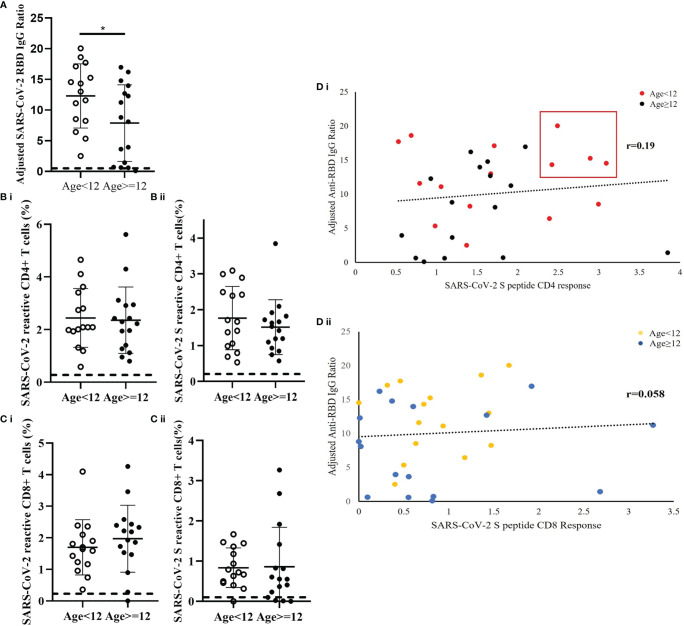
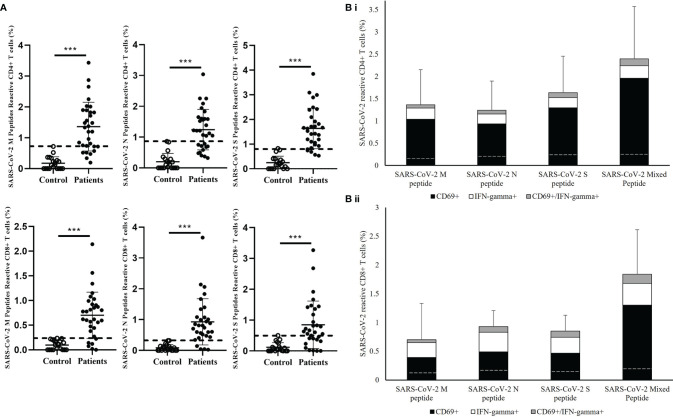
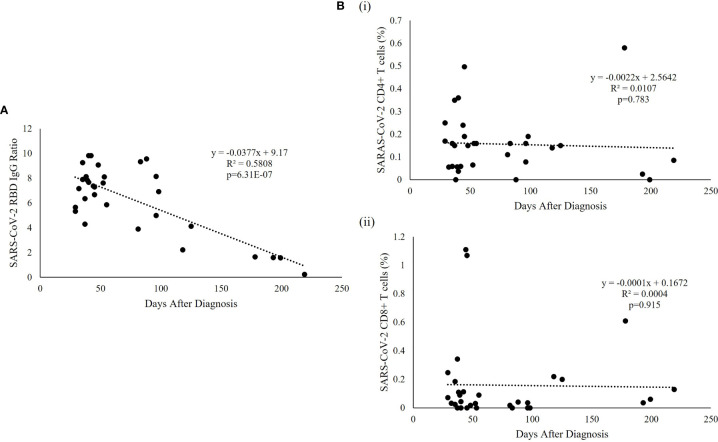
Persistence of protective immunity for SARS-CoV-2 is important against reinfection. Knowledge on SARS-CoV-2 immunity in pediatric patients is currently lacking. We opted to assess the SARS-CoV-2 adaptive immunity in recovered children and adolescents, addressing the pediatrics specific immunity towards COVID-19. Two independent assays were performed to investigate humoral and cellular immunological memory in pediatric convalescent COVID-19 patients. Specifically, RBD IgG, CD4+, and CD8+ T cell responses were identified and quantified in recovered children and adolescents. SARS-CoV-2-specific RBD IgG detected in recovered patients had a half-life of 121.6 days and estimated duration of 7.9 months compared with baseline levels in controls. The specific T cell response was shown to be independent of days after diagnosis. Both CD4+ and CD8+ T cells showed robust responses not only to spike (S) peptides (a main target of vaccine platforms) but were also similarly activated when stimulated by membrane (M) and nuclear (N) peptides. Importantly, we found the differences in the adaptive responses were correlated with the age of the recovered patients. The CD4+ T cell response to SARS-CoV-2 S peptide in children aged <12 years correlated with higher SARS-CoV-2 RBD IgG levels, suggesting the importance of a T cell-dependent humoral response in younger children under 12 years. Both cellular and humoral immunity against SARS-CoV-2 infections can be induced in pediatric patients. Our important findings provide fundamental knowledge on the immune memory responses to SARS-CoV-2 in recovered pediatric patients.
SARS-CoV-2 保护性免疫的持久性对于防止再次感染很重要。目前,关于儿科患者的 SARS-CoV-2 免疫知识还很缺乏。我们选择评估已康复的儿童和青少年的 SARS-CoV-2 适应性免疫,以解决针对 COVID-19 的儿科特异性免疫问题。我们进行了两项独立的检测,以研究儿科 COVID-19 康复患者的体液和细胞免疫记忆。具体来说,我们鉴定和量化了 SARS-CoV-2 特异性 RBD IgG、CD4+和 CD8+T 细胞反应。在已康复的患者中检测到的 SARS-CoV-2 特异性 RBD IgG 的半衰期为 121.6 天,与对照组的基线水平相比,估计持续时间为 7.9 个月。特定的 T 细胞反应表明与诊断后天数无关。CD4+和 CD8+T 细胞不仅对刺突(S)肽(疫苗平台的主要靶标)表现出强大的反应,而且当被膜(M)和核(N)肽刺激时,也同样被激活。重要的是,我们发现康复患者的适应性反应差异与年龄相关。年龄<12 岁的儿童对 SARS-CoV-2 S 肽的 CD4+T 细胞反应与 SARS-CoV-2 RBD IgG 水平升高相关,表明在 12 岁以下的儿童中,T 细胞依赖性体液反应很重要。儿科患者可诱导针对 SARS-CoV-2 的细胞和体液免疫。我们的重要发现为康复儿科患者对 SARS-CoV-2 的免疫记忆反应提供了基本的知识。