Jeoung Nam Ho, Jeong Ji Yun, Kang Bong Seok
Bio-Medical Research Institute, School of Medicine, Kyungpook National University, Daegu, Korea.
Department of Pharmaceutical Engineering, Daegu Catholic University, Gyeongsan, Korea.
J Cancer Prev. 2021 Jun 30;26(2):145-152. doi: 10.15430/JCP.2021.26.2.145.
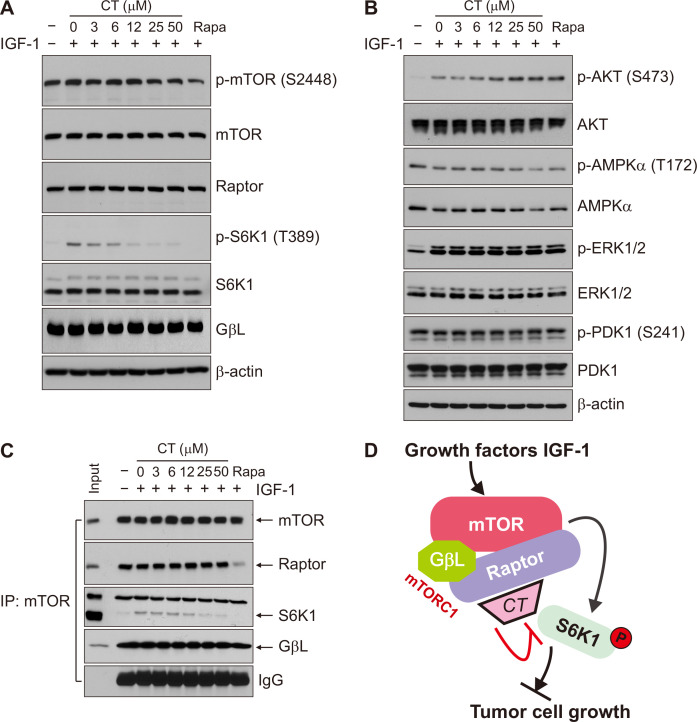
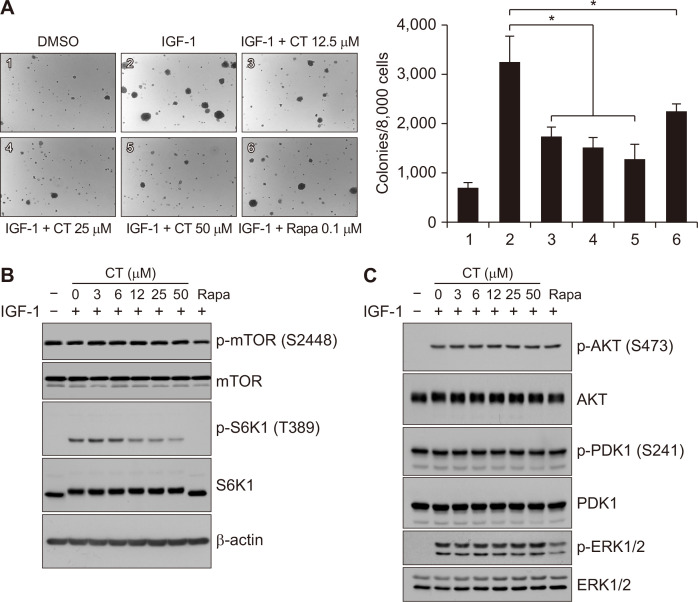
Cryptotanshinone is known for its inhibitory activity against tumorigenesis in various human cancer cells. However, exact mechanisms underlying the anticancer effects of cryptotanshinone are not fully elucidated. Here, we propose a plausible molecular mechanism, wherein cryptotanshinone represses rapamycin-sensitive mTORC1/S6K1 mediated cancer cell growth and cell transformation. We investigated the various effects of cryptotanshinone on the mTORC1/S6K1 axis, which is associated with the regulation of cell growth in response to nutritional and growth factor signals. We found that cryptotanshinone specifically inhibited the mTORC1-mediated phosphorylation of S6K1, which consequently suppressed the clonogenicity of SK-Hep1 cells and the neoplastic transformation of JB6 Cl41 cells induced by insulin-like growth factor-1. Finally, we observed that cryptotanshinone prevented S6K1 from binding to the Raptor/mTOR complex, rather than regulating mTOR and its upstream pathway. Overall, our findings provide a novel mechanism underlying anti-cancer effects cryptotanshinone targeting mTORC1 signaling, contributing to the development of anticancer agents involving metabolic cancer treatment.
隐丹参酮以其对多种人类癌细胞肿瘤发生的抑制活性而闻名。然而,隐丹参酮抗癌作用的确切机制尚未完全阐明。在此,我们提出一种合理的分子机制,即隐丹参酮抑制雷帕霉素敏感的mTORC1/S6K1介导的癌细胞生长和细胞转化。我们研究了隐丹参酮对mTORC1/S6K1轴的各种影响,该轴与响应营养和生长因子信号调节细胞生长有关。我们发现隐丹参酮特异性抑制mTORC1介导的S6K1磷酸化,从而抑制SK-Hep1细胞的克隆形成能力以及胰岛素样生长因子-1诱导的JB6 Cl41细胞的肿瘤转化。最后,我们观察到隐丹参酮阻止S6K1与Raptor/mTOR复合物结合,而不是调节mTOR及其上游途径。总体而言,我们的研究结果提供了隐丹参酮靶向mTORC1信号通路抗癌作用的新机制,有助于开发涉及代谢性癌症治疗的抗癌药物。