Whitehead Institute for Biomedical Research, Cambridge, MA 02142;
Howard Hughes Medical Institute, Massachusetts Institute of Technology, Cambridge, MA 02139.
Proc Natl Acad Sci U S A. 2017 Nov 7;114(45):11818-11825. doi: 10.1073/pnas.1716173114. Epub 2017 Oct 25.
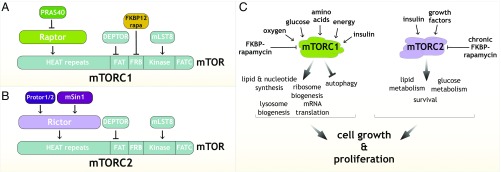
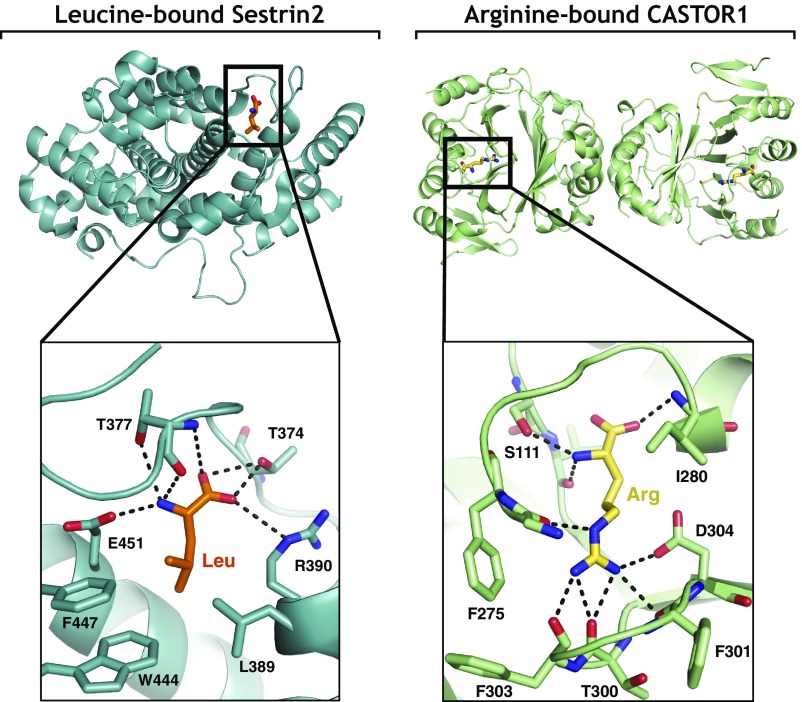
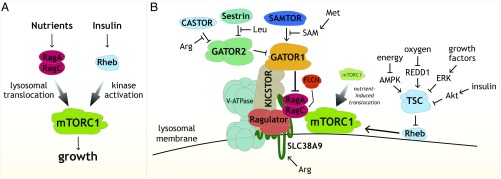
In my PNAS Inaugural Article, I describe the development of the mTOR field, starting with efforts to understand the mechanism of action of the drug rapamycin, which ∼25 y ago led to the discovery of the mTOR protein kinase. I focus on insights that we have contributed and on work that has been particularly influential to me, as well as provide some personal reflections and stories. We now appreciate that, as part of two distinct complexes, mTORC1 and mTORC2, mTOR is the major regulator of growth (mass accumulation) in animals and is the key link between the availability of nutrients in the environment and the control of most anabolic and catabolic processes. Nutrients signal to mTORC1 through the lysosome-associated Rag GTPases and their many regulators and associated cytosolic and lysosomal nutrient sensors. mTOR signaling is deregulated in common diseases, like cancer and epilepsy, and mTORC1 is a well-validated modulator of aging in multiple model organisms. There is significant excitement around using mTORC1 inhibitors to treat cancer and neurological disease and, potentially, to improve healthspan and lifespan.
在我的《美国科学院院刊》创刊文章中,我描述了 mTOR 领域的发展,从最初努力理解雷帕霉素这种药物的作用机制开始,雷帕霉素在大约 25 年前导致了 mTOR 蛋白激酶的发现。我专注于我们做出的见解,以及对我特别有影响力的工作,同时提供一些个人反思和故事。我们现在认识到,mTOR 作为两个不同复合物 mTORC1 和 mTORC2 的一部分,是动物生长(质量积累)的主要调节剂,是环境中营养物质可用性与大多数合成代谢和分解代谢过程控制之间的关键联系。营养物质通过溶酶体相关的 Rag GTPases 及其许多调节剂以及相关的细胞质和溶酶体营养传感器向 mTORC1 发出信号。mTOR 信号在癌症和癫痫等常见疾病中失调,mTORC1 是多种模式生物中衰老的一个经过良好验证的调节剂。使用 mTORC1 抑制剂治疗癌症和神经疾病,以及可能改善健康寿命和寿命,这方面令人非常兴奋。