• 文献检索
  • 文档翻译
  • 深度研究
  • 学术资讯
  • Suppr Zotero 插件Zotero 插件
  • 邀请有礼
  • 套餐&价格
  • 历史记录
应用&插件
Suppr Zotero 插件Zotero 插件浏览器插件Mac 客户端Windows 客户端微信小程序
定价
高级版会员购买积分包购买API积分包
服务
文献检索文档翻译深度研究API 文档MCP 服务
关于我们
关于 Suppr公司介绍联系我们用户协议隐私条款
关注我们

Suppr 超能文献

核心技术专利:CN118964589B侵权必究
粤ICP备2023148730 号-1Suppr @ 2026

文献检索

告别复杂PubMed语法,用中文像聊天一样搜索,搜遍4000万医学文献。AI智能推荐,让科研检索更轻松。

立即免费搜索

文件翻译

保留排版,准确专业,支持PDF/Word/PPT等文件格式,支持 12+语言互译。

免费翻译文档

深度研究

AI帮你快速写综述,25分钟生成高质量综述,智能提取关键信息,辅助科研写作。

立即免费体验

以模拟退火算法进行哈里斯鹰优化作为一种用于COVID-19 CT扫描筛查的深度特征选择方法。

Harris Hawks optimisation with Simulated Annealing as a deep feature selection method for screening of COVID-19 CT-scans.

作者信息

Bandyopadhyay Rajarshi, Basu Arpan, Cuevas Erik, Sarkar Ram

机构信息

Department of Computer Science and Engineering, Jadavpur University, Kolkata 700032, India.

Departamento de Electrónica, Universidad de Guadalajara, CUCEI, Av. Revolución 1500, Guadalajara, Jal, Mexico.

出版信息

Appl Soft Comput. 2021 Nov;111:107698. doi: 10.1016/j.asoc.2021.107698. Epub 2021 Jul 14.

DOI:10.1016/j.asoc.2021.107698
PMID:34276262
原文链接:https://pmc.ncbi.nlm.nih.gov/articles/PMC8277546/
Abstract

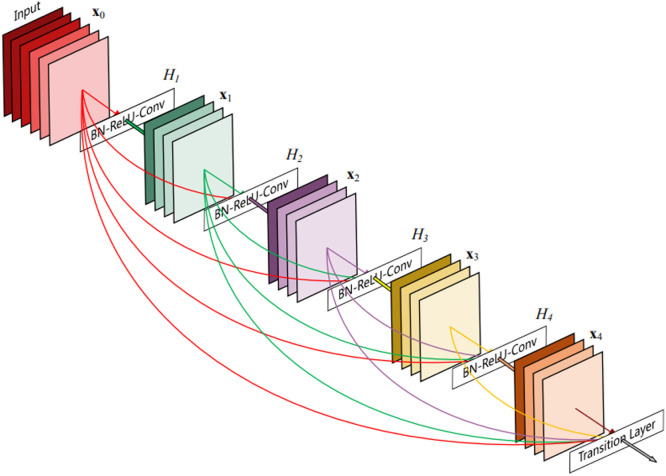
Coronavirus disease 2019 (COVID-19) is a contagious disease caused by severe acute respiratory syndrome coronavirus 2 (SARS-CoV-2). It may cause severe ailments in infected individuals. The more severe cases may lead to death. Automated methods which can detect COVID-19 in radiological images can help in the screening of patients. In this work, a two-stage pipeline composed of feature extraction followed by feature selection (FS) for the detection of COVID-19 from CT scan images is proposed. For feature extraction, a state-of-the-art Convolutional Neural Network (CNN) model based on the DenseNet architecture is utilised. To eliminate the non-informative and redundant features, the meta-heuristic called Harris Hawks optimisation (HHO) algorithm combined with Simulated Annealing (SA) and Chaotic initialisation is employed. The proposed approach is evaluated on the SARS-COV-2 CT-Scan dataset which consists of 2482 CT-scans. Without the Chaotic initialisation and the SA, the method gives an accuracy of around 98.42% which further increases to 98.85% on the inclusion of the two and thus delivers better performance than many state-of-the-art methods and various meta-heuristic based FS algorithms. Also, comparison has been drawn with many hybrid variants of meta-heuristic algorithms. Although HHO falls behind a few of the hybrid variants, when Chaotic initialisation and SA are incorporated into it, the proposed algorithm performs better than any other algorithm with which comparison has been drawn. The proposed algorithm decreases the number of features selected by around 75% , which is better than most of the other algorithms.

摘要

2019冠状病毒病(COVID-19)是一种由严重急性呼吸综合征冠状病毒2(SARS-CoV-2)引起的传染病。它可能导致感染者出现严重疾病。更严重的病例可能会导致死亡。能够在放射图像中检测COVID-19的自动化方法有助于患者的筛查。在这项工作中,提出了一种两阶段的流程,包括特征提取,然后是用于从CT扫描图像中检测COVID-19的特征选择(FS)。对于特征提取,使用了基于密集连接网络(DenseNet)架构的先进卷积神经网络(CNN)模型。为了消除无信息和冗余特征,采用了结合模拟退火(SA)和混沌初始化的元启发式算法——哈里斯鹰优化(HHO)算法。所提出的方法在包含2482次CT扫描的SARS-COV-2 CT扫描数据集上进行了评估。在没有混沌初始化和SA的情况下,该方法的准确率约为98.42%,在加入这两者后进一步提高到98.85%,因此比许多先进方法和各种基于元启发式的FS算法具有更好的性能。此外,还与许多元启发式算法的混合变体进行了比较。虽然HHO落后于一些混合变体,但当将混沌初始化和SA纳入其中时,所提出的算法比与之比较的任何其他算法表现都更好。所提出的算法将所选特征的数量减少了约75%,这比大多数其他算法都要好。
https://cdn.ncbi.nlm.nih.gov/pmc/blobs/7532/8277546/1e8cdc7f1a0e/gr6_lrg.jpg
https://cdn.ncbi.nlm.nih.gov/pmc/blobs/7532/8277546/52d8efd15316/gr1_lrg.jpg
https://cdn.ncbi.nlm.nih.gov/pmc/blobs/7532/8277546/29c2a6db0a80/fx1001_lrg.jpg
https://cdn.ncbi.nlm.nih.gov/pmc/blobs/7532/8277546/d8765761c938/gr2_lrg.jpg
https://cdn.ncbi.nlm.nih.gov/pmc/blobs/7532/8277546/d45c72c68da5/gr3_lrg.jpg
https://cdn.ncbi.nlm.nih.gov/pmc/blobs/7532/8277546/6ed5e17624af/gr4_lrg.jpg
https://cdn.ncbi.nlm.nih.gov/pmc/blobs/7532/8277546/a0694d490a52/gr5_lrg.jpg
https://cdn.ncbi.nlm.nih.gov/pmc/blobs/7532/8277546/1e8cdc7f1a0e/gr6_lrg.jpg
https://cdn.ncbi.nlm.nih.gov/pmc/blobs/7532/8277546/52d8efd15316/gr1_lrg.jpg
https://cdn.ncbi.nlm.nih.gov/pmc/blobs/7532/8277546/29c2a6db0a80/fx1001_lrg.jpg
https://cdn.ncbi.nlm.nih.gov/pmc/blobs/7532/8277546/d8765761c938/gr2_lrg.jpg
https://cdn.ncbi.nlm.nih.gov/pmc/blobs/7532/8277546/d45c72c68da5/gr3_lrg.jpg
https://cdn.ncbi.nlm.nih.gov/pmc/blobs/7532/8277546/6ed5e17624af/gr4_lrg.jpg
https://cdn.ncbi.nlm.nih.gov/pmc/blobs/7532/8277546/a0694d490a52/gr5_lrg.jpg
https://cdn.ncbi.nlm.nih.gov/pmc/blobs/7532/8277546/1e8cdc7f1a0e/gr6_lrg.jpg

相似文献

1
Harris Hawks optimisation with Simulated Annealing as a deep feature selection method for screening of COVID-19 CT-scans.以模拟退火算法进行哈里斯鹰优化作为一种用于COVID-19 CT扫描筛查的深度特征选择方法。
Appl Soft Comput. 2021 Nov;111:107698. doi: 10.1016/j.asoc.2021.107698. Epub 2021 Jul 14.
2
COVID-19 detection from CT scans using a two-stage framework.使用两阶段框架从CT扫描中检测新型冠状病毒肺炎
Expert Syst Appl. 2022 May 1;193:116377. doi: 10.1016/j.eswa.2021.116377. Epub 2022 Jan 1.
3
A CNN-LSTM network with multi-level feature extraction-based approach for automated detection of coronavirus from CT scan and X-ray images.一种基于多级特征提取的卷积神经网络-长短期记忆网络,用于从CT扫描和X光图像中自动检测冠状病毒。
Appl Soft Comput. 2021 Dec;113:107918. doi: 10.1016/j.asoc.2021.107918. Epub 2021 Sep 27.
4
Enhanced Harris hawks optimization-based fuzzy k-nearest neighbor algorithm for diagnosis of Alzheimer's disease.基于增强型哈里斯鹰优化的模糊 K-最近邻算法在阿尔茨海默病诊断中的应用。
Comput Biol Med. 2023 Oct;165:107392. doi: 10.1016/j.compbiomed.2023.107392. Epub 2023 Aug 31.
5
Chaotic Harris Hawks Optimization with Quasi-Reflection-Based Learning: An Application to Enhance CNN Design.基于拟反射学习的混沌哈里斯鹰优化:在增强 CNN 设计中的应用
Sensors (Basel). 2021 Oct 7;21(19):6654. doi: 10.3390/s21196654.
6
A bi-stage feature selection approach for COVID-19 prediction using chest CT images.一种使用胸部CT图像进行COVID-19预测的双阶段特征选择方法。
Appl Intell (Dordr). 2021;51(12):8985-9000. doi: 10.1007/s10489-021-02292-8. Epub 2021 Apr 19.
7
An improved harris hawks optimization algorithm based on chaotic sequence and opposite elite learning mechanism.基于混沌序列和反向精英学习机制的改进型哈里斯鹰优化算法。
PLoS One. 2023 Feb 22;18(2):e0281636. doi: 10.1371/journal.pone.0281636. eCollection 2023.
8
MRFGRO: a hybrid meta-heuristic feature selection method for screening COVID-19 using deep features.MRFGRO:一种混合元启发式特征选择方法,用于使用深度特征筛选 COVID-19。
Sci Rep. 2021 Dec 15;11(1):24065. doi: 10.1038/s41598-021-02731-z.
9
CovH2SD: A COVID-19 detection approach based on Harris Hawks Optimization and stacked deep learning.CovH2SD:一种基于哈里斯鹰优化算法和堆叠深度学习的新冠病毒检测方法。
Expert Syst Appl. 2021 Dec 30;186:115805. doi: 10.1016/j.eswa.2021.115805. Epub 2021 Sep 5.
10
Hybrid Harris hawks optimization with cuckoo search for drug design and discovery in chemoinformatics.混合哈里斯鹰优化与布谷鸟搜索在化学生物信息学中的药物设计与发现。
Sci Rep. 2020 Sep 2;10(1):14439. doi: 10.1038/s41598-020-71502-z.

引用本文的文献

1
Nature-Inspired Intelligent Computing: A Comprehensive Survey.受自然启发的智能计算:全面综述
Research (Wash D C). 2024 Aug 16;7:0442. doi: 10.34133/research.0442. eCollection 2024.
2
PPIGCF: A Protein-Protein Interaction-Based Gene Correlation Filter for Optimal Gene Selection.PPIGCF:一种基于蛋白质相互作用的基因关联滤波器,用于最优基因选择。
Genes (Basel). 2023 May 10;14(5):1063. doi: 10.3390/genes14051063.
3
Squid Game Optimizer (SGO): a novel metaheuristic algorithm.鱿鱼游戏优化器(SGO):一种新颖的元启发式算法。

本文引用的文献

1
OptCoNet: an optimized convolutional neural network for an automatic diagnosis of COVID-19.OptCoNet:一种用于新冠病毒疾病自动诊断的优化卷积神经网络。
Appl Intell (Dordr). 2021;51(3):1351-1366. doi: 10.1007/s10489-020-01904-z. Epub 2020 Sep 21.
2
CovidGAN: Data Augmentation Using Auxiliary Classifier GAN for Improved Covid-19 Detection.CovidGAN:使用辅助分类器生成对抗网络进行数据增强以改进新冠病毒检测
IEEE Access. 2020 May 14;8:91916-91923. doi: 10.1109/ACCESS.2020.2994762. eCollection 2020.
3
An optimized deep learning architecture for the diagnosis of COVID-19 disease based on gravitational search optimization.
Sci Rep. 2023 Apr 1;13(1):5373. doi: 10.1038/s41598-023-32465-z.
4
An augmented Snake Optimizer for diseases and COVID-19 diagnosis.一种用于疾病和新冠肺炎诊断的增强型蛇优化器。
Biomed Signal Process Control. 2023 Jul;84:104718. doi: 10.1016/j.bspc.2023.104718. Epub 2023 Feb 17.
5
Feature selection of pre-trained shallow CNN using the QLESCA optimizer: COVID-19 detection as a case study.使用QLESCA优化器对预训练浅层卷积神经网络进行特征选择:以新冠病毒疾病检测为例
Appl Intell (Dordr). 2023 Feb 6:1-23. doi: 10.1007/s10489-022-04446-8.
6
Detection of Covid-19 and other pneumonia cases from CT and X-ray chest images using deep learning based on feature reuse residual block and depthwise dilated convolutions neural network.基于特征重用残差块和深度扩张卷积神经网络的深度学习从胸部CT和X光图像中检测新冠病毒肺炎及其他肺炎病例
Appl Soft Comput. 2023 Jan;133:109906. doi: 10.1016/j.asoc.2022.109906. Epub 2022 Dec 7.
7
Hybridizing slime mould algorithm with simulated annealing algorithm: a hybridized statistical approach for numerical and engineering design problems.将黏菌算法与模拟退火算法相结合:一种用于数值和工程设计问题的混合统计方法。
Complex Intell Systems. 2023;9(2):1525-1582. doi: 10.1007/s40747-022-00852-0. Epub 2022 Sep 21.
8
TOPSIS aided ensemble of CNN models for screening COVID-19 in chest X-ray images.基于 TOPSIS 的 CNN 模型集成用于胸部 X 射线图像中的 COVID-19 筛查。
Sci Rep. 2022 Sep 14;12(1):15409. doi: 10.1038/s41598-022-18463-7.
9
COVID-19 detection from CT scans using a two-stage framework.使用两阶段框架从CT扫描中检测新型冠状病毒肺炎
Expert Syst Appl. 2022 May 1;193:116377. doi: 10.1016/j.eswa.2021.116377. Epub 2022 Jan 1.
10
MRFGRO: a hybrid meta-heuristic feature selection method for screening COVID-19 using deep features.MRFGRO:一种混合元启发式特征选择方法,用于使用深度特征筛选 COVID-19。
Sci Rep. 2021 Dec 15;11(1):24065. doi: 10.1038/s41598-021-02731-z.
一种基于引力搜索优化的用于新冠肺炎疾病诊断的优化深度学习架构。
Appl Soft Comput. 2021 Jan;98:106742. doi: 10.1016/j.asoc.2020.106742. Epub 2020 Sep 22.
4
COVID-19 image classification using deep features and fractional-order marine predators algorithm.使用深度特征和分数阶海洋捕食者算法进行 COVID-19 图像分类。
Sci Rep. 2020 Sep 21;10(1):15364. doi: 10.1038/s41598-020-71294-2.
5
COVID-19 detection in CT images with deep learning: A voting-based scheme and cross-datasets analysis.基于深度学习的CT图像中COVID-19检测:一种基于投票的方案及跨数据集分析
Inform Med Unlocked. 2020;20:100427. doi: 10.1016/j.imu.2020.100427. Epub 2020 Sep 14.
6
Contrastive Cross-Site Learning With Redesigned Net for COVID-19 CT Classification.基于重新设计的网络的 COVID-19 CT 分类对比跨站点学习。
IEEE J Biomed Health Inform. 2020 Oct;24(10):2806-2813. doi: 10.1109/JBHI.2020.3023246. Epub 2020 Sep 10.
7
Recognition of COVID-19 disease from X-ray images by hybrid model consisting of 2D curvelet transform, chaotic salp swarm algorithm and deep learning technique.通过由二维曲波变换、混沌樽海鞘群算法和深度学习技术组成的混合模型从X射线图像中识别COVID-19疾病。
Chaos Solitons Fractals. 2020 Nov;140:110071. doi: 10.1016/j.chaos.2020.110071. Epub 2020 Jul 3.
8
Iteratively Pruned Deep Learning Ensembles for COVID-19 Detection in Chest X-rays.用于胸部X光片中COVID-19检测的迭代剪枝深度学习集成模型
IEEE Access. 2020;8:115041-115050. doi: 10.1109/access.2020.3003810. Epub 2020 Jun 19.
9
Classification of the COVID-19 infected patients using DenseNet201 based deep transfer learning.基于 DenseNet201 的深度迁移学习对 COVID-19 感染患者进行分类。
J Biomol Struct Dyn. 2021 Sep;39(15):5682-5689. doi: 10.1080/07391102.2020.1788642. Epub 2020 Jul 3.
10
New machine learning method for image-based diagnosis of COVID-19.基于图像的 COVID-19 诊断的新机器学习方法。
PLoS One. 2020 Jun 26;15(6):e0235187. doi: 10.1371/journal.pone.0235187. eCollection 2020.