Chen Kui, Gorgen Andre, Ding Avrilynn, Du Lulu, Jiang Keruo, Ding Yu, Sapisochin Gonzalo, Ghanekar Anand
Toronto General Hospital Research InstituteUniversity Health NetworkTorontoONCanada.
Division of General SurgeryUniversity Health NetworkTorontoONCanada.
Hepatol Commun. 2021 Mar 11;5(7):1310-1328. doi: 10.1002/hep4.1701. eCollection 2021 Jul.
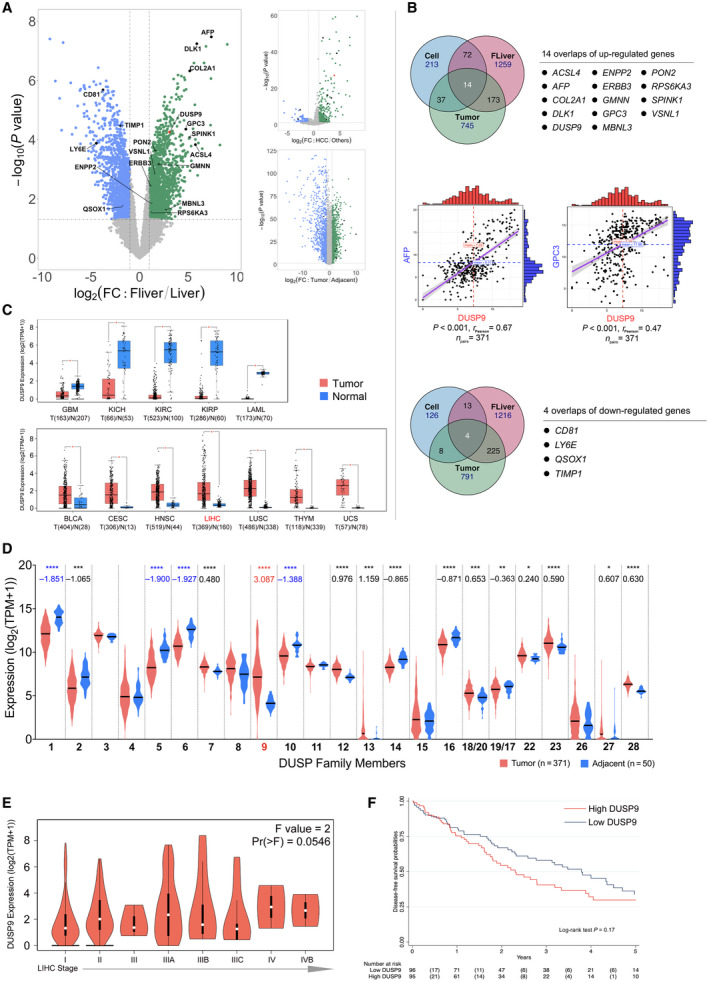
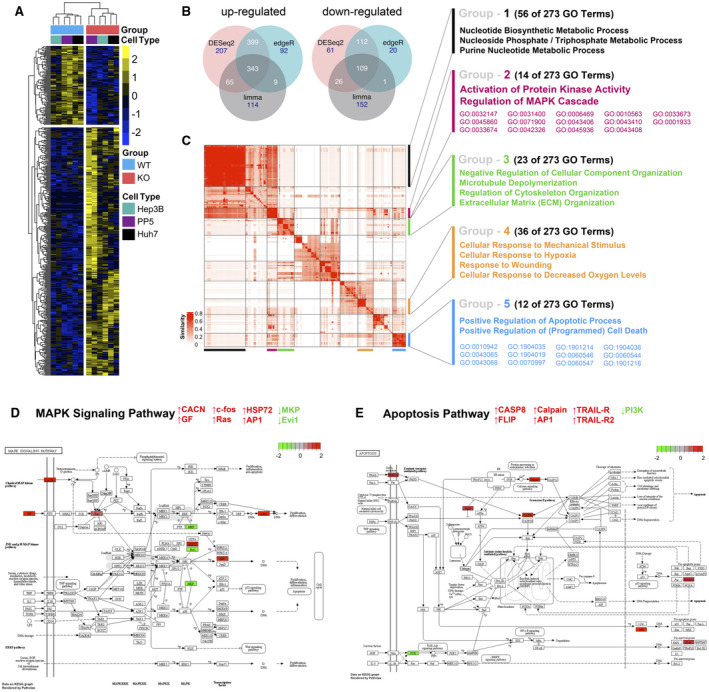
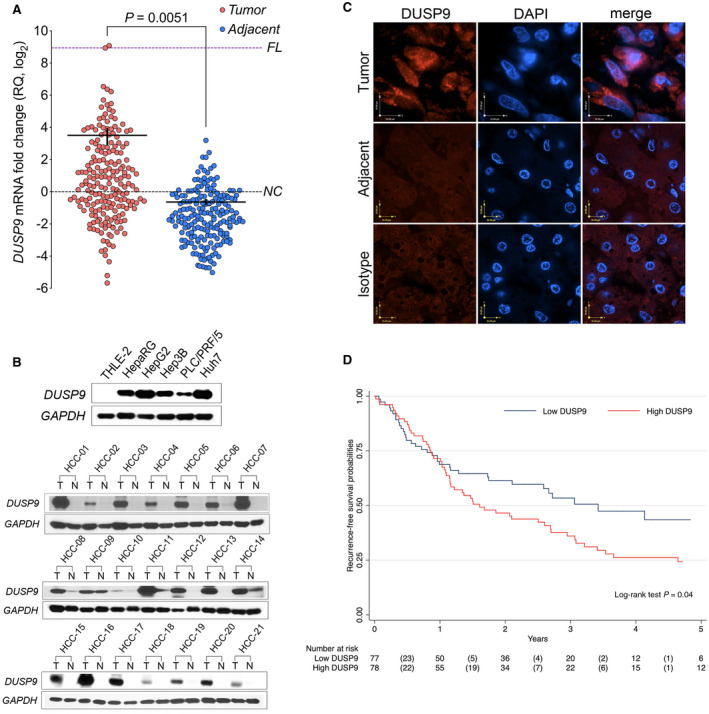
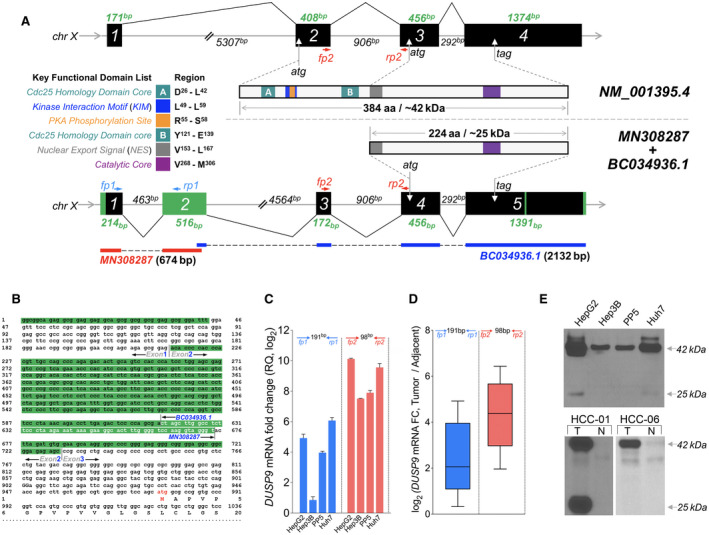
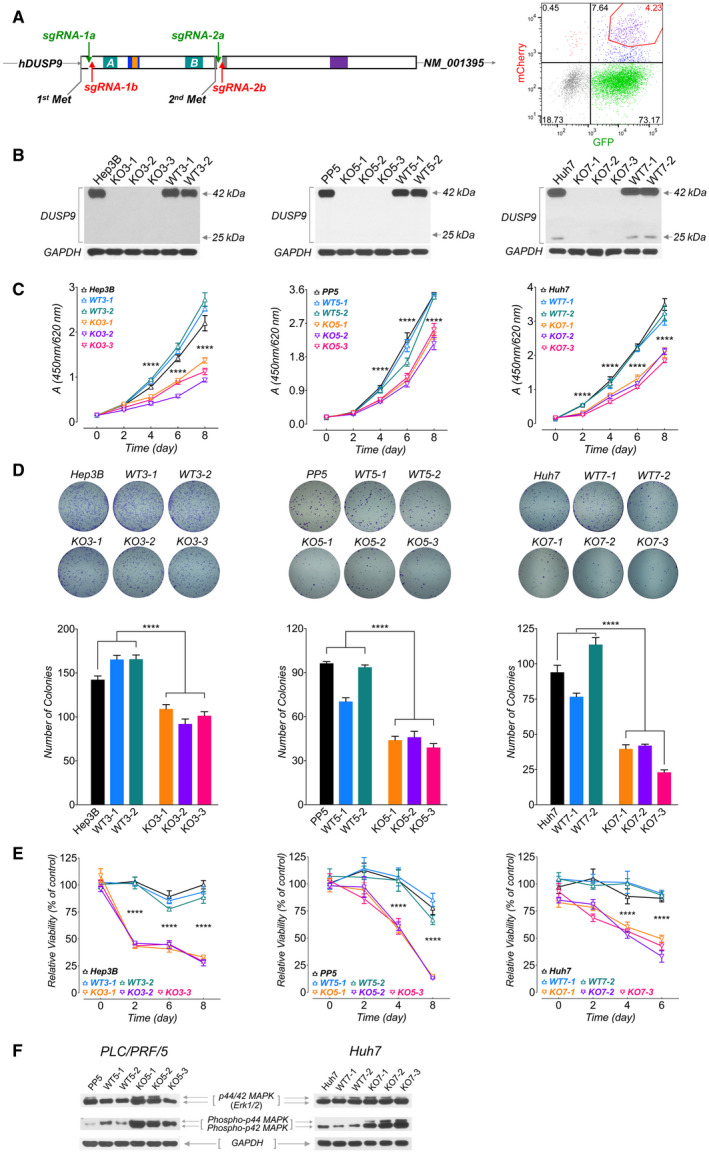
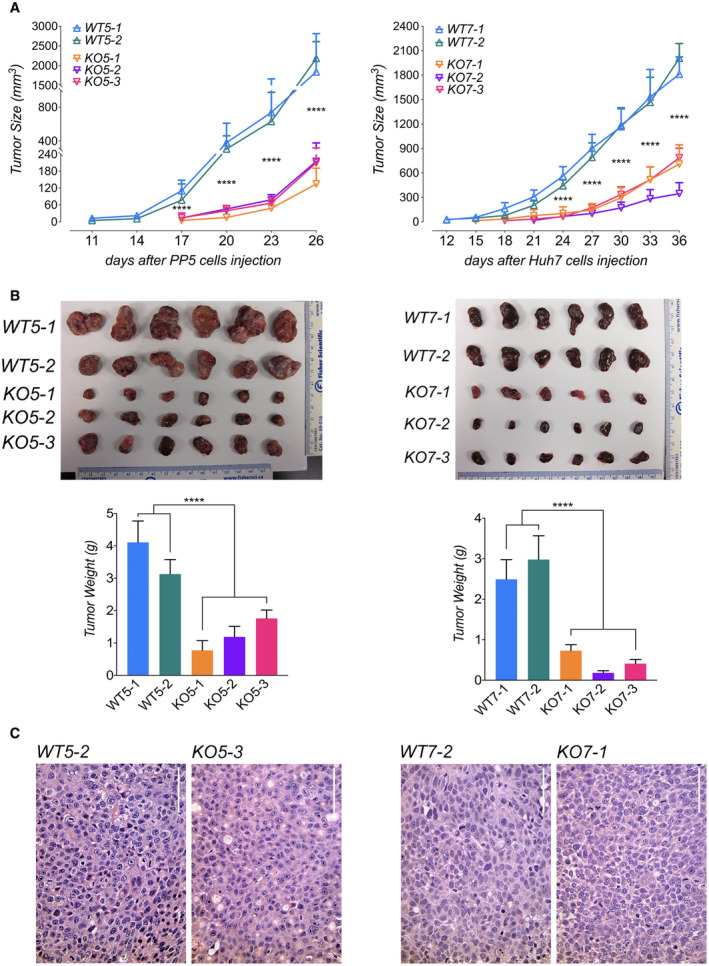
Hepatocellular carcinoma (CC) is a common and deadly cancer with complex molecular pathogenesis. Little is known about dual-specificity phosphatases (DUSPs) in HCC. We investigated DUSP9 expression in human HCC, associations between DUSP9 and patient outcomes, and effects of altered DUSP9 expression on HCC biology. We studied public data sets as well as 196 patients at our institution who had HCC resections. Quantitative real-time reverse transcription polymerase chain reaction and western blot demonstrated that expression was increased >10-fold in HCC compared to adjacent liver and healthy controls ( = 0.005). Kaplan-Meier and multivariable regression analyses revealed that higher expression was associated with shorter disease-free survival (high DUSP9, 1.6; 95% confidence interval, 0.9-2.3 vs. low DUSP9, 3.4; 95% confidence interval, 1.8-5.0 years; = 0.04) and increased risk of recurrence (hazard ratio 1.55; 95% confidence interval, 1.01-2.67; = 0.05) after resection. complementary DNA (cDNA) was cloned using rapid amplification of cDNA ends, revealing two DUSP9 isoforms in human HCC cells. Studies of transcriptional regulation using promoter-luciferase reporter constructs suggested that DUSP9 transcription is regulated by E26 transformation-specific transcription factors. Proliferation of hepatic cells was enhanced by lentiviral-mediated overexpression of DUSP9. In contrast, DUSP9 knockout HCC cells generated using clustered regularly interspaced short palindromic repeats (CRISPR) demonstrated decreased HCC proliferation and doxorubicin resistance and impaired xenograft growth . RNA sequencing, gene set enrichment, and network/pathway analysis revealed that DUSP9 knockout is associated with activation of protein kinase activity and apoptosis. DUSP9 regulates cell proliferation and predicts recurrence after surgery in HCC. DUSP9 may represent a novel prognostic candidate and therapeutic target. Additional studies are warranted to further explore the role and regulation of DUSP9 in HCC.
肝细胞癌(HCC)是一种常见且致命的癌症,其分子发病机制复杂。人们对HCC中的双特异性磷酸酶(DUSPs)了解甚少。我们研究了DUSP9在人类HCC中的表达、DUSP9与患者预后的关联以及DUSP9表达改变对HCC生物学特性的影响。我们研究了公共数据集以及本机构196例接受HCC切除术的患者。定量实时逆转录聚合酶链反应和蛋白质印迹表明,与相邻肝脏组织和健康对照相比,HCC中DUSP9的表达增加了10倍以上(P = 0.005)。Kaplan-Meier分析和多变量回归分析显示,较高的DUSP9表达与较短的无病生存期相关(高DUSP9组,1.6年;95%置信区间,0.9 - 2.3年 vs. 低DUSP9组,3.4年;95%置信区间,1.8 - 5.0年;P = 0.04),并且切除术后复发风险增加(风险比1.55;95%置信区间,1.01 - 2.67;P = 0.05)。使用cDNA末端快速扩增技术克隆互补DNA(cDNA),发现在人类HCC细胞中有两种DUSP9异构体。使用启动子 - 荧光素酶报告基因构建体进行转录调控研究表明,DUSP9转录受E26转化特异性转录因子调控。慢病毒介导的DUSP9过表达增强了肝细胞的增殖。相反,使用成簇规律间隔短回文重复序列(CRISPR)产生的DUSP9基因敲除HCC细胞显示HCC增殖减少、对多柔比星耐药性降低且异种移植生长受损。RNA测序、基因集富集分析以及网络/通路分析表明,DUSP9基因敲除与蛋白激酶活性激活和细胞凋亡相关。DUSP9调节细胞增殖并预测HCC术后复发。DUSP9可能代表一种新的预后候选指标和治疗靶点。有必要进行更多研究以进一步探索DUSP9在HCC中的作用和调控机制。