National Veterinary Services Laboratories, Veterinary Services, Animal and Plant Health Inspection Service, United States Department of Agriculture, Ames, IA, United States of America.
Department of Animal Medicine, College of Veterinary Medicine, Benha University, Benha, Egypt.
PLoS One. 2021 Jul 19;16(7):e0254998. doi: 10.1371/journal.pone.0254998. eCollection 2021.
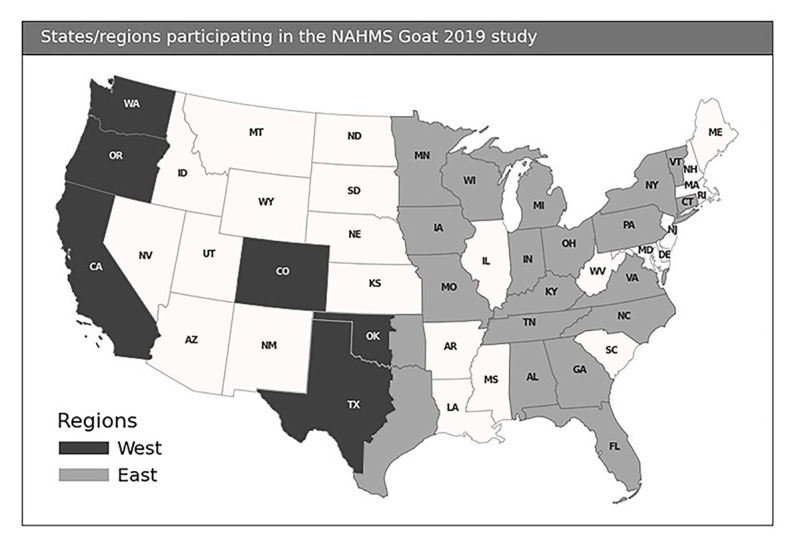
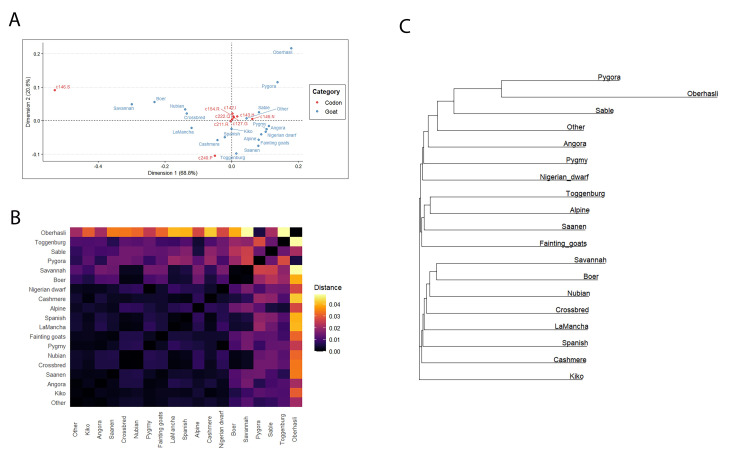
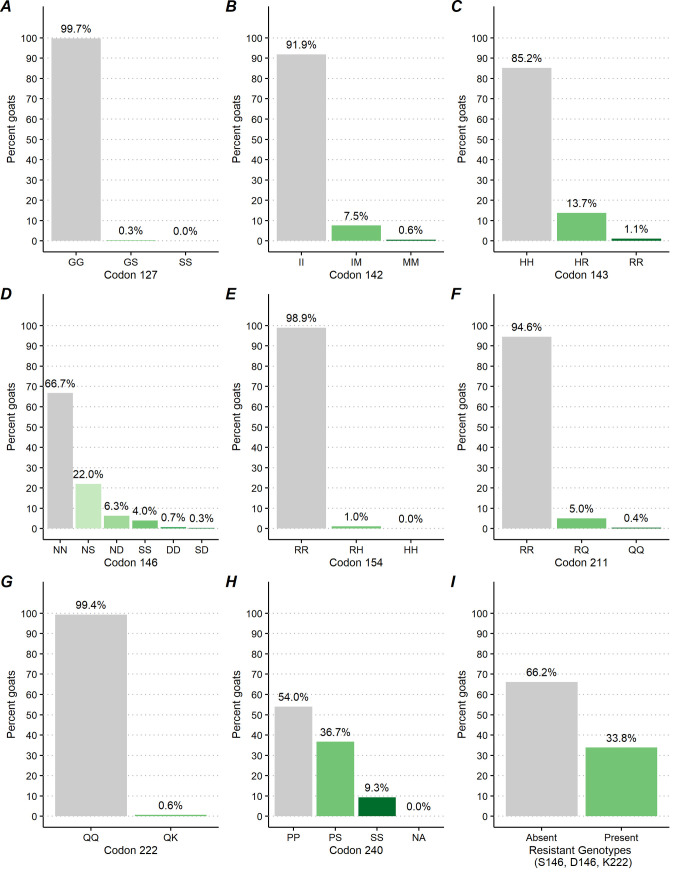
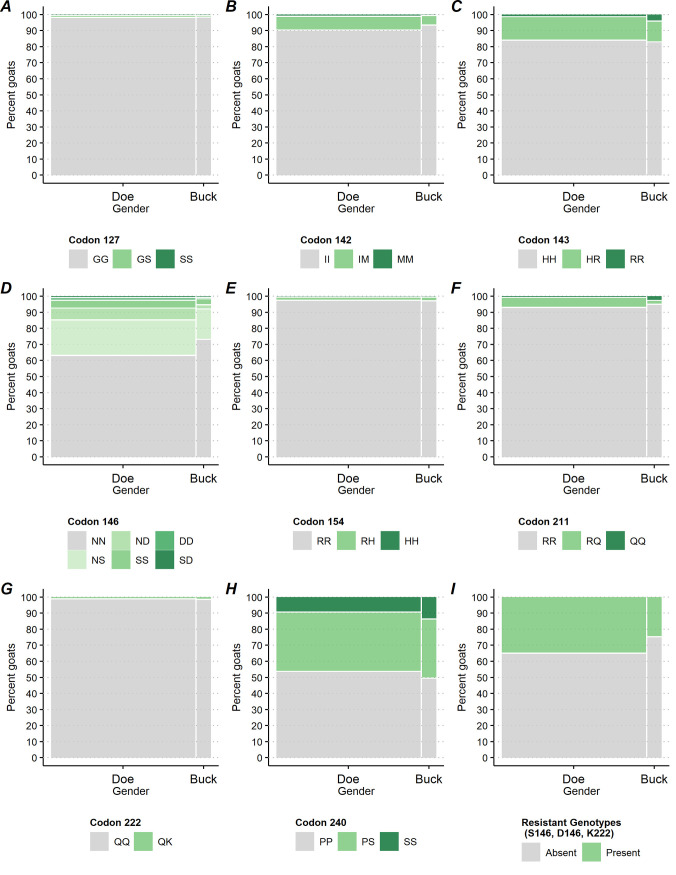
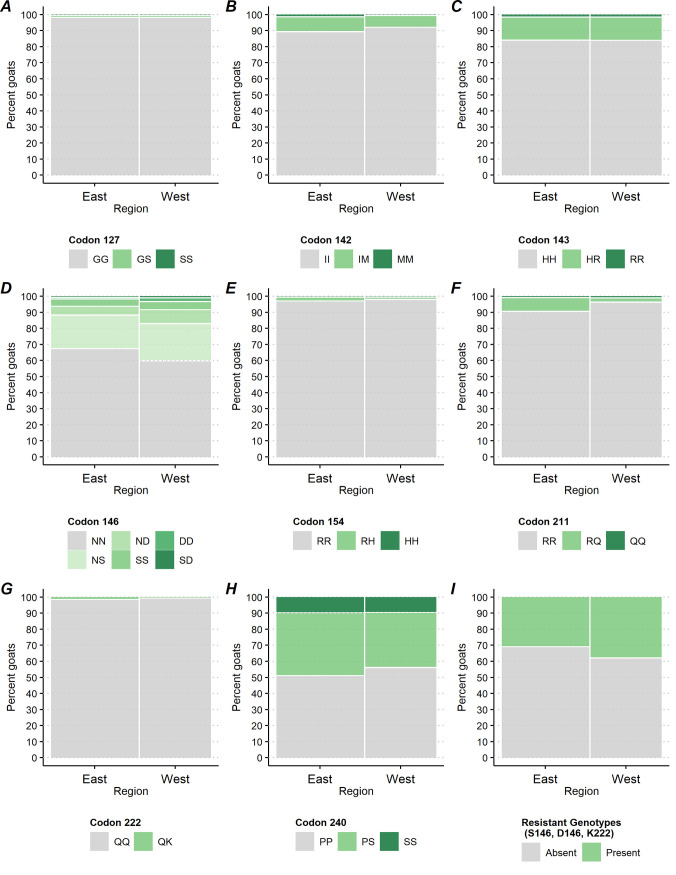
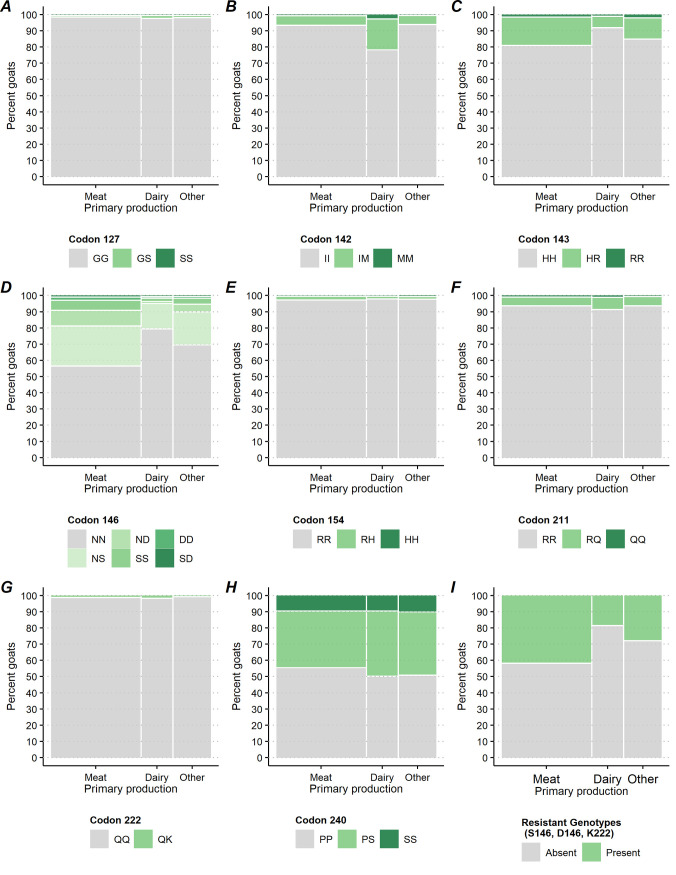
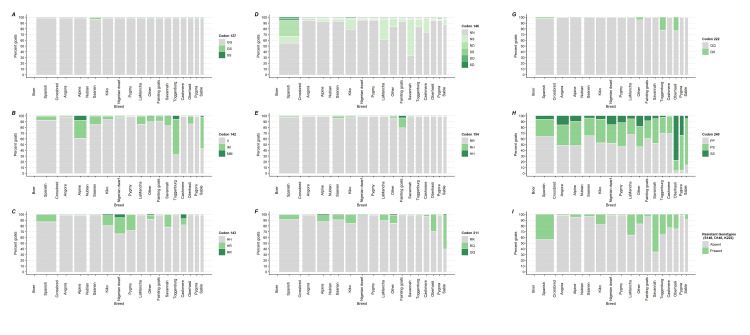
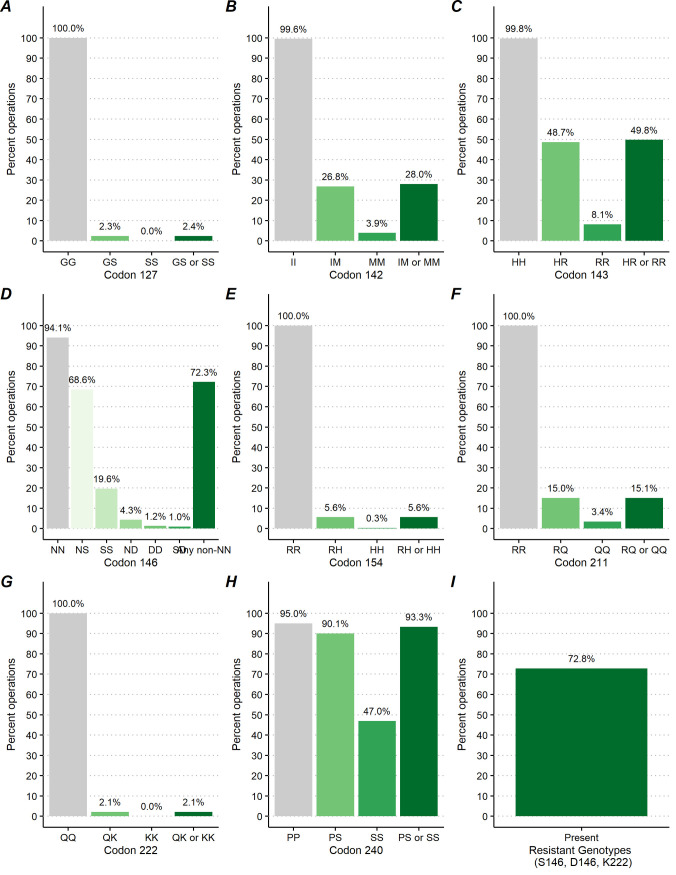
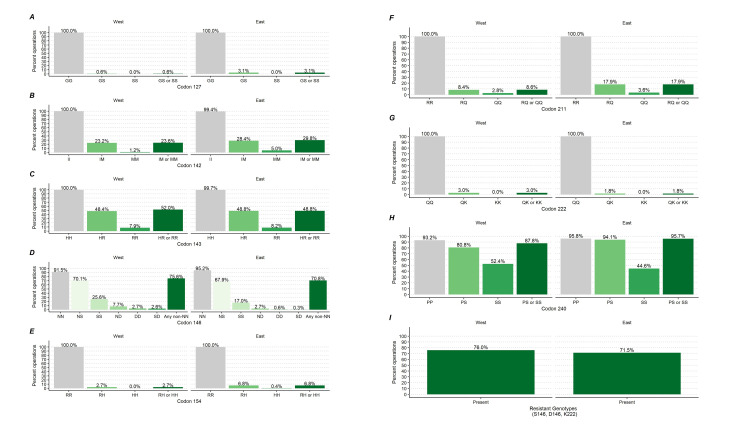
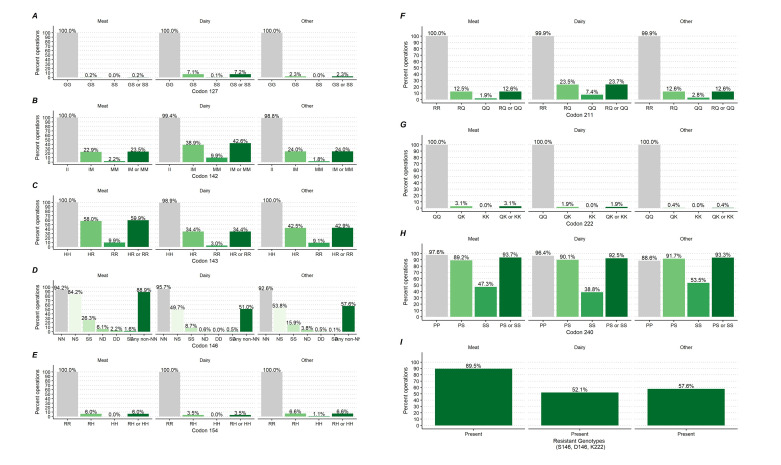
Scrapie is a slowly progressive neurodegenerative disease of small ruminants caused by an accumulation of an abnormal isoform of prion protein in the central nervous system. Polymorphisms of the prion protein gene (PRNP) strongly modulate scrapie resistance and incubation period in goats. The aim of this study was to identify PRNP genetic variability in goats across the United States. Blood from a total of 6,029 apparent scrapie disease-free goats from 654 operations and 19 breeds were analyzed. Sequencing of PRNP revealed 26 genotypes with different rates based on eight codons. The GG127, RR154, and QQ222 genotypes were predominant and showed a remarkably high rate across all goats. The QK222 and NS146 genotypes, known to be protective against scrapie, were found in 0.6% [with 95% CI = (0.3, 1.2)] and 22.0% [95% CI = (19.1, 25.2)] of goats, respectively. The QK222 genotype was found in 23.1% of Oberhasli goats tested, with 95%CI = (3.9, 68.7)] and 22.0% of Toggenburg goats tested with 95%CI = (9.7, 42.5)], while NS146 was found in 65.5% of Savannah goats tested, with 95%CI = (30.8, 89.9), 36.7% of Boer goats tested, with 95%CI = (33.1, 40.4), 36.3% of Nubian goats tested, with 95%CI = (27.0, 46.7)], and 35.6% of LaMancha goats tested, with 95%CI = (22.8, 50.8%). The MM142 and IM142 genotypes were found more frequently in goats on dairy operations, while the HR143, NS146, and ND146 genotypes were found more frequently in goats on meat operations. Goats in the east region had a higher percentage of goats with RH154, RQ211, and QK222 genotypes than goats in the west region. The results of this study showed high genetic variability of PRNP among the U.S. goat population, with differences by location and breed, and may serve as a rationale for development of goat breeding programs at the national level to mitigate the risk of scrapie.
瘙痒病是一种由中枢神经系统中异常朊病毒蛋白积累引起的小反刍动物进行性神经退行性疾病。朊病毒蛋白基因(PRNP)的多态性强烈调节山羊的瘙痒病抗性和潜伏期。本研究的目的是鉴定美国各地山羊的 PRNP 遗传变异。对来自 654 个操作和 19 个品种的总共 6029 只明显无瘙痒病的山羊的血液进行了分析。PRNP 测序显示,基于 8 个密码子,有 26 种不同速率的基因型。GG127、RR154 和 QQ222 基因型为主导基因型,在所有山羊中表现出极高的比率。已知对瘙痒病具有保护作用的 QK222 和 NS146 基因型分别在 0.6%[95%置信区间(0.3,1.2)]和 22.0%[95%置信区间(19.1,25.2)]的山羊中发现。QK222 基因型在测试的 Oberhasli 山羊中发现率为 23.1%,95%置信区间为(3.9,68.7)],在测试的 Toggenburg 山羊中发现率为 22.0%,95%置信区间为(9.7,42.5)],而 NS146 在测试的 Savannah 山羊中发现率为 65.5%,95%置信区间为(30.8,89.9)],在测试的 Boer 山羊中发现率为 36.7%,95%置信区间为(33.1,40.4)],在测试的 Nubian 山羊中发现率为 36.3%,95%置信区间为(27.0,46.7)],在测试的 LaMancha 山羊中发现率为 35.6%,95%置信区间为(22.8,50.8)]。MM142 和 IM142 基因型在乳用操作的山羊中更为常见,而 HR143、NS146 和 ND146 基因型在肉用操作的山羊中更为常见。东部地区的山羊比西部地区的山羊具有更高比例的 RH154、RQ211 和 QK222 基因型。本研究结果表明,美国山羊群体中 PRNP 的遗传多态性很高,地理位置和品种存在差异,这可能为在国家层面制定山羊繁殖计划以减轻瘙痒病风险提供依据。