Ricci Antonia, Allende Ana, Bolton Declan, Chemaly Marianne, Davies Robert, Fernández Escámez Pablo Salvador, Gironés Rosina, Herman Lieve, Koutsoumanis Kostas, Lindqvist Roland, Nørrung Birgit, Robertson Lucy, Ru Giuseppe, Sanaa Moez, Skandamis Panagiotis, Speybroeck Niko, Simmons Marion, Kuile Benno Ter, Threlfall John, Wahlström Helene, Acutis Pier-Luigi, Andreoletti Olivier, Goldmann Wilfred, Langeveld Jan, Windig Jack J, Ortiz Pelaez Angel, Snary Emma
EFSA J. 2017 Aug 10;15(8):e04962. doi: 10.2903/j.efsa.2017.4962. eCollection 2017 Aug.
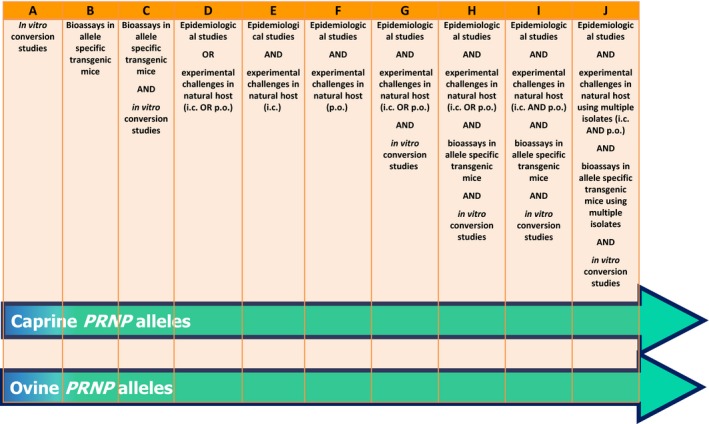
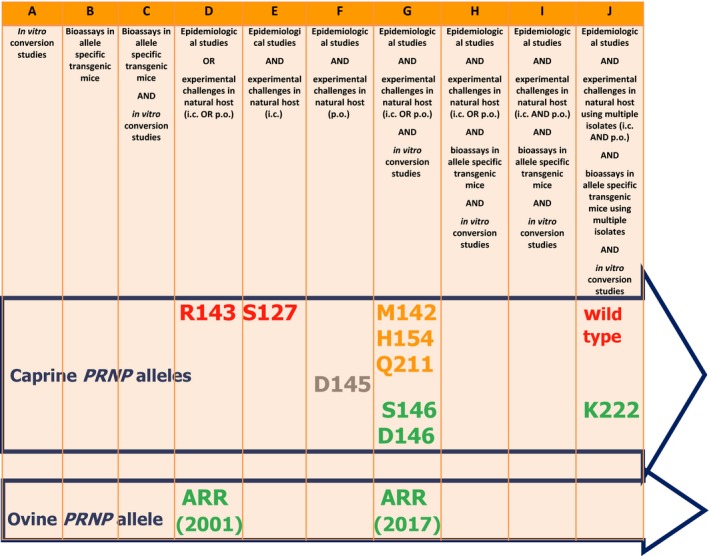
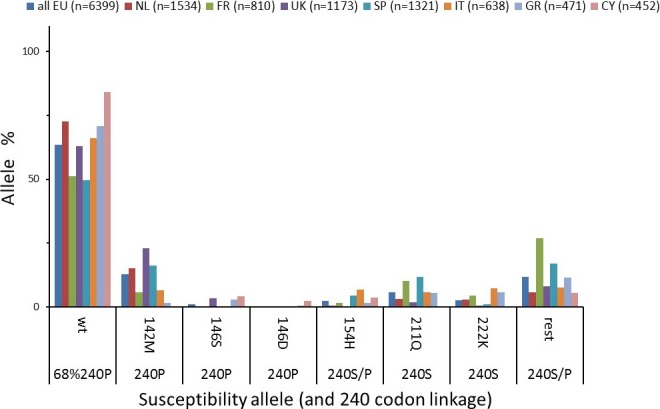
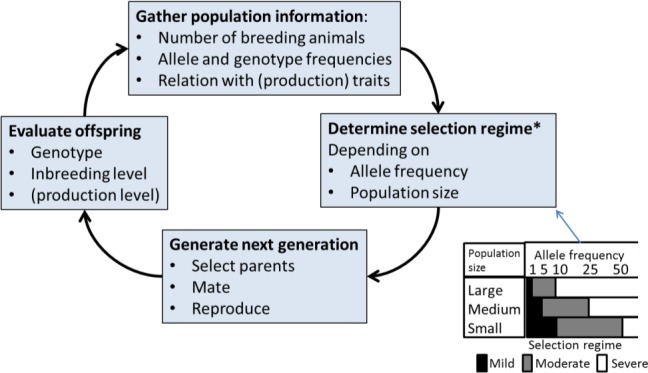
Breeding programmes to promote resistance to classical scrapie, similar to those for sheep in existing transmissible spongiform encephalopathies (TSE) regulations, have not been established in goats. The European Commission requested a scientific opinion from EFSA on the current knowledge of genetic resistance to TSE in goats. An evaluation tool, which considers both the weight of evidence and strength of resistance to classical scrapie of alleles in the goat gene, was developed and applied to nine selected alleles of interest. Using the tool, the quality and certainty of the field and experimental data are considered robust enough to conclude that the K222, D146 and S146 alleles both confer genetic resistance against classical scrapie strains known to occur naturally in the EU goat population, with which they have been challenged both experimentally and under field conditions. The weight of evidence for K222 is greater than that currently available for the D146 and S146 alleles and for the ARR allele in sheep in 2001. Breeding for resistance can be an effective tool for controlling classical scrapie in goats and it could be an option available to member states, both at herd and population levels. There is insufficient evidence to assess the impact of K222, D146 and S146 alleles on susceptibility to atypical scrapie and bovine spongiform encephalopathy (BSE), or on health and production traits. These alleles are heterogeneously distributed across the EU Member States and goat breeds, but often at low frequencies (< 10%). Given these low frequencies, high selection pressure may have an adverse effect on genetic diversity so any breeding for resistance programmes should be developed at Member States, rather than EU level and their impact monitored, with particular attention to the potential for any negative impact in rare or small population breeds.
与现有可传播性海绵状脑病(TSE)法规中针对绵羊的育种计划类似,旨在提高对经典羊瘙痒病抗性的山羊育种计划尚未建立。欧盟委员会要求欧洲食品安全局(EFSA)就山羊对TSE的遗传抗性的现有知识提供科学意见。开发了一种评估工具,该工具既考虑了证据权重,又考虑了山羊基因中各等位基因对经典羊瘙痒病的抗性强度,并将其应用于九个选定的目标等位基因。使用该工具,现场和实验数据的质量和确定性被认为足够可靠,可以得出结论:K222、D146和S146等位基因均赋予对已知在欧盟山羊群体中自然出现的经典羊瘙痒病毒株的遗传抗性,它们在实验和现场条件下都曾受到这些毒株的挑战。K222的证据权重比目前可获得的D146和S146等位基因以及2001年绵羊ARR等位基因的证据权重大。抗性育种可以成为控制山羊经典羊瘙痒病的有效工具,并且在畜群和种群层面上,这可能是成员国可采用的一种选择。没有足够的证据来评估K222、D146和S146等位基因对非典型羊瘙痒病和牛海绵状脑病(BSE)易感性的影响,或对健康和生产性状的影响。这些等位基因在欧盟成员国和山羊品种中分布不均,但频率通常较低(<10%)。鉴于这些低频率,高选择压力可能会对遗传多样性产生不利影响,因此任何抗性育种计划都应在成员国层面制定,并对其影响进行监测,尤其要关注对稀有或小种群品种可能产生的任何负面影响。