Sun Xin, Nancekivell Shaylene, Gelman Susan A, Shah Priti
Department of Psychology, University of Michigan, Ann Arbor, MI, USA.
Department of Psychology, University of North Carolina Greensboro, Greensboro, NC, USA.
NPJ Sci Learn. 2021 Jul 19;6(1):21. doi: 10.1038/s41539-021-00100-z.
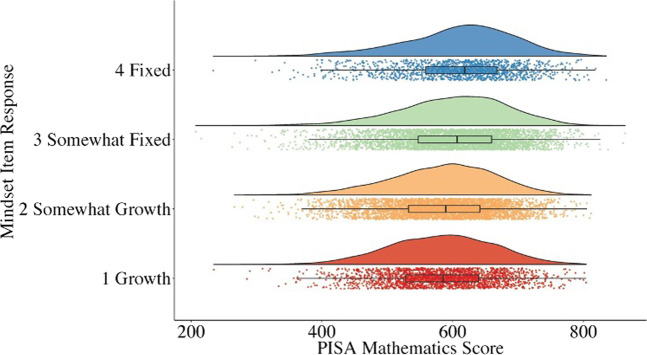
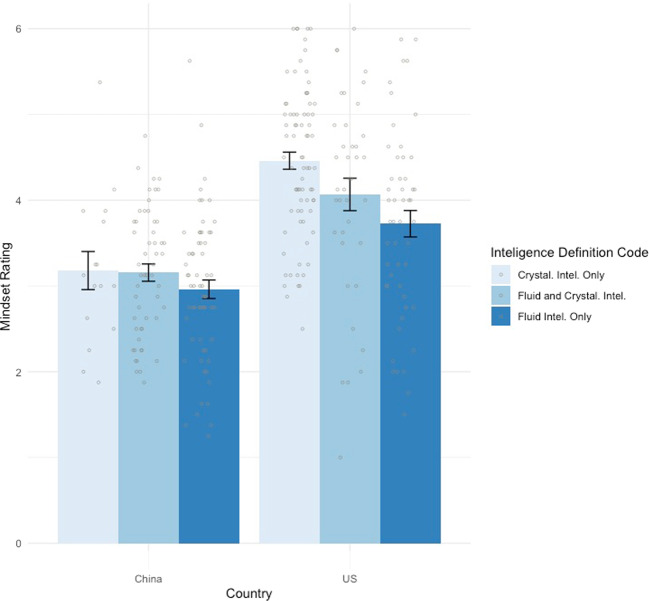
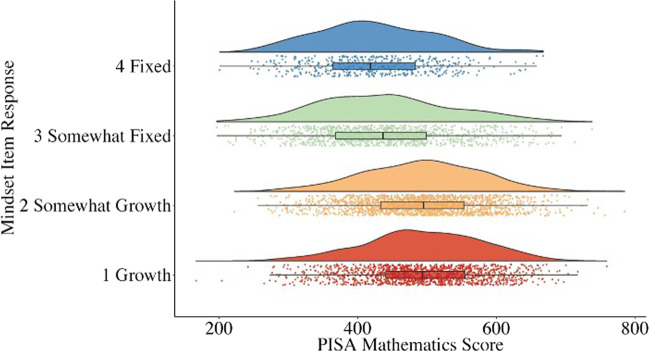
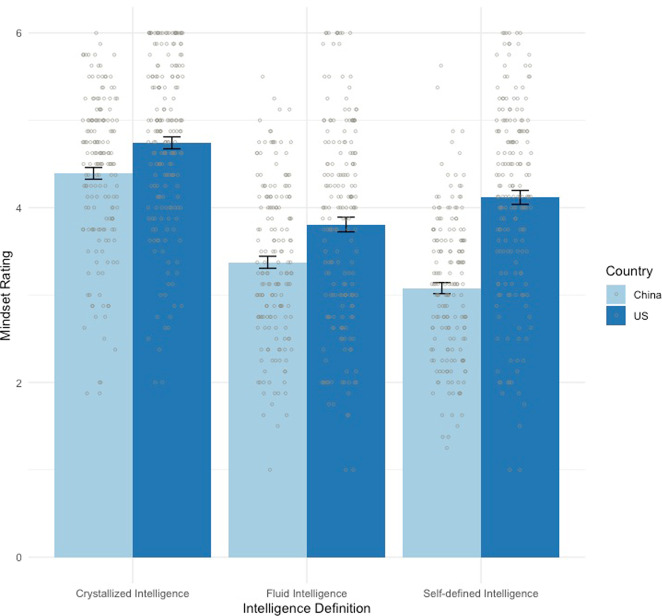
Chinese students are more likely than US students to hold a malleable view of success in school, yet are more likely to hold fixed mindsets about intelligence. We demonstrate that this apparently contradictory pattern of cross-cultural differences holds true across multiple samples and is related to how students conceptualize intelligence and its relationship with academic achievement. Study 1 (N > 15,000) confirmed that US students endorsed more growth mindsets than Chinese students. Importantly, US students' mathematics grades were positively related to growth mindsets with a medium-to-large effect, but for Chinese students, this association was slightly negative. Study 2 conceptually replicated Study 1 findings with US and Chinese college samples, and further discovered that cross-cultural differences in intelligence mindset beliefs corresponded to how students defined intelligence. Together, these studies demonstrated systematic cross-cultural differences in intelligence mindset and suggest that intelligence mindsets are not necessarily associated with academic motivation or success in the same way across cultures.
与美国学生相比,中国学生更倾向于对学业成功持有一种可塑的观点,但对智力更倾向于持有固定型思维模式。我们证明,这种明显矛盾的跨文化差异模式在多个样本中都成立,并且与学生如何概念化智力及其与学业成绩的关系有关。研究1(N>15000)证实,美国学生比中国学生更认同成长型思维模式。重要的是,美国学生的数学成绩与成长型思维模式呈正相关,影响程度为中到大型,但对于中国学生来说,这种关联略显负面。研究2从概念上重复了研究1在美国和中国大学生样本中的发现,并进一步发现,智力思维模式信念的跨文化差异与学生如何定义智力相对应。总之,这些研究证明了智力思维模式存在系统性的跨文化差异,并表明智力思维模式在不同文化中不一定以相同的方式与学业动机或成功相关联。