Department of Physiology and Membrane Biology, University of California Davis, Davis, CA, USA.
Department of Anesthesiology and Pain Medicine, University of California Davis, Davis, CA, USA.
Channels (Austin). 2021 Dec;15(1):408-423. doi: 10.1080/19336950.2021.1910461.
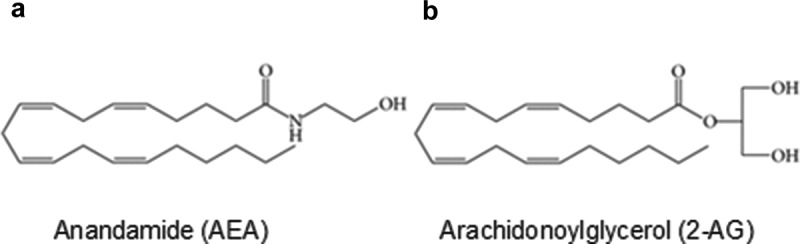
Endocannabinoids are a group of endogenous mediators derived from membrane lipids, which are implicated in a wide variety of physiological functions such as blood pressure regulation, immunity, pain, memory, reward, perception, reproduction, and sleep. -Arachidonoylethanolamine (anandamide; AEA) and 2-arachidonoylglycerol (2-AG) represent two major endocannabinoids in the human body and they exert many of their cellular and organ system effects by activating the G protein-coupled, cannabinoid type 1 (CB1) and type 2 (CB2) receptors. However, not all effects of cannabinoids are ascribable to their interaction with CB1 and CB2 receptors; indeed, macromolecules like other types of receptors, ion channels, transcription factors, enzymes, transporters, and cellular structure have been suggested to mediate the functional effects of cannabinoids. Among the proposed molecular targets of endocannabinoids, potassium channels constitute an intriguing group, because these channels not only are crucial in shaping action potentials and controlling the membrane potential and cell excitability, thereby regulating a wide array of physiological processes, but also serve as potential therapeutic targets for the treatment of cancer and metabolic, neurological and cardiovascular disorders. This review sought to survey evidence pertaining to the CB1 and CB2 receptor-independent actions of endocannabinoids on ion channels, with an emphasis on AEA and potassium channels. To better understand the functional roles as well as potential medicinal uses of cannabinoids in human health and disease, further mechanistic studies to delineate interactions between various types of cannabinoids and ion channels, including members in the potassium channel superfamily, are warranted.
内源性大麻素是一类源自膜脂质的内源性介质,涉及多种生理功能,如血压调节、免疫、疼痛、记忆、奖励、感知、生殖和睡眠。 - 花生四烯酸乙醇胺(大麻素;AEA)和 2-花生四烯酸甘油(2-AG)是人体内两种主要的内源性大麻素,它们通过激活 G 蛋白偶联的大麻素 1 型(CB1)和 2 型(CB2)受体来发挥许多细胞和器官系统作用。然而,大麻素的并非所有作用都归因于它们与 CB1 和 CB2 受体的相互作用;事实上,像其他类型的受体、离子通道、转录因子、酶、转运体和细胞结构等大分子已被认为可以介导大麻素的功能作用。在提出的内源性大麻素的分子靶标中,钾通道构成了一个有趣的群体,因为这些通道不仅在塑造动作电位和控制膜电位和细胞兴奋性方面至关重要,从而调节广泛的生理过程,而且还可以作为治疗癌症以及代谢、神经和心血管疾病的潜在治疗靶点。本综述旨在调查与内源性大麻素对离子通道的 CB1 和 CB2 受体非依赖性作用有关的证据,重点关注 AEA 和钾通道。为了更好地了解大麻素在人类健康和疾病中的功能作用以及潜在的药用用途,需要进一步的机制研究来阐明各种类型的大麻素与离子通道(包括钾通道超家族的成员)之间的相互作用。