Department of Fisheries and Aquatic Sciences, University of Cape Coast, Cape Coast, Ghana.
Africa Centre of Excellence in Coastal Resilience, University of Cape Coast, Cape Coast, Ghana.
BMJ Open. 2021 Jul 20;11(7):e048724. doi: 10.1136/bmjopen-2021-048724.
This study sought to investigate the joint effect of household cooking fuel type and urbanicity (rural-urban residency) on anaemia among children under the age of five in sub-Saharan Africa.
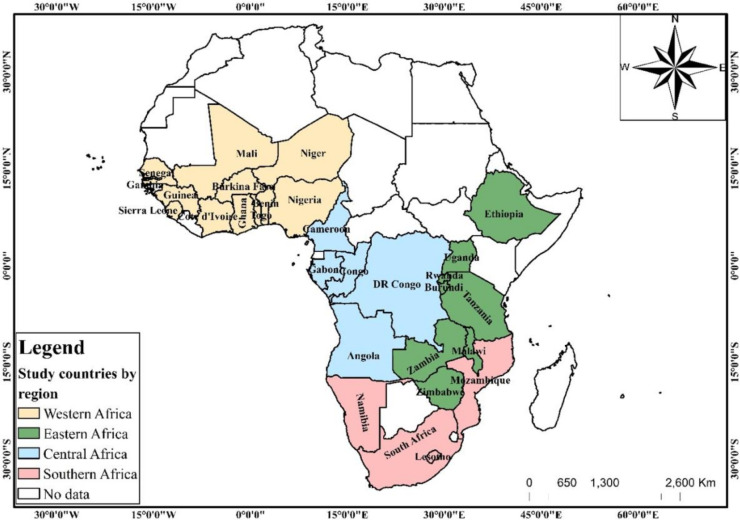
We analysed cross-sectional data of 123, 186 children under the age of five from 29 sub-Saharan African countries gathered between 2010 and 2019 by the Demographic and Health Survey programme. Bivariate (χ test of independence) and multilevel logistic regression were used to examine the effect of urbanicity-household cooking fuel type on childhood anaemia. Results were reported as adjusted odds ratios (aORs) with 95% CIs at p<0.05.
Anaemia status of children.
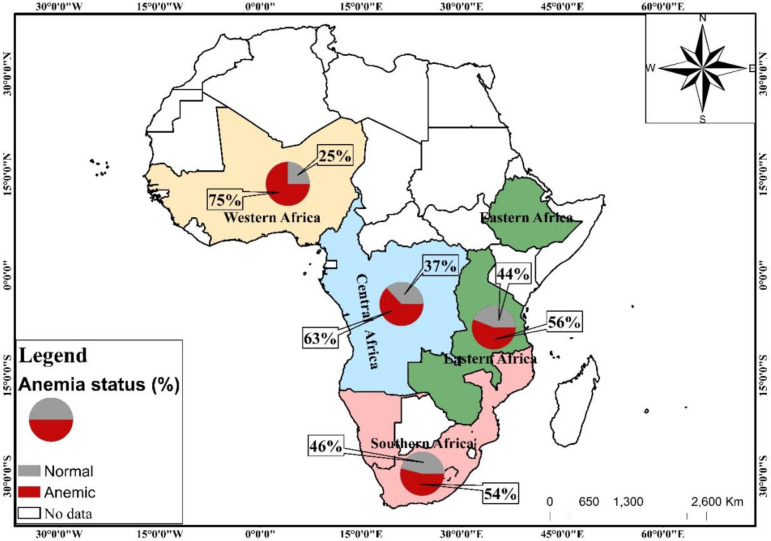
More than half (64%) of children had anaemia. The percentage of children who suffered from anaemia was high in those born to mothers in Western Africa (75%) and low among those born in Southern Africa (54%). Children from rural households that depend on unclean cooking fuels (aOR=1.120; 95% CI 1.033 to 1.214) and rural households that depend on clean cooking fuels (aOR=1.256; 95% CI 1.080 to 1.460) were more likely to be anaemic as compared with children from urban households using clean cooking fuel. Child's age, sex of child, birth order, perceived birth size, age of mother, body mass index of mother, education, marital status, employment status, antenatal care, wealth quintile, household size, access to electricity, type of toilet facility, source of drinking water and geographic region had significant associations with childhood anaemia status.
Our study has established a joint effect of type of household cooking fuel and urbanicity on anaemia among children under the age of five in sub-Saharan Africa. It is therefore critical to promote the usage of clean cooking fuels among households and women in rural areas. These should be done taking into consideration the significant child, maternal, household, and contextual factors identified in this study.
本研究旨在探讨撒哈拉以南非洲五岁以下儿童贫血的家庭烹饪燃料类型和城市化(城乡居住)的联合效应。
我们分析了 2010 年至 2019 年期间由人口与健康调查计划在 29 个撒哈拉以南非洲国家收集的 123186 名五岁以下儿童的横断面数据。采用双变量(χ 独立性检验)和多水平逻辑回归分析城乡-家庭烹饪燃料类型对儿童贫血的影响。结果以 95%置信区间(CI)的调整优势比(aOR)表示,p<0.05。
超过一半(64%)的儿童贫血。在母亲来自西非的儿童中,贫血儿童的比例较高(75%),而在南部非洲出生的儿童中,贫血儿童的比例较低(54%)。与使用清洁烹饪燃料的城市家庭儿童相比,来自依赖不洁烹饪燃料的农村家庭(aOR=1.120;95%CI 1.033 至 1.214)和依赖清洁烹饪燃料的农村家庭(aOR=1.256;95%CI 1.080 至 1.460)的儿童更有可能贫血。儿童年龄、儿童性别、出生顺序、感知出生体重、母亲年龄、母亲体重指数、教育程度、婚姻状况、就业状况、产前保健、财富五分位数、家庭规模、是否通电、厕所设施类型、饮用水来源和地理区域与儿童贫血状况显著相关。
本研究确定了家庭烹饪燃料类型和城市化对撒哈拉以南非洲五岁以下儿童贫血的联合影响。因此,必须在农村家庭中推广清洁烹饪燃料的使用。在考虑到本研究中确定的重要儿童、产妇、家庭和背景因素的情况下,应这样做。