Laboratory of Innovations in Therapies, Education and Bioproducts, Oswaldo Cruz Institute (LITEB-IOC/Fiocruz), Oswaldo Cruz Foundation (Fiocruz), Rio de Janeiro Brazil.
Laboratory of Functional Genomics and Bioinformatics, Oswaldo Cruz Institute (LAGFB-IOC/Fiocruz), Oswaldo Cruz Foundation (Fiocruz), Rio de Janeiro, Brazil.
PLoS Negl Trop Dis. 2021 Jul 21;15(7):e0009534. doi: 10.1371/journal.pntd.0009534. eCollection 2021 Jul.
Chagas Disease (CD) affects 6-7 million people worldwide and is related to poverty-promoting conditions. Chronic asymptomatic cases are mostly invisible to health systems. Aiming (1) to translate CD discoveries into education/information practices to raise alertness and empowerment of affected people; and (2) to perform an active search of CD cases, articulating intersectoral actions to improve the access of infected people to the local health service for the treatment of CD; our research group developed and tested under field conditions as innovative social technology: an itinerant education interdisciplinary setting named "Chagas Express XXI" (CE21).
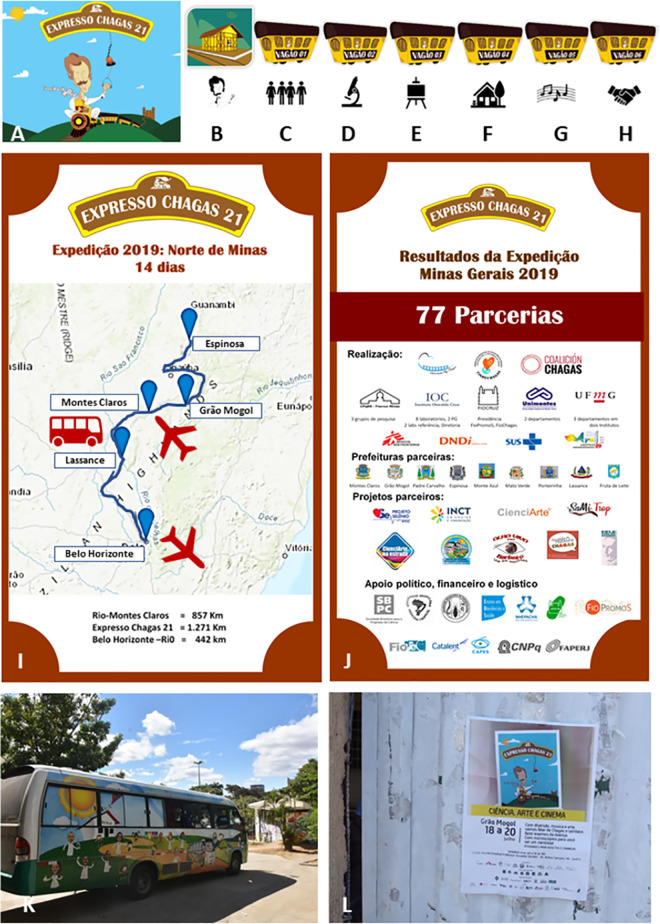
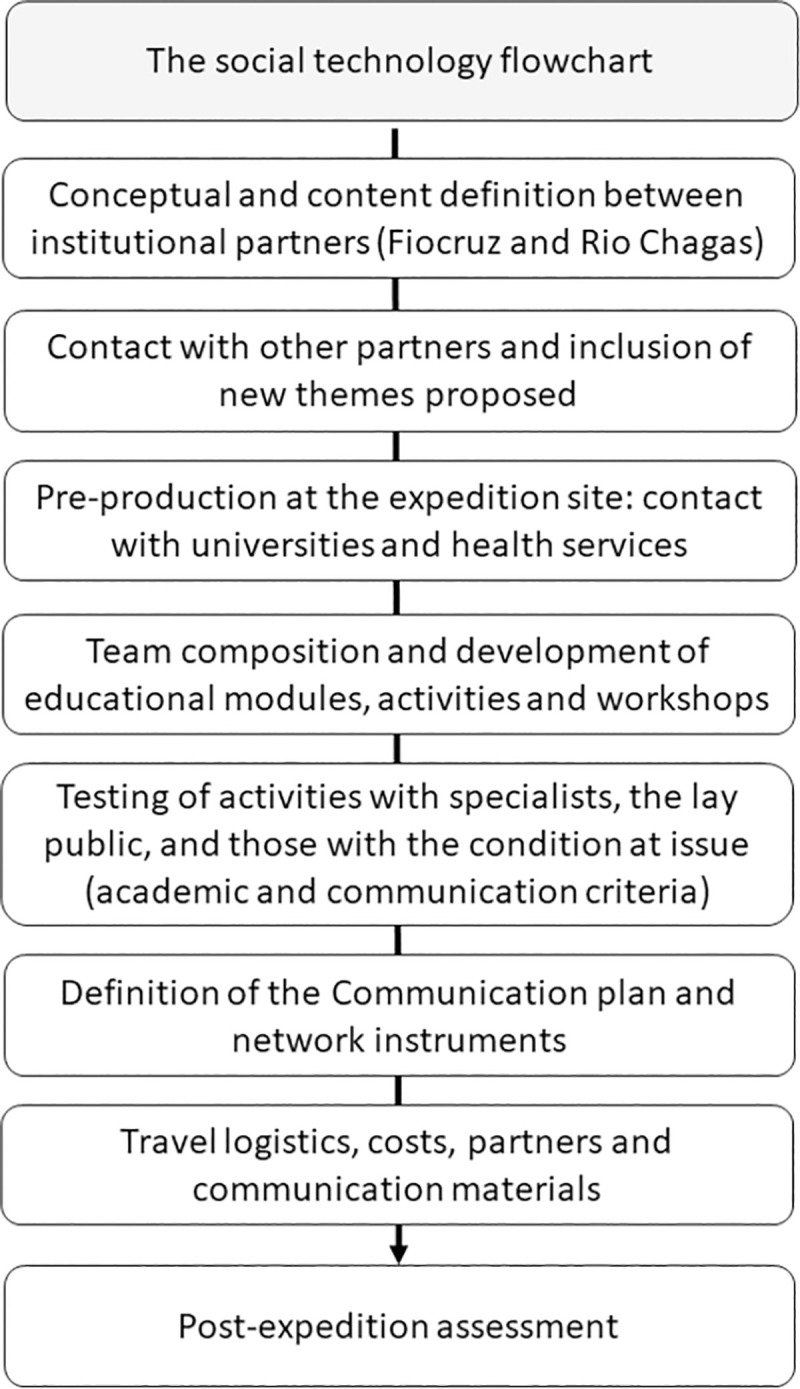
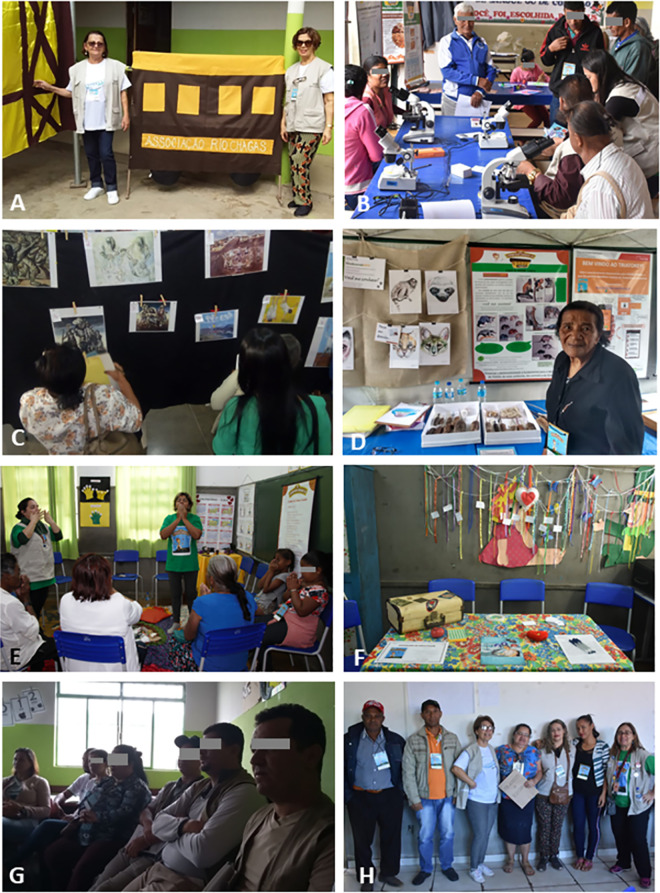
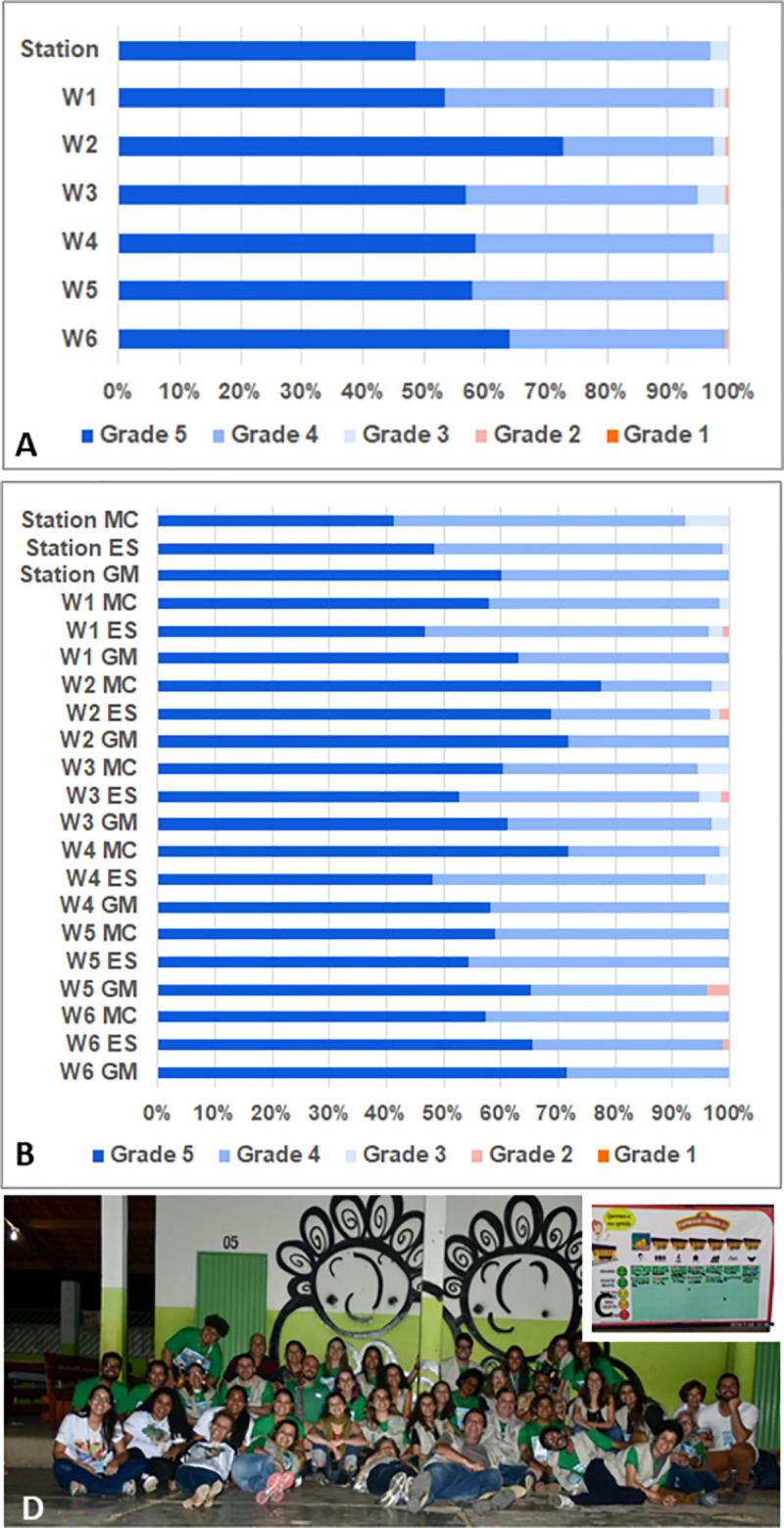
CE21 was created as an "imaginary train" with ~40 ArtScience workshops, games, laboratory activities and conversation circles. An entry/exit plus six activity modules combined associations of affected people, microscopic observations, One Health education, and wellness activities. CE21 was conceived as a social technology, since all the processes were co-created with CD patients and inter-sector local partners. Descriptive statistics showed quantitative data collected throughout the expeditions (CD knowledge, serological results). Qualitative data accessed the public perceptions about the education activities.
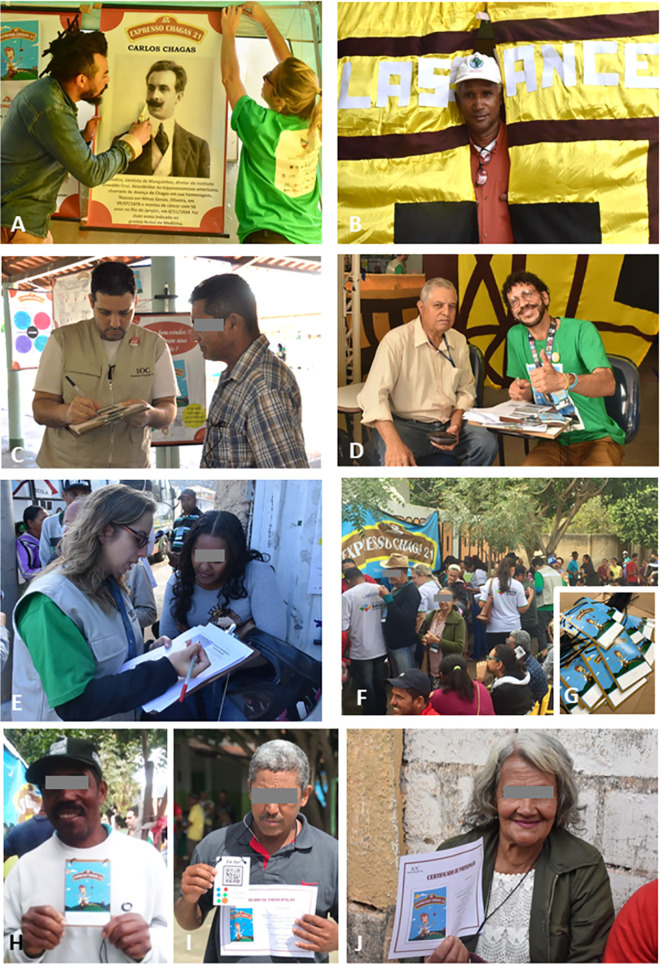
CE21 was exhibited in local educational institutions (schools, universities) in four cities, engaging 2,117 people that evaluated the 41 activities carried out. Citizens and health professionals enjoyed acquisition of information related to blood, parasites, vectors, reservoirs, environmental changes, and social determinants of CD. Further, local legacies of 600 participants volunteer for health promotion groups and CD associations, local empowerment groups to fight for better health conditions, and 05 mural paintings. We observed that 81% of the participants ignored the possibility of treating CD while 52% of the participants requested a blood test for CD showing seropositivity in 20% of them.
CE21 is a social technology potentially useful for health and science education and active search of asymptomatic CD chronic cases. Moreover, this technology may be adapted to understand and to cooperate in other potentially epidemic situations, especially NTDs related.
恰加斯病(CD)影响全球 600 至 700 万人,与促进贫困的条件有关。慢性无症状病例在卫生系统中大多难以发现。本研究旨在(1)将 CD 的发现转化为教育/信息实践,以提高受影响人群的警觉性和赋权;(2)积极搜索 CD 病例,协调部门间行动,改善感染人群获得当地卫生服务治疗 CD 的机会;我们的研究小组开发并在现场条件下测试了一种创新的社会技术:一个名为“Chagas Express XXI”(CE21)的巡回教育跨学科环境。
CE21 被创建为一个带有~40 个艺术科学工作坊、游戏、实验室活动和对话圈的“想象中的火车”。一个入口/出口和六个活动模块结合了受影响人群、微观观察、One Health 教育和健康活动。CE21 被视为一种社会技术,因为所有的过程都是与 CD 患者和当地跨部门合作伙伴共同创造的。描述性统计显示了整个考察过程中收集的定量数据(CD 知识、血清学结果)。定性数据评估了公众对教育活动的看法。
CE21 在四个城市的当地教育机构(学校、大学)展出,吸引了 2117 人参与了 41 项活动。市民和卫生专业人员喜欢获取与血液、寄生虫、媒介、储存宿主、环境变化和 CD 的社会决定因素有关的信息。此外,600 名参与者中的 05 名志愿者成为了健康促进团体和 CD 协会的当地遗产、地方赋权团体,为改善健康条件而奋斗,以及 05 幅壁画。我们观察到,81%的参与者忽略了治疗 CD 的可能性,而 52%的参与者要求进行 CD 血液检测,其中 20%呈血清阳性。
CE21 是一种用于健康和科学教育以及主动搜索无症状 CD 慢性病例的社会技术。此外,这项技术可以适应其他潜在流行情况的理解和合作,特别是与被忽视的热带病(NTDs)相关的情况。