Departamento de Inmunología, Instituto Nacional de Cardiología Ignacio Chávez, Mexico City, CDMX, Mexico.
Departamento de Parasitología, Escuela Nacional de Ciencias Biológicas, Instituto Politécnico Nacional, Mexico City, CDMX, Mexico.
Biol Res. 2021 Jul 21;54(1):21. doi: 10.1186/s40659-021-00345-3.
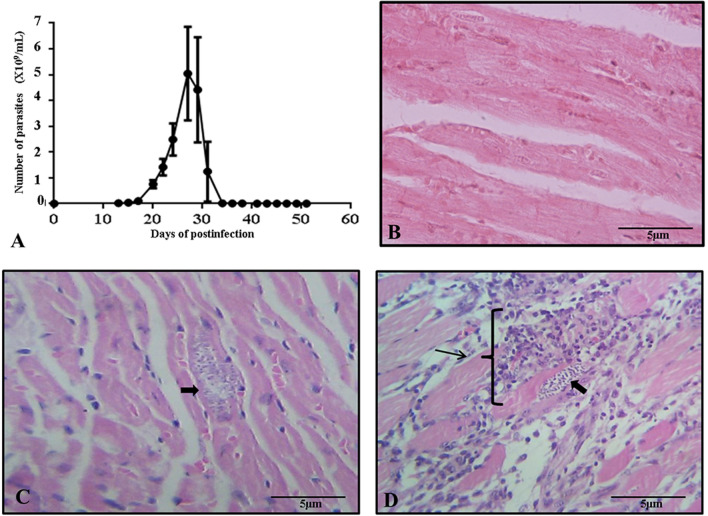
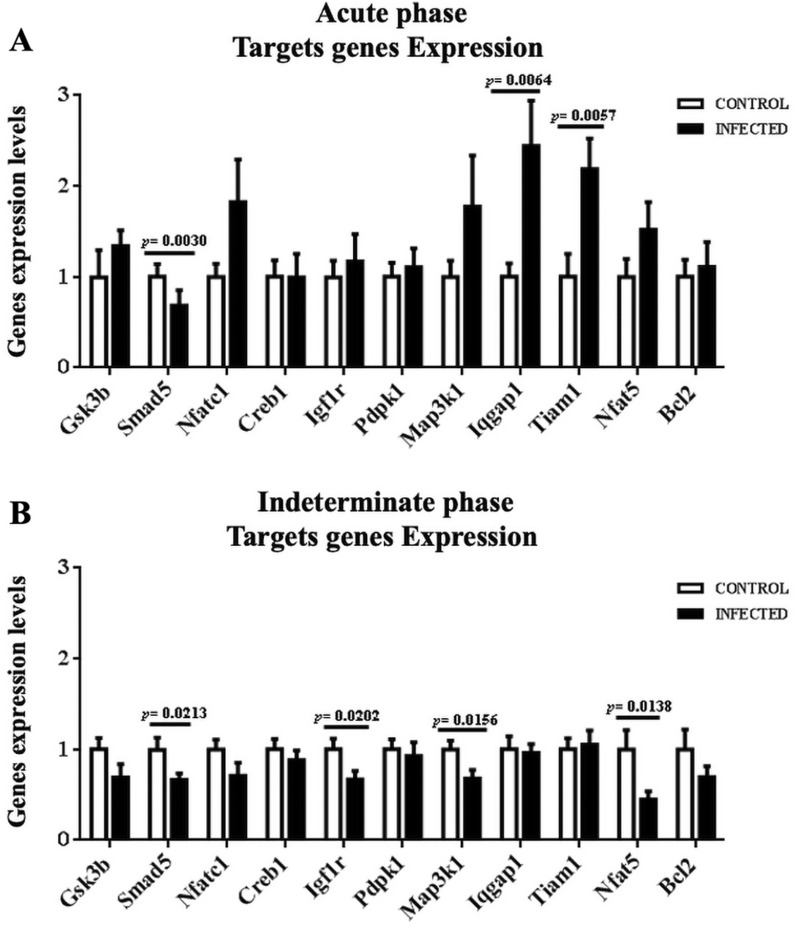
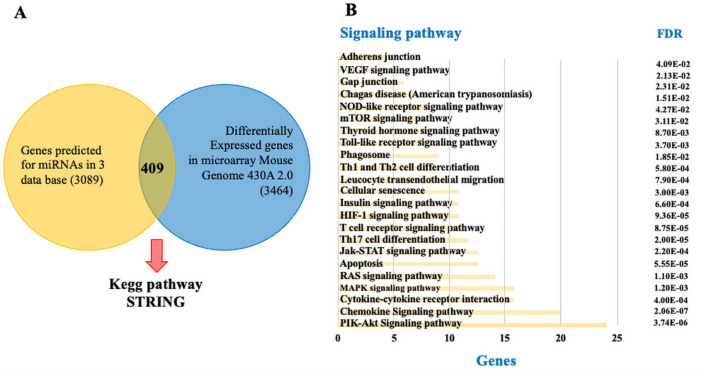
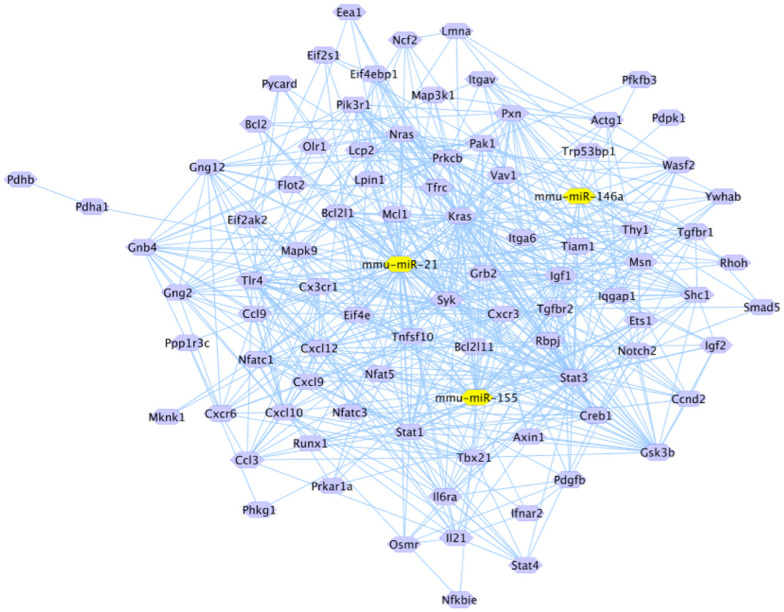
Chagas disease is considered important and presents intense inflammatory and fibrotic processes induced by the perpetuation of the parasite in the affected tissues and organs. Therefore, it is necessary to inquire about the host defense and attack mechanisms to have a more detailed knowledge about Chagas disease. MicroRNAs are found in blood, tissues and extracellular vesicles. These small regulators of gene expression are involved in physiological and pathological processes in both mammals and parasites. Several microRNAs have deregulated expression in chagasic heart disease, although little is known about their extracellular expression. Our main objective was to evaluate the involvement of miR-21, miR-146a and miR-155 in several samples from mice infected with the TcI Ninoa strain from the acute and indeterminate phases. We also explored a potential functional association of the selected microRNAs using STRING software. This software identified 23 pathways associated with Trypanosoma cruzi infection. In addition, eleven genes were identified through bioinformatics analysis, and we found that SMAD family member 5 was downregulated in both phases. This gene serves as a mediator in the TGF-β signaling pathway. Thus, forty female mice of the CD1 strain were distributed into 4 groups and the expression levels of miR-21, miR-146a and miR-155 were measured in samples of heart tissue, total plasma and plasma extracellular vesicles by quantitative real-time polymerase chain reaction.
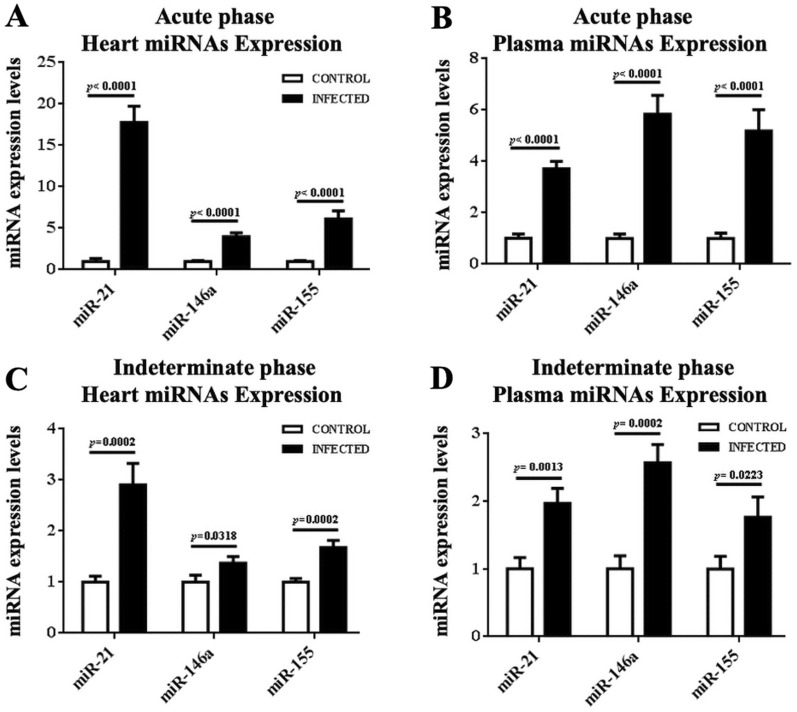
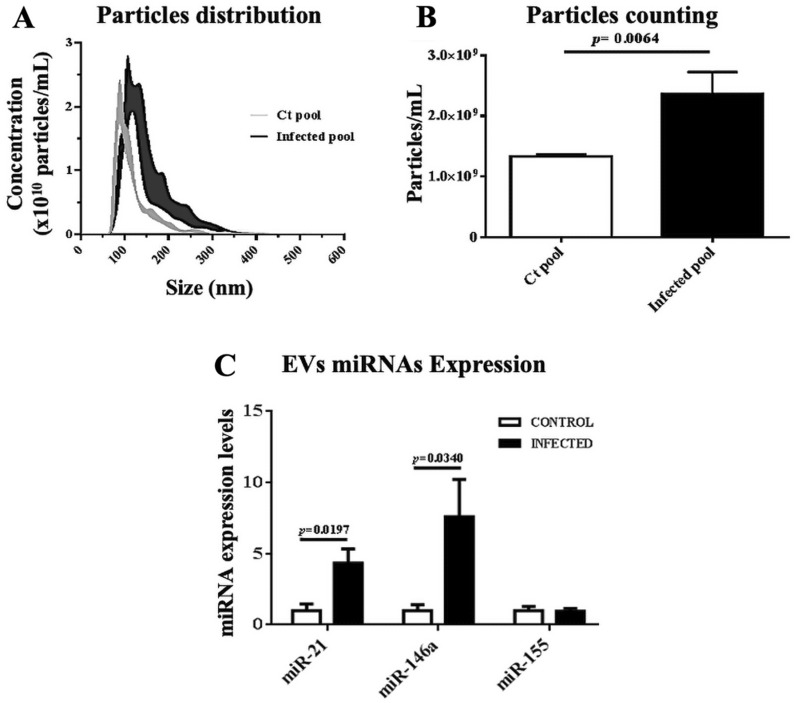
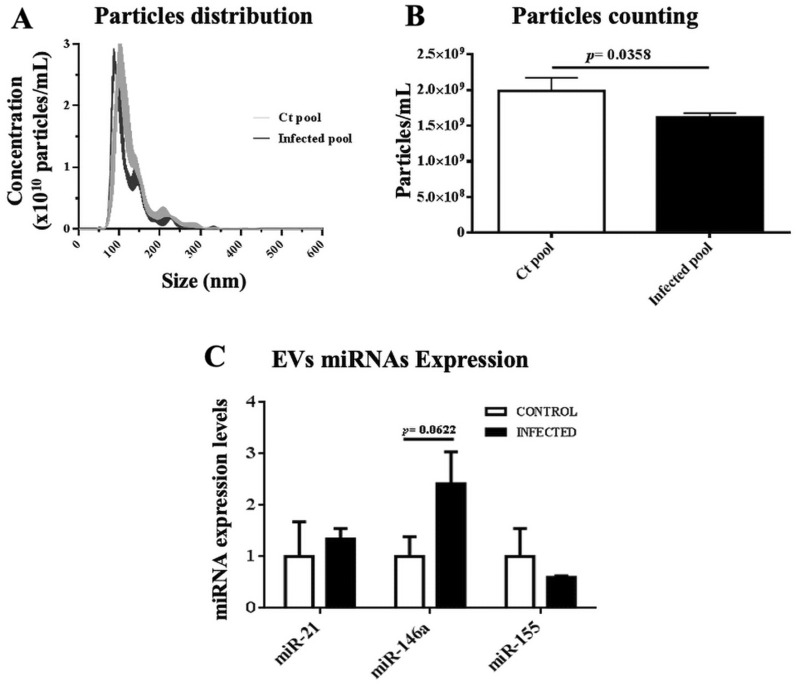
Overexpression of miR-21, miR-146a and miR-155 was observed in heart and plasma in both phases. Moreover, in extracellular vesicles miR-21 and miR-146a were also overexpressed in the acute phase, whereas in the indeterminate chronic phase we found only miR-146a up-regulated.
The expression of inflammatory microRNAs miR-21, miR-146a and miR-155 were up-regulated in each of the samples from acutely and chronically infected mice. The relevant finding was that miR-146a was up-regulated in each sample in both phases; therefore, this miRNA could be a possible candidate biomarker in Chagas disease.
恰加斯病被认为很重要,它会在受影响的组织和器官中持续存在寄生虫,从而引发强烈的炎症和纤维化过程。因此,有必要研究宿主防御和攻击机制,以便更详细地了解恰加斯病。微小 RNA 存在于血液、组织和细胞外囊泡中。这些基因表达的小调控因子参与哺乳动物和寄生虫的生理和病理过程。在恰加斯心脏病中,有几种微小 RNA 的表达发生了失调,尽管它们在细胞外的表达知之甚少。我们的主要目标是评估 miR-21、miR-146a 和 miR-155 在 TcI Ninoa 株急性和不确定期感染的几种小鼠样本中的作用。我们还使用 STRING 软件探索了所选微小 RNA 的潜在功能关联。该软件鉴定了与克氏锥虫感染相关的 23 条途径。此外,通过生物信息学分析鉴定了 11 个基因,我们发现 SMAD 家族成员 5 在两个阶段都下调。该基因是 TGF-β 信号通路的介质。因此,将 40 只 CD1 品系雌性小鼠分为 4 组,通过定量实时聚合酶链反应测量心脏组织、总血浆和血浆细胞外囊泡样本中 miR-21、miR-146a 和 miR-155 的表达水平。
在两个阶段,心脏和血浆中的 miR-21、miR-146a 和 miR-155 表达均上调。此外,在急性阶段,细胞外囊泡中的 miR-21 和 miR-146a 也过表达,而在不确定的慢性阶段,我们只发现 miR-146a 上调。
在急性和慢性感染小鼠的每个样本中,炎症微小 RNA miR-21、miR-146a 和 miR-155 的表达均上调。相关发现是 miR-146a 在两个阶段的每个样本中均上调;因此,这种 miRNA 可能是恰加斯病的一个潜在候选生物标志物。