Koczorski Piotr, Furtado Bliss Ursula, Gołębiewski Marcin, Hulisz Piotr, Baum Christel, Weih Martin, Hrynkiewicz Katarzyna
Department of Microbiology, Faculty of Biological and Veterinary Sciences, Nicolaus Copernicus University, Torun, Poland.
Department of Plant Physiology and Biotechnology, Faculty of Biological and Veterinary Sciences, Nicolaus Copernicus University, Torun, Poland.
Front Plant Sci. 2021 Jul 5;12:647709. doi: 10.3389/fpls.2021.647709. eCollection 2021.
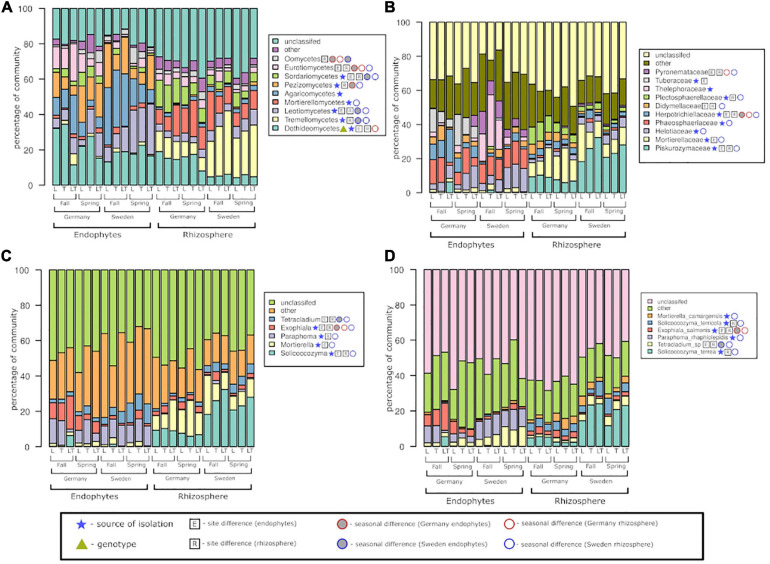
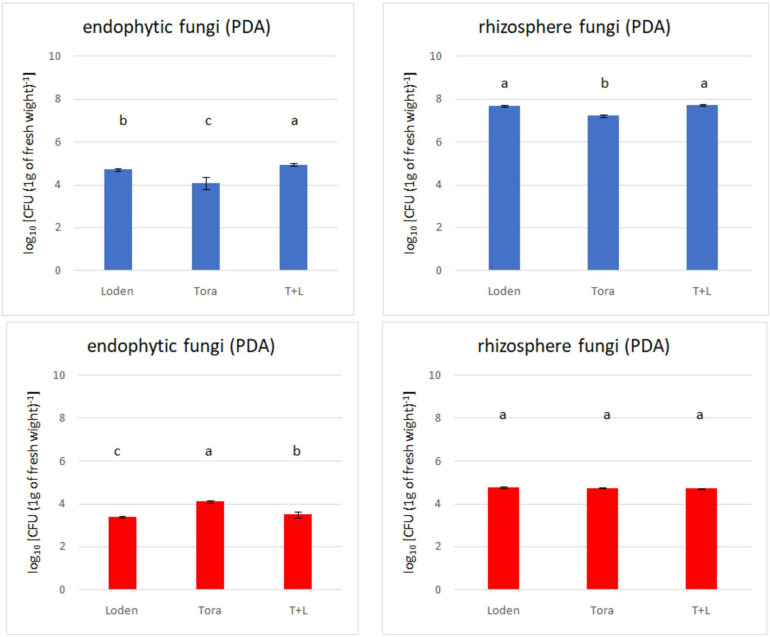
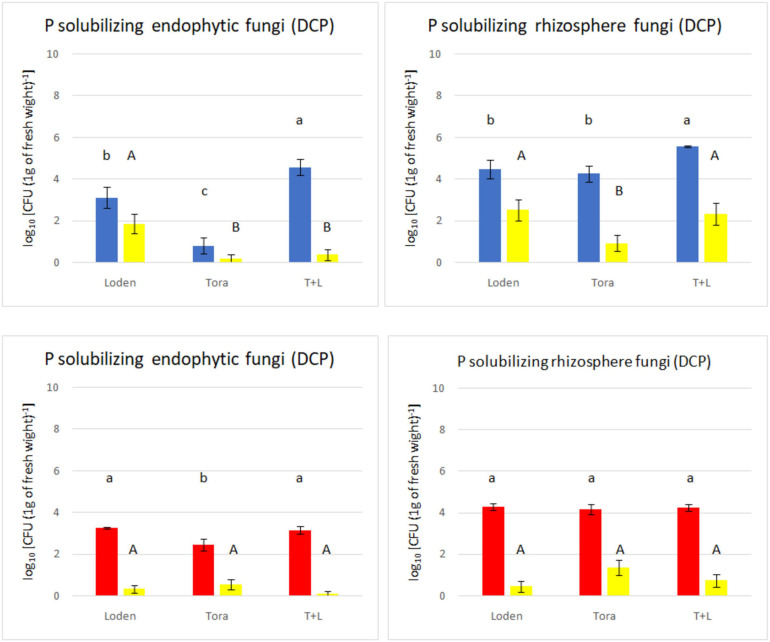
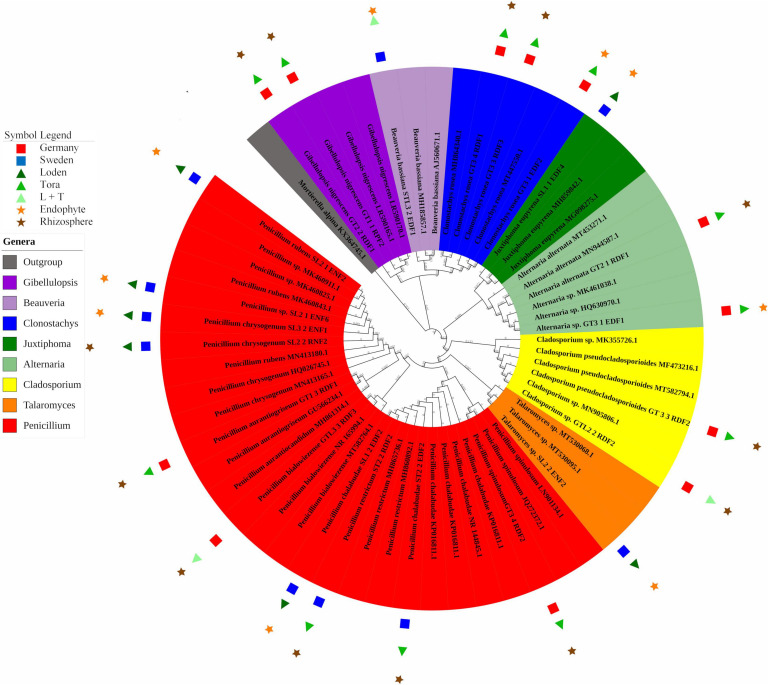
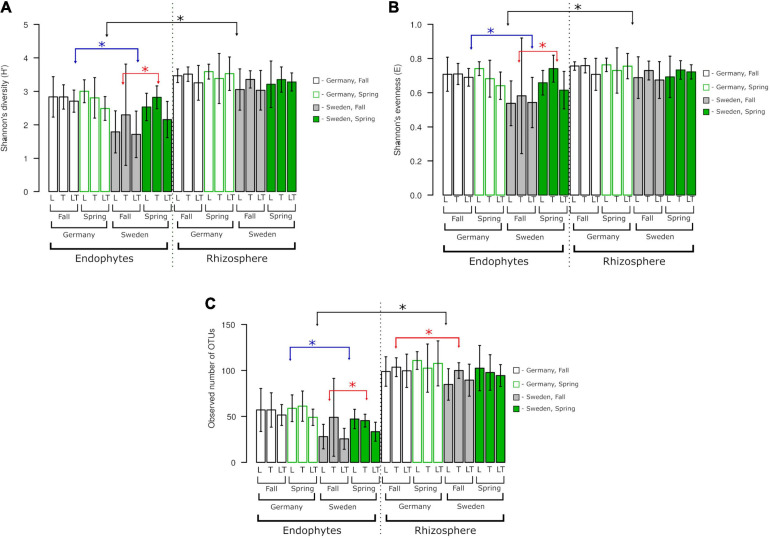
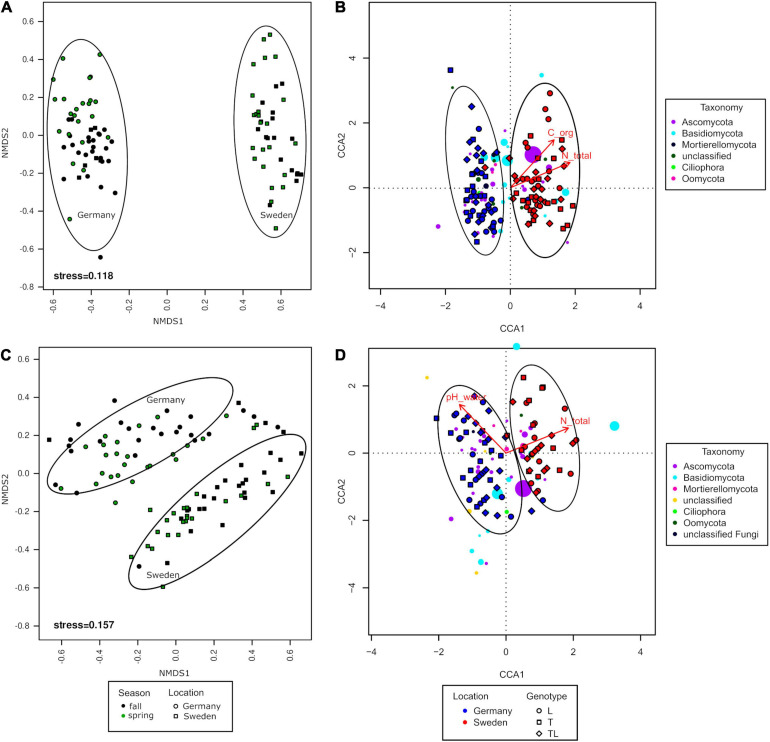
Phosphorus (P) is an essential plant nutrient. Low availability of P in soil is mainly caused by high content of FeO in the clay fraction that binds to P making it unavailable. Beneficial microbes, such as P solubilizing microorganisms can increase the available P in soil and improve plant growth and productivity. In this study, we evaluated the effects of environmental conditions (climate, soil parameters), plant genotype, and level of plant association (rhizosphere or endophytic root organism) on the abundance and diversity of phosphorus solubilizing microorganisms in a production system. We hypothesized that a lower number of endophytic fungi may possess the ability to solubilize P compared to the number of rhizosphere fungi with the same ability. We also expect that the plant genotype and the experimental site with its environmental conditions will influence fungal diversity. Two genotypes grown in pure and mixed cultures were investigated for their fungal microbiome community and diversity in the rhizosphere and endosphere during two growing seasons. We found that the rhizosphere fungal community was more diverse. A general dominance of Ascomycota () and Basidiomycota () was observed. The classes and were more frequent in the endosphere, while and were more abundant in the rhizosphere. Plot-specific soil properties (pH, total organic carbon, and nitrogen) significantly influenced the fungal community structure. Among the culturable fungal diversities, 10 strains of phosphate solubilizing fungi (PSFs) from roots and 12 strains from rhizosphere soil were identified using selective media supplemented with di-calcium and tri-calcium phosphates. The fungal density and the number of PSF were much higher in the rhizosphere than in the endosphere. was the dominant genus of PSF isolated from both sites; other less frequent genera of PSFs were , and . Overall the main factors controlling the fungal communities (endophytic vs. rhizosphere fungi) were the soil properties and level of plant association, while no significant influence of growing season was observed. Differences between genotypes were observed for culturable fungal diversity, while in metagenomic data analysis, only the class showed a significant effect from the plant genotype.
磷(P)是植物必需的养分。土壤中磷的有效性低主要是由于黏粒部分中氧化铁含量高,氧化铁与磷结合使其无法利用。有益微生物,如解磷微生物,可以增加土壤中有效磷的含量,改善植物生长和生产力。在本研究中,我们评估了环境条件(气候、土壤参数)、植物基因型以及植物关联水平(根际或内生根系生物)对生产系统中解磷微生物丰度和多样性的影响。我们假设,与具有相同解磷能力的根际真菌数量相比,内生真菌中具有解磷能力的数量可能较少。我们还预期植物基因型及其环境条件的实验地点将影响真菌多样性。在两个生长季节中,对两种基因型在纯培养和混合培养条件下根际和内生真菌的微生物群落及其多样性进行了研究。我们发现根际真菌群落更为多样。观察到子囊菌门()和担子菌门()普遍占优势。在根内,纲和纲更为常见,而在根际,纲和纲更为丰富。特定地块的土壤性质(pH值、总有机碳和氮)显著影响真菌群落结构。在可培养的真菌多样性方面,使用添加了磷酸二钙和磷酸三钙的选择性培养基,从根部分离出10株解磷真菌(PSF),从根际土壤中分离出12株。根际真菌密度和解磷真菌数量远高于根内。是从两个地点分离出的解磷真菌的优势属;其他不太常见的解磷真菌属有、和。总体而言,控制真菌群落(内生真菌与根际真菌)的主要因素是土壤性质和植物关联水平,而未观察到生长季节的显著影响。在可培养真菌多样性方面观察到两种基因型之间存在差异,而在宏基因组数据分析中,只有纲显示出植物基因型的显著影响。