Koczorski Piotr, Furtado Bliss Ursula, Gołębiewski Marcin, Hulisz Piotr, Thiem Dominika, Baum Christel, Weih Martin, Hrynkiewicz Katarzyna
Department of Microbiology, Faculty of Biological and Veterinary Sciences, Nicolaus Copernicus University, Torun, Poland.
Department of Plant Physiology and Biotechnology, Faculty of Biological and Veterinary Sciences, Nicolaus Copernicus University, Torun, Poland.
Front Microbiol. 2022 Oct 20;13:1006722. doi: 10.3389/fmicb.2022.1006722. eCollection 2022.
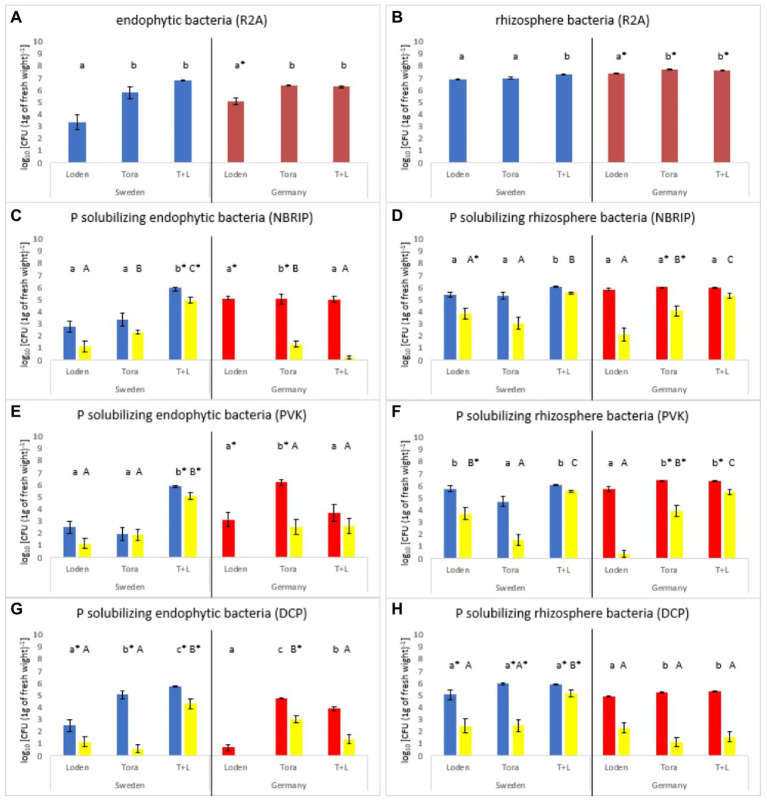
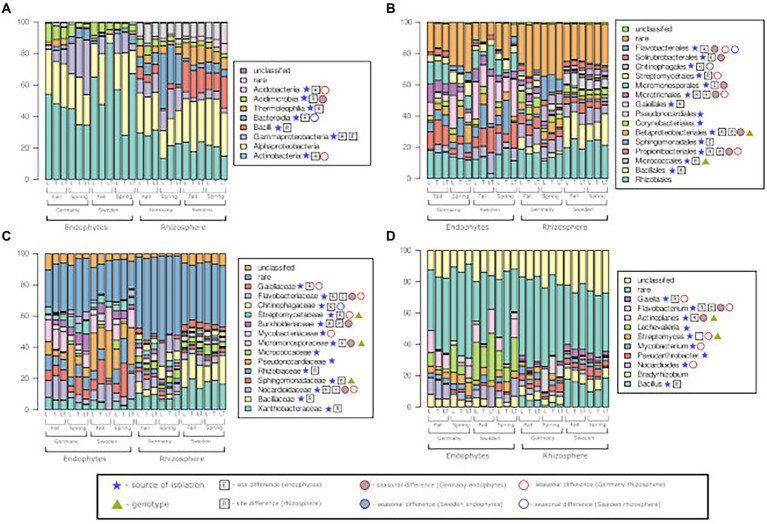
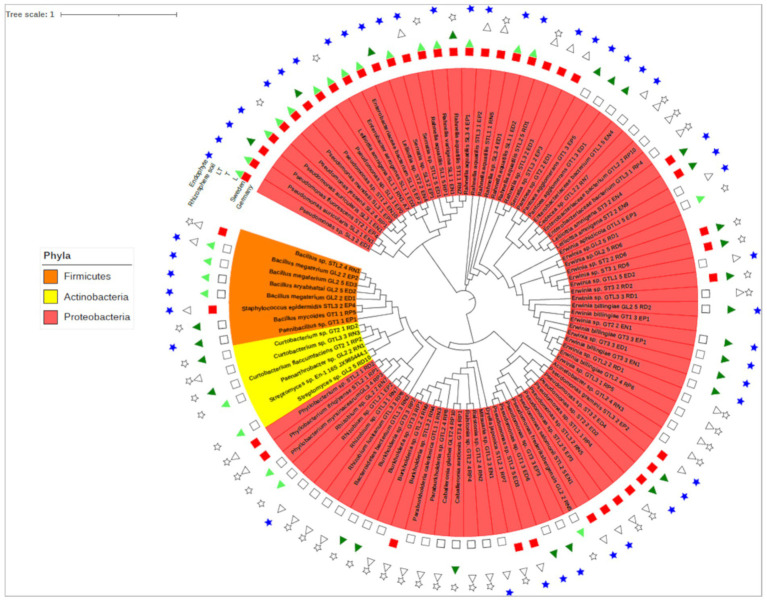
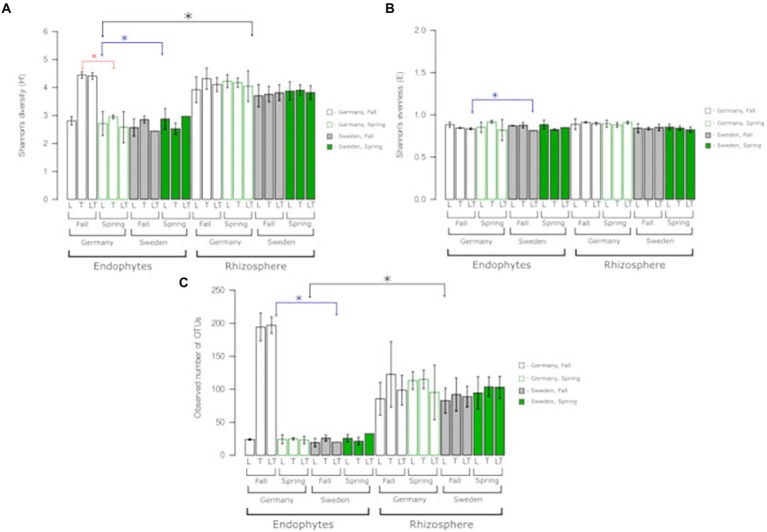
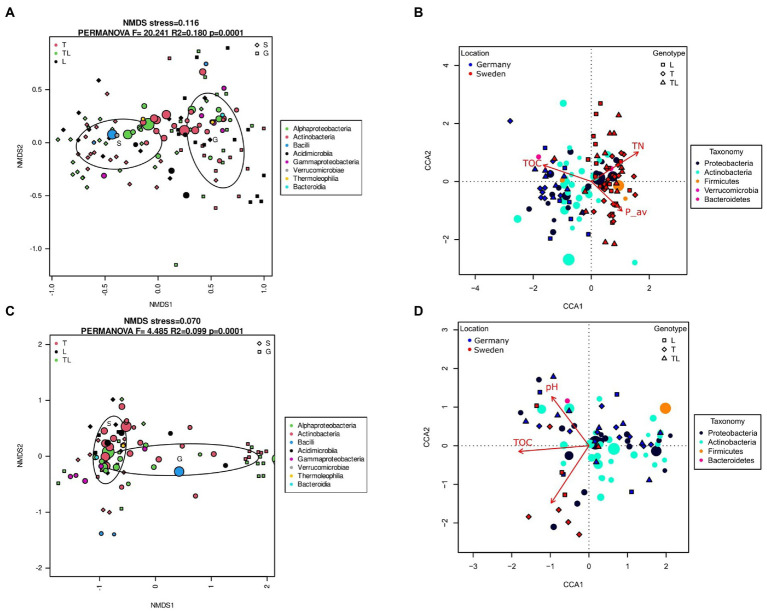
Phosphorus (P) is an essential plant nutrient that can limit plant growth due to low availability in the soil. P-solubilizing bacteria in the roots and rhizosphere increase the P use efficiency of plants. This study addressed the impact of plant species, the level of plant association with bacteria (rhizosphere or root endophyte) and environmental factors (e.g., seasons, soil properties) on the abundance and diversity of P-solubilizing bacteria in short-rotation coppices (SRC) of willows ( spp.) for biomass production. Two willow species ( . Loden and Tora) grown in mono-and mixed culture plots were examined for the abundance and diversity of bacteria in the root endosphere and rhizosphere during two seasons (fall and spring) in central Sweden and northern Germany. Soil properties, such as pH and available P and N, had a significant effect on the structure of the bacterial community. Microbiome analysis and culture-based methods revealed a higher diversity of rhizospheric bacteria than endophytic bacteria. The P-solubilizing bacterial isolates belonged mainly to Proteobacteria (85%), Actinobacteria (6%) and Firmicutes (9%). was the most frequently isolated cultivable bacterial genus from both the root endosphere and the rhizosphere. The remaining cultivable bacterial isolates belonged to the phyla and . In conclusion, site-specific soil conditions and the level of plant association with bacteria were the main factors shaping the bacterial communities in the willow SRCs. In particular, the concentration of available P along with the total nitrogen in the soil controlled the total bacterial diversity in willow SRCs. A lower number of endophytic and rhizospheric bacteria was observed in Loden willow species compared to that of Tora and the mix of the two, indicating that mixed growth of species promotes P-solubilizing bacterial diversity and abundance. Therefore, a mixed plant design was presented as a management option to increase the P availability for in SRCs. This design should be tested for further species mixtures.
磷(P)是植物必需的养分,但由于土壤中有效性低,它可能会限制植物生长。根际和根际中的解磷细菌可提高植物的磷利用效率。本研究探讨了植物种类、植物与细菌的关联水平(根际或根内生菌)以及环境因素(如季节、土壤性质)对柳树短轮伐期矮林(SRC)中解磷细菌的丰度和多样性的影响,这些柳树用于生物质生产。在瑞典中部和德国北部的两个季节(秋季和春季),对在单作和混作地块中种植的两种柳树(洛登柳和托拉柳)的根内圈和根际细菌的丰度和多样性进行了检测。土壤性质,如pH值以及有效磷和氮,对细菌群落结构有显著影响。微生物组分析和基于培养的方法表明,根际细菌的多样性高于内生细菌。解磷细菌分离株主要属于变形菌门(85%)、放线菌门(6%)和厚壁菌门(9%)。芽孢杆菌属是从根内圈和根际中最常分离到的可培养细菌属。其余可培养细菌分离株属于拟杆菌门和酸杆菌门。总之,特定地点的土壤条件以及植物与细菌的关联水平是塑造柳树SRC中细菌群落的主要因素。特别是,土壤中有效磷的浓度以及总氮控制着柳树SRC中的细菌总多样性。与托拉柳及其两者的混合品种相比,洛登柳品种中观察到的内生和根际细菌数量较少,这表明混合种植品种可促进解磷细菌的多样性和丰度。因此,提出了混合种植设计作为一种管理选择,以提高SRC中柳树的磷有效性。这种设计应针对更多的品种混合物进行测试。