Department of Obstetrics, Gynecology, and Women's Health, University of Missouri School of Medicine, Columbia, Missouri, USA.
Christopher S Bond Life Sciences Center, University of Missouri, Columbia, Missouri, USA.
J Infect Dis. 2021 Dec 8;224(Suppl 6):S660-S669. doi: 10.1093/infdis/jiab309.
SARS-CoV-2 infection in term placenta is rare. However, growing evidence suggests that susceptibility of the human placenta to infection may vary by gestational age and pathogen. For several viral infections, susceptibility appears to be greatest during early gestation. Peri-implantation placental infections that result in pre-clinical pregnancy loss would typically go undetected. Little is known about the effects of SARS-CoV-2 on the peri-implantation human placenta since this time in pregnancy can only be modeled in vitro.
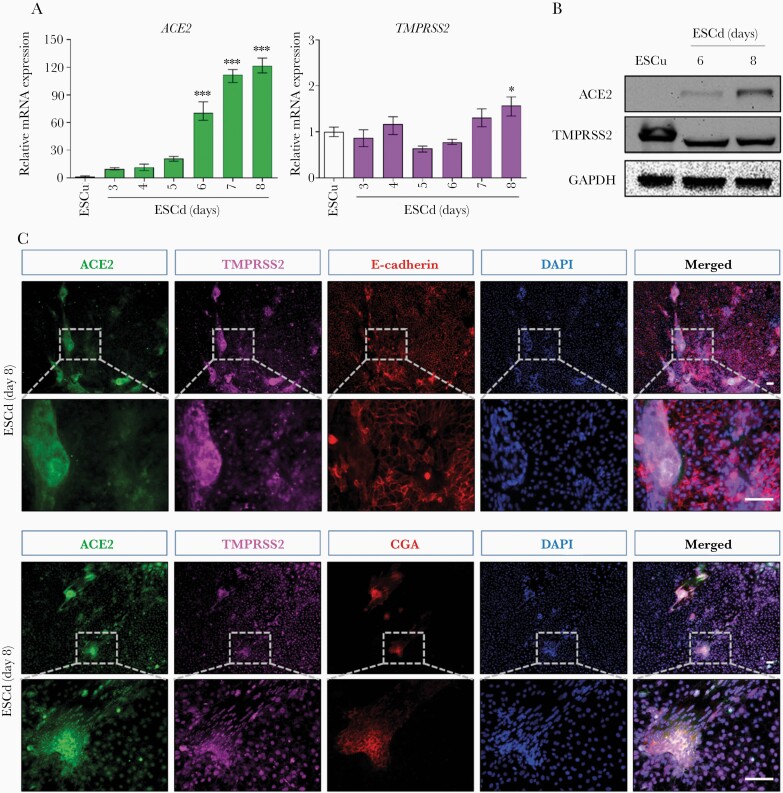
We used a human embryonic stem cell (hESC)-derived model of peri-implantation placental development to assess patterns of ACE2 and TMPRSS2 transcription and protein expression in primitive trophoblast. We then infected the same trophoblast cell model with a clinical isolate of SARS-CoV-2 and documented infection dynamics.
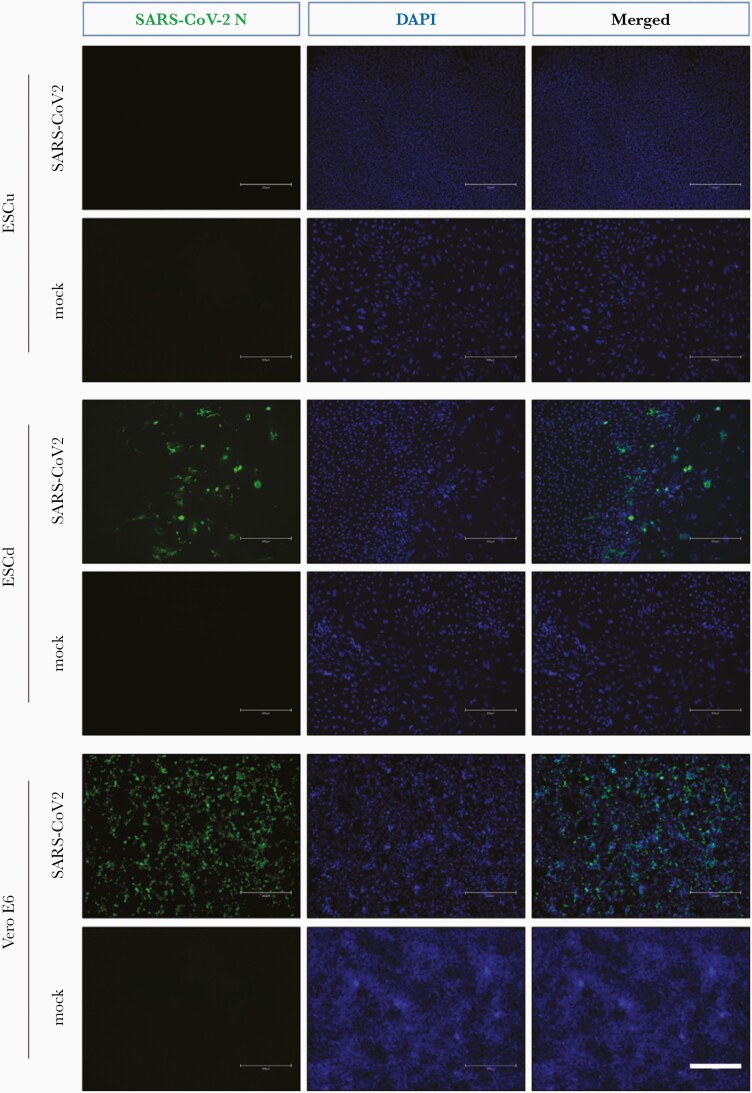
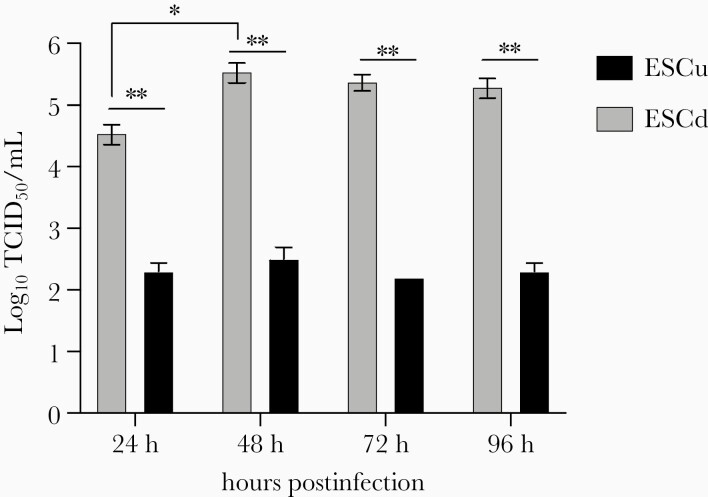
ACE2 and TMPRSS2 were transcribed and translated in hESC-derived trophoblast, with preferential expression in syncytialized cells. These same cells supported replicative and persistent infection by SARS-CoV-2, while non-syncytialized trophoblast cells in the same cultures did not.
Co-expression of ACE2 and TMPRSS2 in hESC-derived trophoblast and the robust and replicative infection limited to syncytiotrophoblast equivalents support the hypothesis that increased viral susceptibility may be a defining characteristic of primitive trophoblast.
SARS-CoV-2 感染足月胎盘较为罕见。然而,越来越多的证据表明,人类胎盘对感染的易感性可能因妊娠龄和病原体而异。对于几种病毒感染,易感性似乎在妊娠早期最大。导致临床前妊娠丢失的着床前胎盘感染通常无法检测到。由于在此期间只能在体外对妊娠进行建模,因此人们对 SARS-CoV-2 对着床前人类胎盘的影响知之甚少。
我们使用人胚胎干细胞 (hESC) 衍生的着床前胎盘发育模型来评估原始滋养层中 ACE2 和 TMPRSS2 转录和蛋白表达的模式。然后,我们用临床分离的 SARS-CoV-2 感染相同的滋养层细胞模型,并记录感染动力学。
ACE2 和 TMPRSS2 在 hESC 衍生的滋养层中转录和翻译,在合胞体细胞中优先表达。这些相同的细胞支持 SARS-CoV-2 的复制和持续感染,而同一培养物中的非合胞体滋养层细胞则没有。
hESC 衍生的滋养层中 ACE2 和 TMPRSS2 的共表达以及仅限于合胞滋养层等效物的强大和复制性感染支持这样的假设,即增加的病毒易感性可能是原始滋养层的一个特征。