Department of Molecular Epidemiology and Biomedical Sciences, Aichi Medical University, Nagakute, 480-1195, Japan.
Department of Clinical Infectious Diseases, Aichi Medical University, Nagakute, 480-1195, Japan.
Sci Rep. 2021 Jul 22;11(1):15007. doi: 10.1038/s41598-021-94572-z.
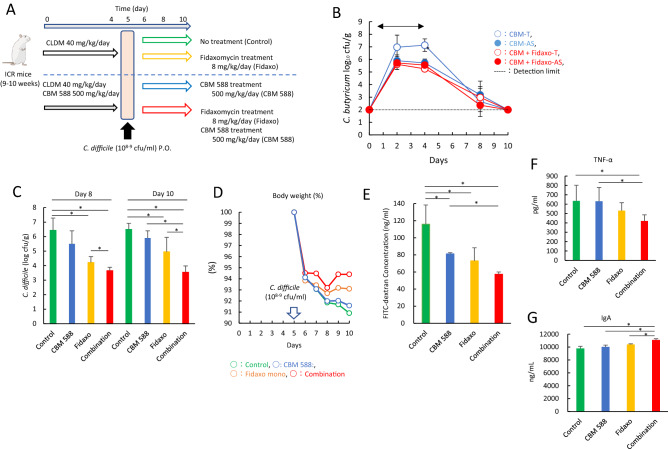
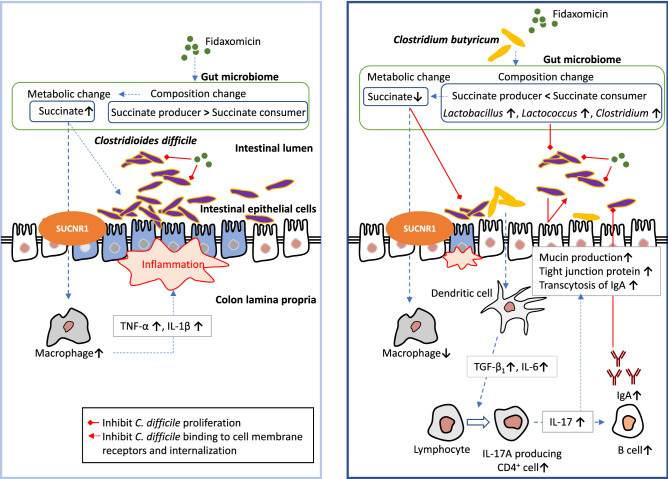
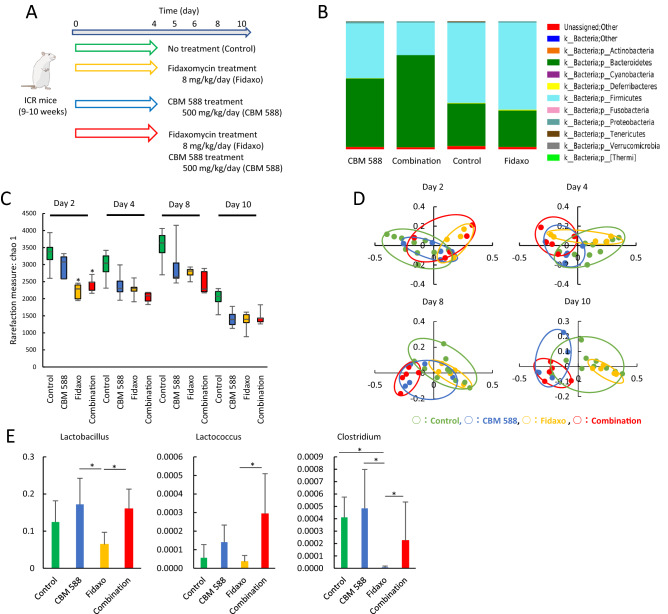
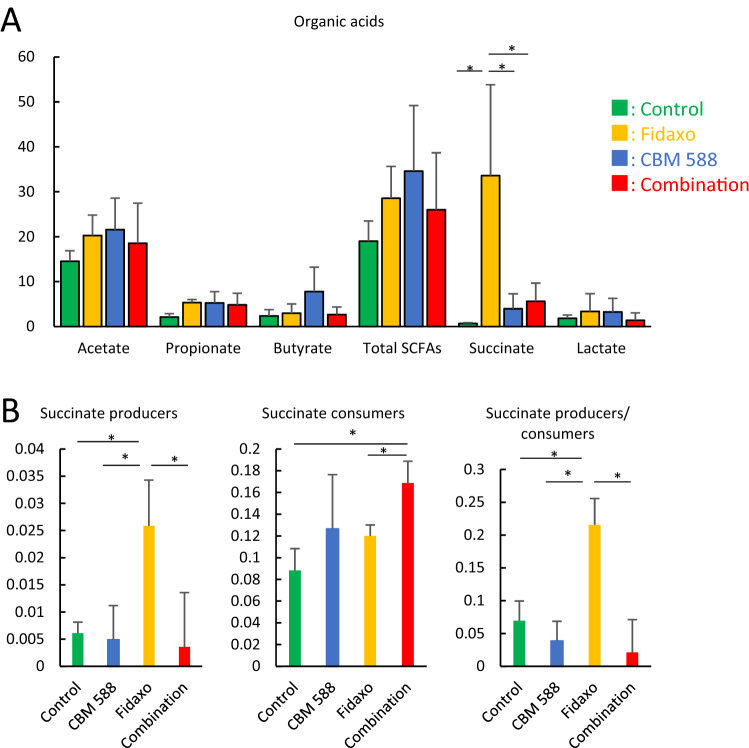
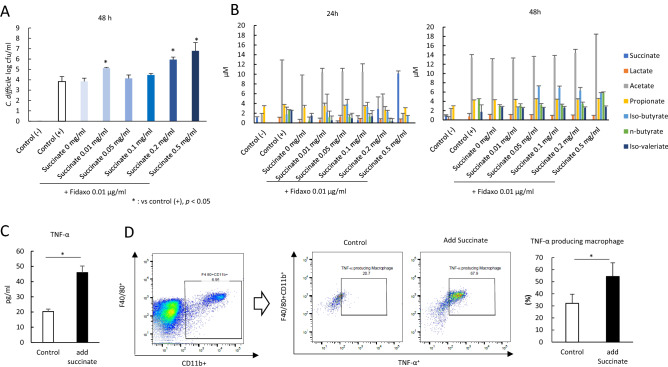
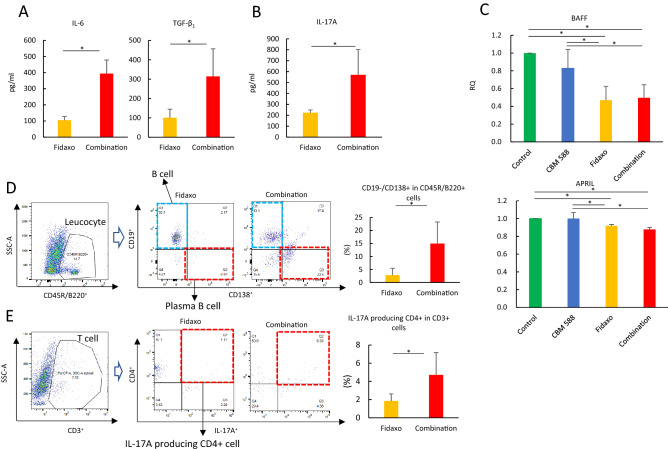
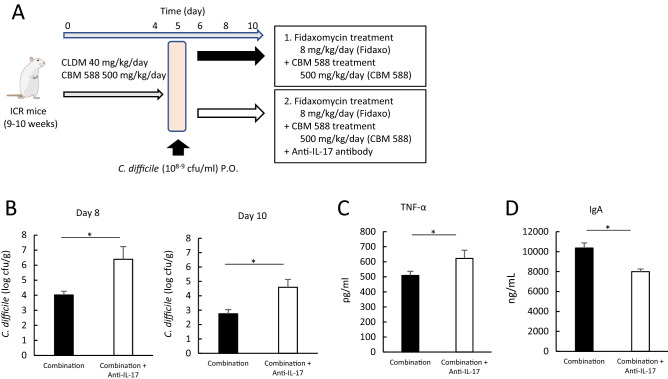
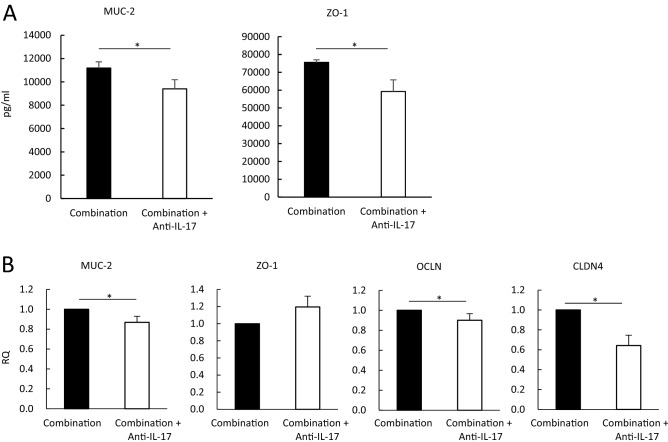
Clostridioides difficile infection (CDI) represents the leading cause of nosocomial diarrhea worldwide and is associated with gut dysbiosis and intestinal damage. Clostridium butyricum MIYAIRI 588 (CBM 588) contributes significantly to reduce epithelial damage. However, the impacts of CBM 588 on antibacterial therapy for CDI are not clear. Here we show that CBM 588 enhanced the antibacterial activity of fidaxomicin against C. difficile and negatively modulated gut succinate levels to prevent C. difficile proliferation and downregulate tumor necrosis factor-α (TNF-α) producing macrophages in the colon lumina propria (cLP), resulting in a significant decrease in colon epithelial damage. Additionally, CBM 588 upregulated T cell-dependent pathogen specific immunoglobulin A (IgA) via interleukin (IL)-17A producing CD4 cells and plasma B cells in the cLP, and Th17 cells in the cLP enhanced the gut epithelial barrier function. IL-17A and succinic acid modulations with CBM 588 enhance gut colonization resistance to C. difficile and protect the colon tissue from CDI.
艰难梭菌感染(CDI)是全球医院获得性腹泻的主要原因,与肠道菌群失调和肠道损伤有关。丁酸梭菌 MIYAIRI 588(CBM 588)可显著减轻上皮损伤。然而,CBM 588 对 CDI 的抗菌治疗的影响尚不清楚。本研究表明,CBM 588 增强了 fidaxomicin 对艰难梭菌的抗菌活性,负调控肠道琥珀酸水平,以防止艰难梭菌增殖,并下调结肠固有层(cLP)中产生肿瘤坏死因子-α(TNF-α)的巨噬细胞,从而显著减轻结肠上皮损伤。此外,CBM 588 通过 cLP 中的白细胞介素(IL)-17A 产生的 CD4 细胞和浆细胞上调 T 细胞依赖性病原体特异性免疫球蛋白 A(IgA),并在 cLP 中上调 Th17 细胞,增强肠道上皮屏障功能。CBM 588 对 IL-17A 和琥珀酸的调节增强了肠道对艰难梭菌的定植抵抗力,保护结肠组织免受 CDI 的影响。