Earth Observatory of Singapore, Interdisciplinary Graduate School, Nanyang Technological University, Singapore, Singapore.
Asian School of the Environment, Nanyang Technological University, Singapore, Singapore.
ISME J. 2022 Jan;16(1):233-246. doi: 10.1038/s41396-021-01054-1. Epub 2021 Jul 22.
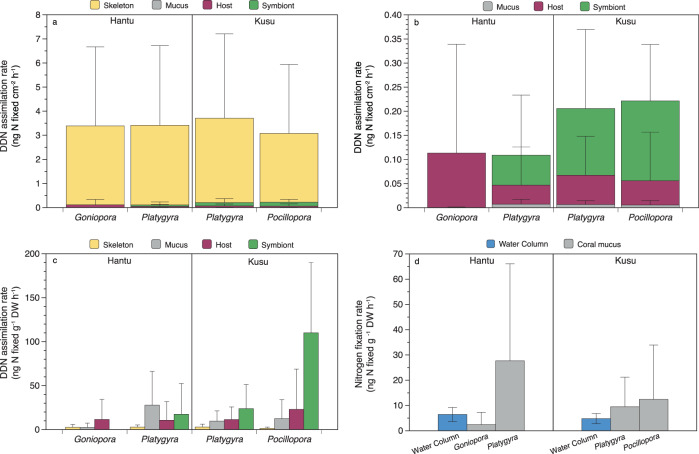
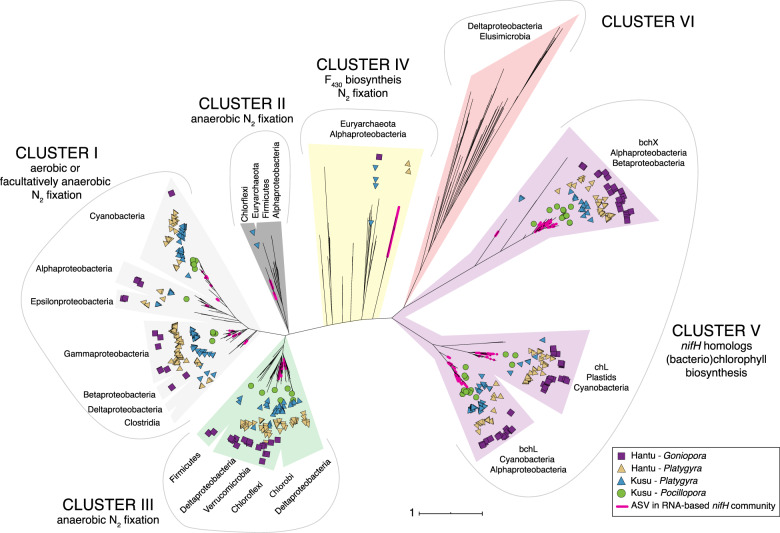
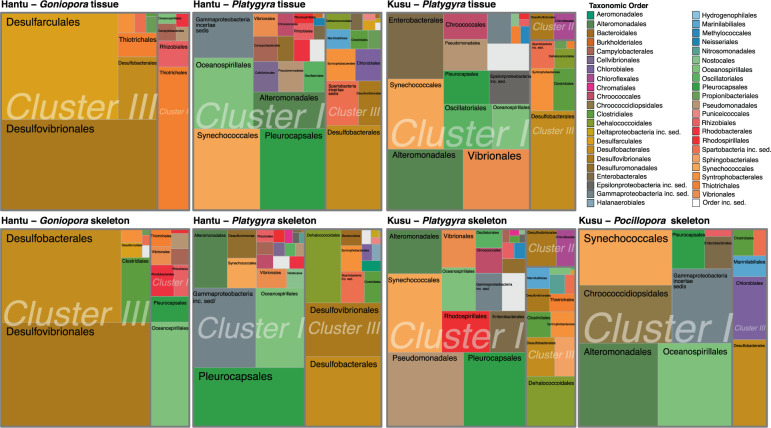
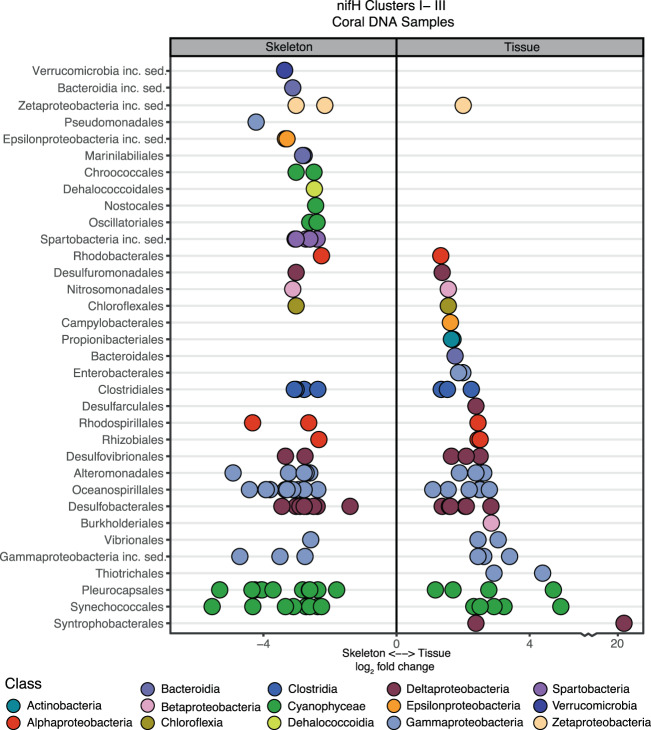
The role of diazotrophs in coral physiology and reef biogeochemistry remains poorly understood, in part because N fixation rates and diazotrophic community composition have only been jointly analyzed in the tissue of one tropical coral species. We performed field-based N tracer incubations during nutrient-replete conditions to measure diazotroph-derived nitrogen (DDN) assimilation into three species of scleractinian coral (Pocillopora acuta, Goniopora columna, Platygyra sinensis). Using multi-marker metabarcoding (16S rRNA, nifH, 18S rRNA), we analyzed DNA- and RNA-based communities in coral tissue and skeleton. Despite low N fixation rates, DDN assimilation supplied up to 6% of the holobiont's N demand. Active coral-associated diazotrophs were chiefly Cluster I (aerobes or facultative anaerobes), suggesting that oxygen may control coral-associated diazotrophy. Highest N fixation rates were observed in the endolithic community (0.20 µg N cm per day). While the diazotrophic community was similar between the tissue and skeleton, RNA:DNA ratios indicate potential differences in relative diazotrophic activity between these compartments. In Pocillopora, DDN was found in endolithic, host, and symbiont compartments, while diazotrophic nifH sequences were only observed in the endolithic layer, suggesting a possible DDN exchange between the endolithic community and the overlying coral tissue. Our findings demonstrate that coral-associated diazotrophy is significant, even in nutrient-rich waters, and suggest that endolithic microbes are major contributors to coral nitrogen cycling on reefs.
固氮生物在珊瑚生理学和珊瑚礁生物地球化学中的作用仍未被充分了解,部分原因是仅在一种热带珊瑚物种的组织中联合分析了固氮速率和固氮生物群落组成。我们在营养充足的条件下进行了基于现场的氮示踪剂孵育实验,以测量三种石珊瑚(Pocillopora acuta、Goniopora columna 和 Platygyra sinensis)中固氮生物衍生氮(DDN)的同化。我们使用多标记代谢组学(16S rRNA、nifH、18S rRNA)分析了珊瑚组织和骨骼中的 DNA 和 RNA 基群落。尽管固氮率较低,但 DDN 的同化供应了整个共生体氮需求的高达 6%。活跃的珊瑚相关固氮生物主要是 I 类群(好氧或兼性厌氧菌),这表明氧气可能控制珊瑚相关固氮作用。内共生体(0.20 μg N cm 每天)中的固氮率最高。虽然组织和骨骼中的固氮生物群落相似,但 RNA:DNA 比值表明这些隔室之间的相对固氮活性可能存在差异。在 Pocillopora 中,DDN 存在于内生、宿主和共生体隔室中,而固氮 nifH 序列仅在内生层中观察到,这表明内生群落和覆盖其上的珊瑚组织之间可能存在 DDN 交换。我们的研究结果表明,珊瑚相关固氮作用在营养丰富的水域中也很重要,并表明内生微生物是珊瑚氮循环的主要贡献者。