Lee Jessica K, Koppelmans Vincent, Pasternak Ofer, Beltran Nichole E, Kofman Igor S, De Dios Yiri E, Mulder Edwin R, Mulavara Ajitkumar P, Bloomberg Jacob J, Seidler Rachael D
Department of Applied Physiology and Kinesiology, College of Health and Human Performance, University of Florida, Gainesville, FL 32611, USA.
Department of Psychiatry, University of Utah, Salt Lake City, UT 84108, USA.
Cereb Cortex Commun. 2021 Mar 30;2(2):tgab022. doi: 10.1093/texcom/tgab022. eCollection 2021.
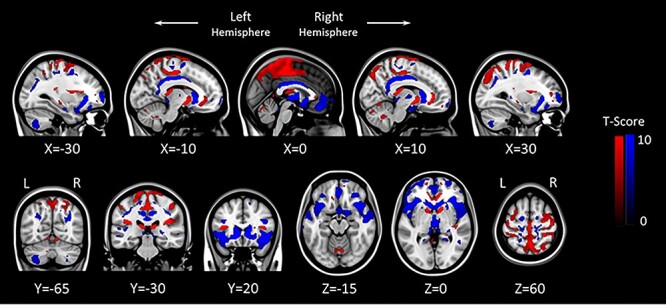
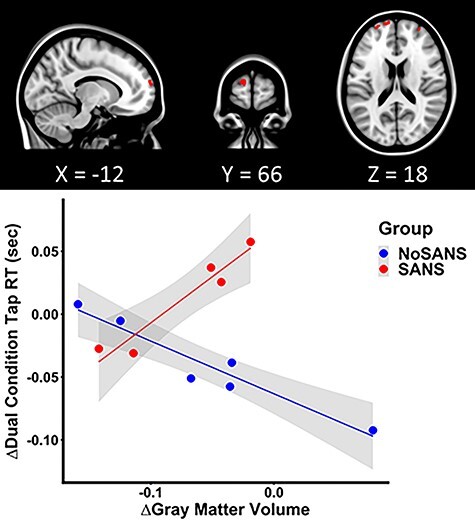
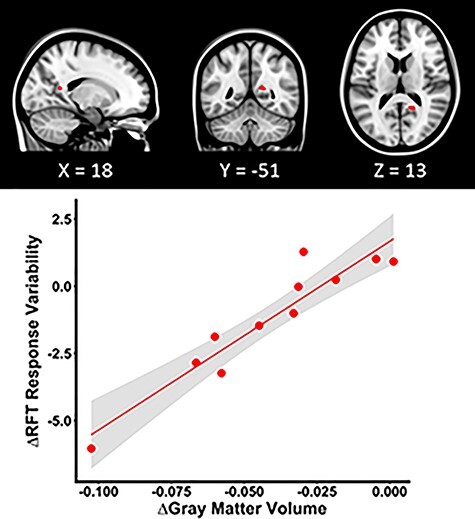
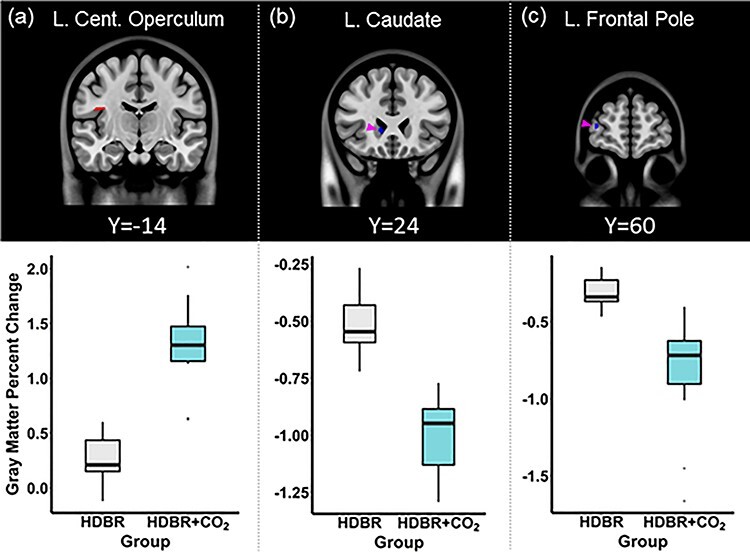
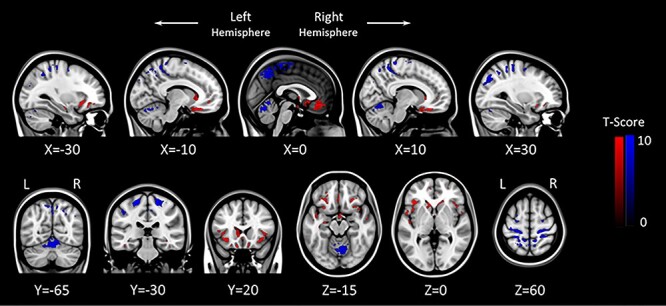
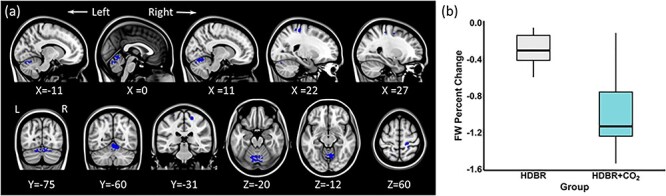
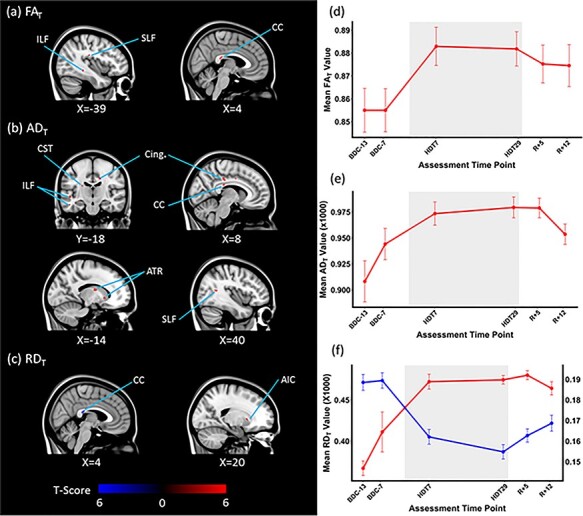
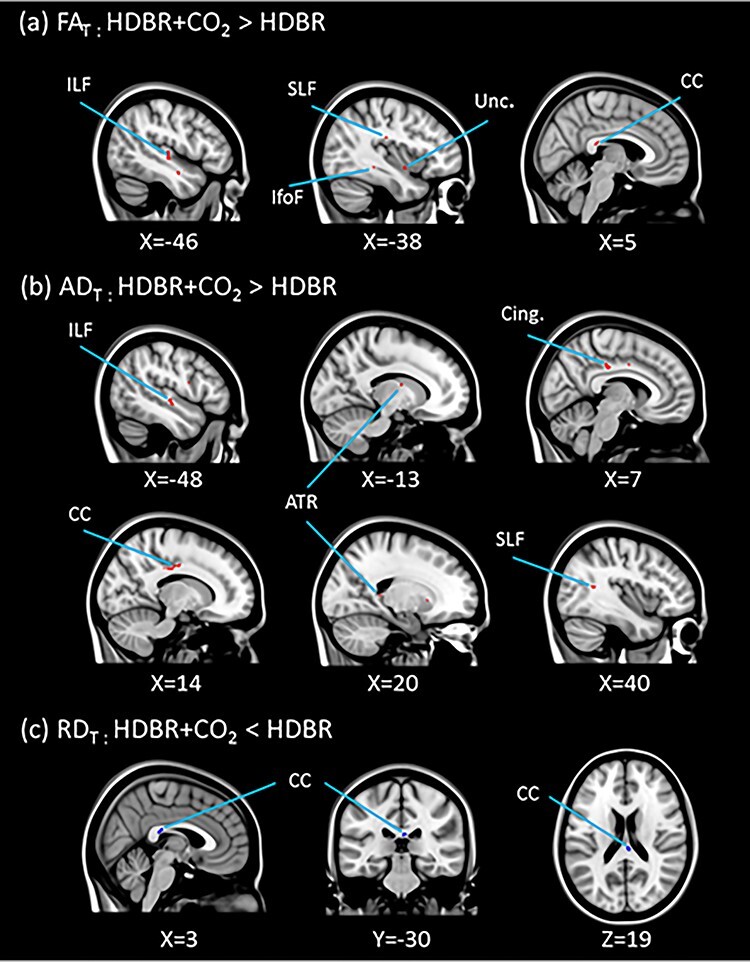
Astronauts are exposed to elevated CO levels onboard the International Space Station. Here, we investigated structural brain changes in 11 participants following 30-days of head-down tilt bed rest (HDBR) combined with 0.5% ambient CO (HDBR + CO) as a spaceflight analog. We contrasted brain changes observed in the HDBR + CO group with those of a previous HDBR sample not exposed to elevated CO. Both groups exhibited a global upward shift of the brain and concomitant intracranial free water (FW) redistribution. Greater gray matter changes were seen in the HDBR + CO group in some regions. The HDBR + CO group showed significantly greater FW decrements in the posterior cerebellum and the cerebrum than the HDBR group. In comparison to the HDBR group, the HDBR + CO group exhibited greater diffusivity increases. In half of the participants, the HDBR + CO intervention resulted in signs of Spaceflight Associated Neuro-ocular Syndrome (SANS), a constellation of ocular structural and functional changes seen in astronauts. We therefore conducted an exploratory comparison compared between subjects that did and did not develop SANS and found asymmetric lateral ventricle enlargement in the SANS group. These results enhance our understanding of the underlying mechanisms of spaceflight-induced brain changes, which is critical for promoting astronaut health and performance.
宇航员在国际空间站上会接触到升高的一氧化碳水平。在此,我们研究了11名参与者在30天头低位卧床休息(HDBR)并结合0.5%环境一氧化碳(HDBR + CO)作为太空飞行模拟条件后的大脑结构变化。我们将HDBR + CO组观察到的大脑变化与之前未接触升高一氧化碳的HDBR样本的变化进行了对比。两组均表现出大脑整体向上移位以及伴随的颅内自由水(FW)重新分布。在某些区域,HDBR + CO组的灰质变化更大。HDBR + CO组在后小脑和大脑中的FW减少量明显大于HDBR组。与HDBR组相比,HDBR + CO组的扩散率增加更大。在一半的参与者中,HDBR + CO干预导致了太空飞行相关神经眼部综合征(SANS)的迹象,这是宇航员中出现的一系列眼部结构和功能变化。因此,我们对出现和未出现SANS的受试者进行了探索性比较,发现SANS组存在不对称侧脑室扩大。这些结果增进了我们对太空飞行引起大脑变化潜在机制的理解,这对于促进宇航员的健康和表现至关重要。