Lee Jessica K, De Dios Yiri, Kofman Igor, Mulavara Ajitkumar P, Bloomberg Jacob J, Seidler Rachael D
Department of Applied Physiology and Kinesiology, College of Health and Human Performance, University of Florida, Gainesville, FL, United States.
German Aerospace Center, Cologne, Germany.
Front Hum Neurosci. 2019 Oct 17;13:355. doi: 10.3389/fnhum.2019.00355. eCollection 2019.
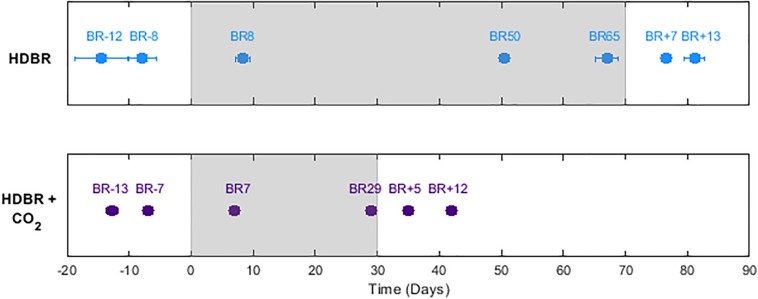
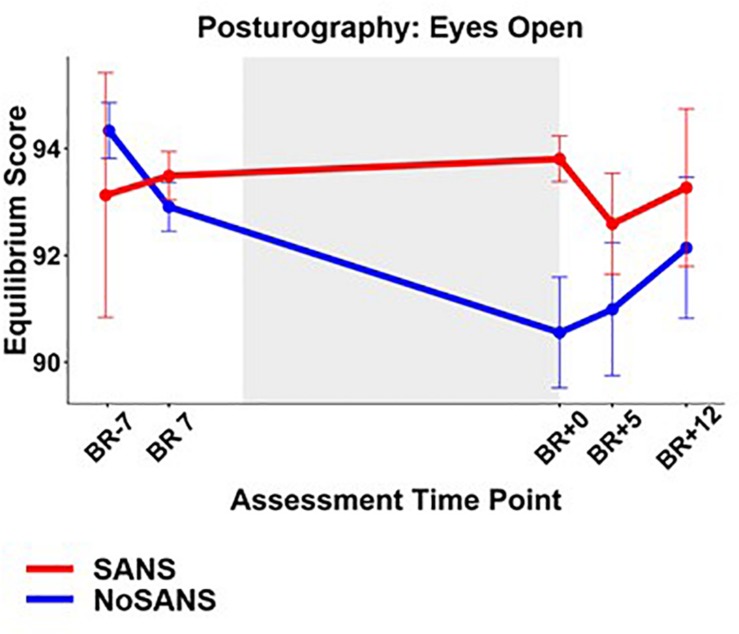
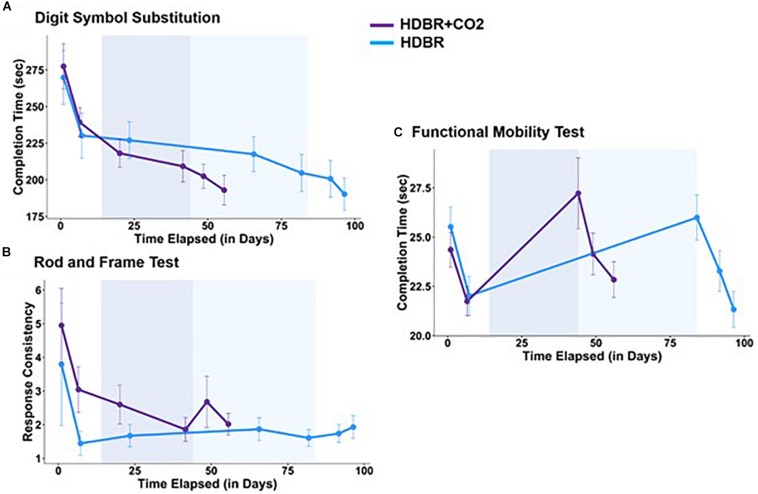
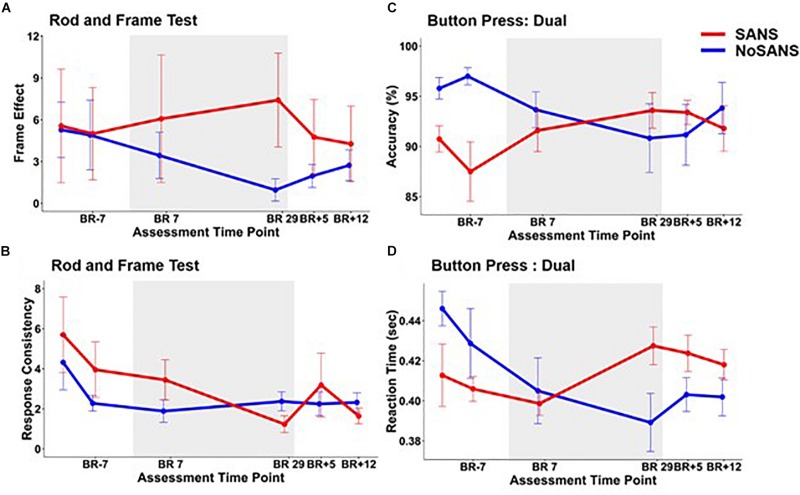
Long duration head down tilt bed rest (HDBR) has been widely used as a spaceflight analog environment to understand the effects of microgravity on human physiology and performance. Reports have indicated that crewmembers onboard the International Space Station (ISS) experience symptoms of elevated CO such as headaches at lower levels of CO than levels at which symptoms begin to appear on Earth. This suggests there may be combinatorial effects of elevated CO and the other physiological effects of microgravity including headward fluid shifts and body unloading. The purpose of the current study was to investigate these effects by evaluating the impact of 30 days of 6° HDBR and 0.5% CO (HDBR + CO) on mission relevant cognitive and sensorimotor performance. We found a facilitation of processing speed and a decrement in functional mobility for subjects undergoing HDBR + CO relative to our previous study of HDBR in ambient air. In addition, nearly half of the participants in this study developed signs of Spaceflight Associated Neuro-ocular Syndrome (SANS), a constellation of ocular structural and functional changes seen in approximately one third of long duration astronauts. This allowed us the unique opportunity to compare the two subgroups. We found that participants who exhibited signs of SANS became more visually dependent and shifted their speed-accuracy tradeoff, such that they were slower but more accurate than those that did not incur ocular changes. These small subgroup findings suggest that SANS may have an impact on mission relevant performance inflight via sensory reweighting.
We examined the effects of long duration head down tilt bed rest coupled with elevated CO as a spaceflight analog environment on human cognitive and sensorimotor performance. We found enhancements in processing speed and declines in functional mobility. A subset of participants exhibited signs of Spaceflight Associated Neuro-ocular Syndrome (SANS), which affects approximately one in three astronauts. These individuals increased their visual reliance throughout the intervention in comparison to participants who did not show signs of SANS.
长时间头低位卧床休息(HDBR)已被广泛用作模拟太空飞行环境,以了解微重力对人体生理和机能的影响。报告指出,国际空间站(ISS)上的机组人员在二氧化碳(CO)水平低于在地球上开始出现症状的水平时,就会出现诸如头痛等二氧化碳升高的症状。这表明,二氧化碳升高与微重力的其他生理影响(包括头部液体转移和身体失重)可能存在综合作用。本研究的目的是通过评估30天6°头低位卧床休息和0.5%二氧化碳(HDBR + CO)对与任务相关的认知和感觉运动机能的影响来研究这些作用。我们发现,与我们之前在环境空气中进行的HDBR研究相比,接受HDBR + CO的受试者处理速度加快,功能活动能力下降。此外,本研究中近一半的参与者出现了太空飞行相关神经眼综合征(SANS)迹象,这是一组在约三分之一的长期宇航员中出现的眼部结构和功能变化。这使我们有独特的机会比较这两个亚组。我们发现,出现SANS迹象的参与者在视觉上变得更加依赖,并且改变了他们的速度-准确性权衡,因此他们比没有出现眼部变化的参与者速度更慢但更准确。这些小规模亚组研究结果表明,SANS可能通过感觉重新加权对飞行中的任务相关机能产生影响。
我们研究了长时间头低位卧床休息并结合二氧化碳升高作为模拟太空飞行环境对人类认知和感觉运动机能的影响。我们发现处理速度提高,功能活动能力下降。一部分参与者出现了太空飞行相关神经眼综合征(SANS)迹象,大约每三名宇航员中就有一人受其影响。与没有出现SANS迹象的参与者相比,这些人在整个干预过程中增加了对视觉的依赖。