Public Sector Research Group, University New South Wales, Canberra, Australia.
One Disease, Darwin, Australia.
PLoS Negl Trop Dis. 2021 Jul 23;15(7):e0009577. doi: 10.1371/journal.pntd.0009577. eCollection 2021 Jul.
Crusted scabies is endemic in some remote Aboriginal communities in the Northern Territory (NT) of Australia and carries a high mortality risk. Improvement in active case detection (ACD) for crusted scabies is hampered by a lack of evidence about best practice. We therefore conducted a systematic review of ACD methods for leprosy, a condition with similar ACD requirements, to consider how findings could be informative to crusted scabies detection.
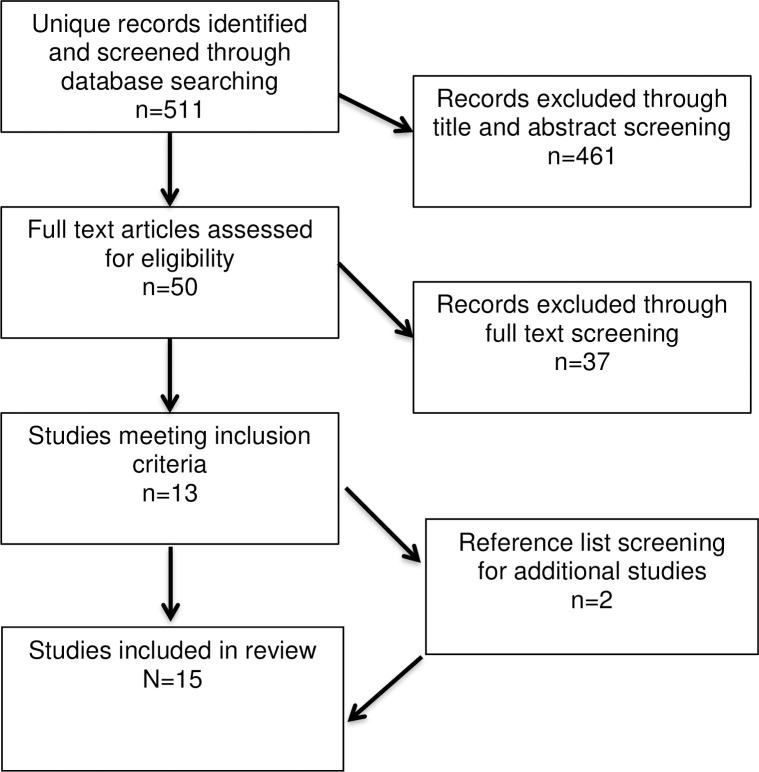
We conducted systematic searches in MEDLINE, CINAHL, Scopus and the Cochrane Database for Systematic Reviews for studies published since 1999 that reported at least one comparison rate (detection or prevalence rate) against which the yield of the ACD method could be assessed. The search yielded 15 eligible studies from 511. Study heterogeneity precluded meta-analysis. Contact tracing and community screening of marginalised ethnic groups yielded the highest new case detection rates. Rapid community screening campaigns, and those using less experienced screening personnel, were associated with lower suspect confirmation rates. There is insufficient data to assess whether ACD campaigns improve treatment outcomes or disease control.
This review demonstrates the importance of ACD campaigns in communities facing the highest barriers to healthcare access and within neighbourhoods of index cases. The potential benefit of ACD for crusted scabies is not quantified, however, lessons from leprosy suggest value in follow-up with previously identified cases and their close contacts to support for scabies control and to reduce the likelihood of reinfection in the crusted scabies case. Skilled screening personnel and appropriate community engagement strategies are needed to maximise screening uptake. More research is needed to assess ACD cost effectiveness, impact on disease control, and to explore ACD methods capable of capturing the homeless and highly mobile who may be missed in household centric models.
结痂性疥疮在澳大利亚北部地区(NT)的一些偏远原住民社区流行,死亡率很高。由于缺乏有关最佳实践的证据,结痂性疥疮的主动病例发现(ACD)的改善受到阻碍。因此,我们对麻风病的 ACD 方法进行了系统评价,麻风病具有相似的 ACD 要求,以考虑如何为结痂性疥疮的检测提供信息。
我们在 MEDLINE、CINAHL、Scopus 和 Cochrane 系统评价数据库中进行了系统搜索,以查找自 1999 年以来发表的至少报告了一个比较率(检测或患病率)的研究,以便可以评估 ACD 方法的产量。该搜索从 511 项研究中得出了 15 项合格的研究。研究的异质性使得无法进行荟萃分析。对边缘化族裔群体进行接触追踪和社区筛查可获得最高的新病例检出率。快速的社区筛查运动和使用经验不足的筛查人员与较低的可疑确认率相关。没有足够的数据来评估 ACD 运动是否改善治疗结果或疾病控制。
这项审查表明,在面临最高医疗保健获取障碍的社区和索引病例所在的社区中,ACD 运动非常重要。尚未量化 ACD 对结痂性疥疮的潜在益处,但是从麻风病中获得的经验表明,对以前确定的病例及其密切接触者进行随访以支持疥疮控制并减少结痂性疥疮病例再次感染的可能性是有价值的。需要熟练的筛查人员和适当的社区参与策略来最大程度地提高筛查参与度。需要进行更多的研究来评估 ACD 的成本效益,对疾病控制的影响,并探索能够捕获可能在以家庭为中心的模型中错过的无家可归者和高度流动人群的 ACD 方法。