Poggi Alessandro, Villa Federico, Fernadez Jordi Leonardo Castrillo, Costa Delfina, Zocchi Maria Raffaella, Benelli Roberto
Molecular Oncology and Angiogenesis Unit, IRCCS Ospedale Policlinico San Martino, 16132 Genoa, Italy.
Division on Immunology, Transplants and Infectious Diseases, IRCCS San Raffaele Scientific Institute, 20132 Milan, Italy.
Cancers (Basel). 2021 Jul 8;13(14):3417. doi: 10.3390/cancers13143417.
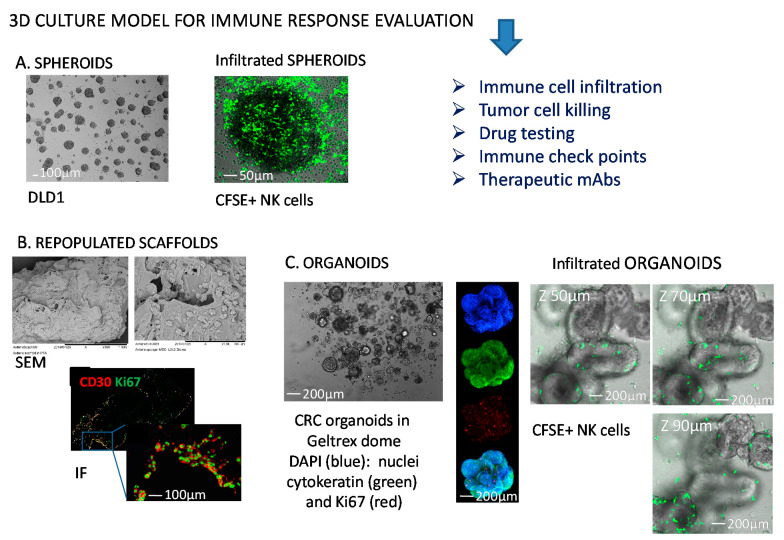
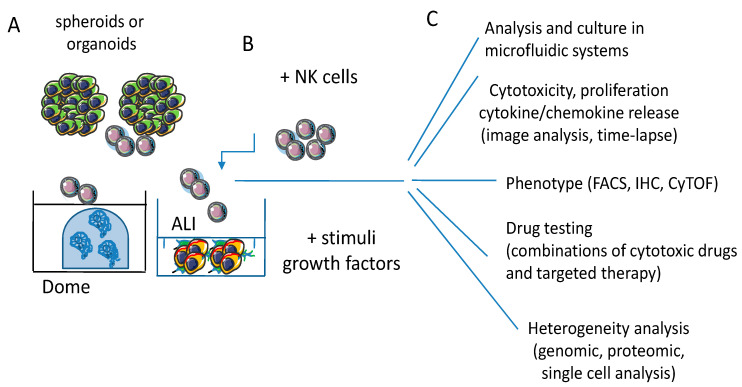
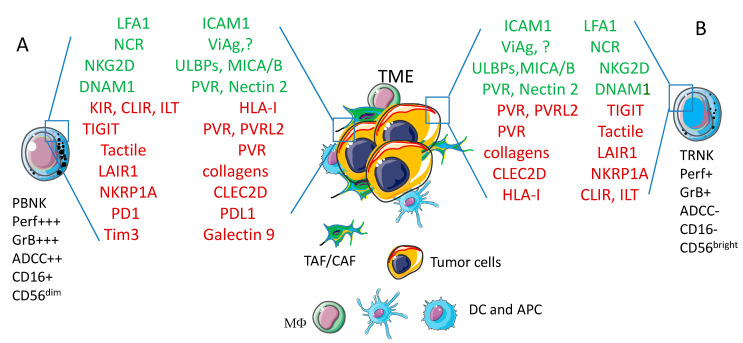
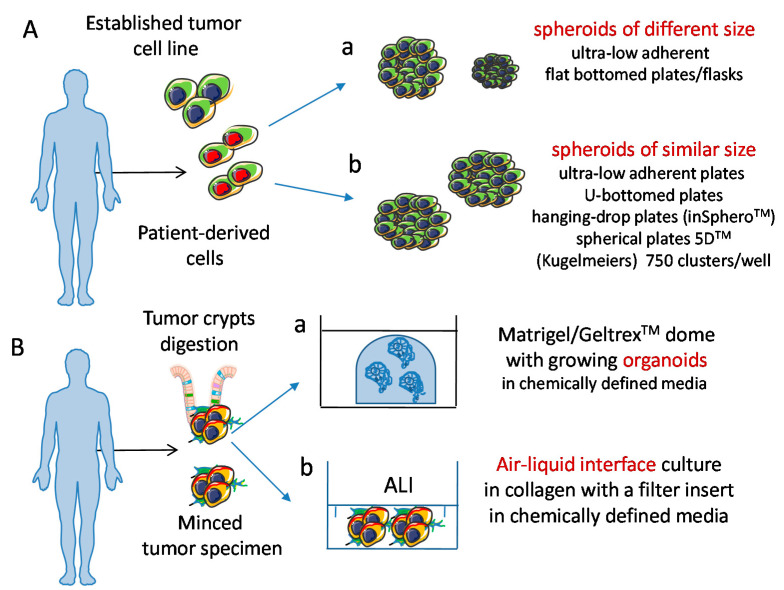
Several approaches have shown that the immune response against tumors strongly affects patients' clinical outcome. Thus, the study of anti-tumor immunity is critical to understand and potentiate the mechanisms underlying the elimination of tumor cells. Natural killer (NK) cells are members of innate immunity and represent powerful anti-tumor effectors, able to eliminate tumor cells without a previous sensitization. Thus, the study of their involvement in anti-tumor responses is critical for clinical translation. This analysis has been performed in vitro, co-incubating NK with tumor cells and quantifying the cytotoxic activity of NK cells. In vivo confirmation has been applied to overcome the limits of in vitro testing, however, the innate immunity of mice and humans is different, leading to discrepancies. Different activating receptors on NK cells and counter-ligands on tumor cells are involved in the antitumor response, and innate immunity is strictly dependent on the specific microenvironment where it takes place. Thus, three-dimensional (3D) culture systems, where NK and tumor cells can interact in a tissue-like architecture, have been created. For example, tumor cell spheroids and primary organoids derived from several tumor types, have been used so far to analyze innate immune response, replacing animal models. Herein, we briefly introduce NK cells and analyze and discuss in detail the properties of 3D tumor culture systems and their use for the study of tumor cell interactions with NK cells.
多种方法已表明,针对肿瘤的免疫反应会强烈影响患者的临床结局。因此,研究抗肿瘤免疫对于理解和增强肿瘤细胞清除的潜在机制至关重要。自然杀伤(NK)细胞是先天免疫的成员,是强大的抗肿瘤效应细胞,能够在无需预先致敏的情况下清除肿瘤细胞。因此,研究它们在抗肿瘤反应中的作用对于临床转化至关重要。这种分析是在体外进行的,将NK细胞与肿瘤细胞共同孵育并量化NK细胞的细胞毒性活性。体内验证已被用于克服体外测试的局限性,然而,小鼠和人类的先天免疫是不同的,这导致了差异。NK细胞上不同的激活受体和肿瘤细胞上的配体参与了抗肿瘤反应,并且先天免疫严格依赖于其发生的特定微环境。因此,已经创建了三维(3D)培养系统,其中NK细胞和肿瘤细胞可以在类似组织的结构中相互作用。例如,迄今为止,源自多种肿瘤类型的肿瘤细胞球体和原代类器官已被用于分析先天免疫反应,以替代动物模型。在此,我们简要介绍NK细胞,并详细分析和讨论3D肿瘤培养系统的特性及其在研究肿瘤细胞与NK细胞相互作用中的应用。