Berehab Mimoune, Rouas Redouane, Akl Haidar, Duvillier Hugues, Journe Fabrice, Fayyad-Kazan Hussein, Ghanem Ghanem, Bron Dominique, Lewalle Philippe, Merimi Makram
Laboratory of Experimental Hematology, Institut Jules Bordet-Université libre de Bruxelles, 1000 Brussels, Belgium.
Department of Biology, Functional Biology, Katholieke Universiteit Leuven, 3000 Leuven, Belgium.
Cancers (Basel). 2021 Jul 16;13(14):3579. doi: 10.3390/cancers13143579.
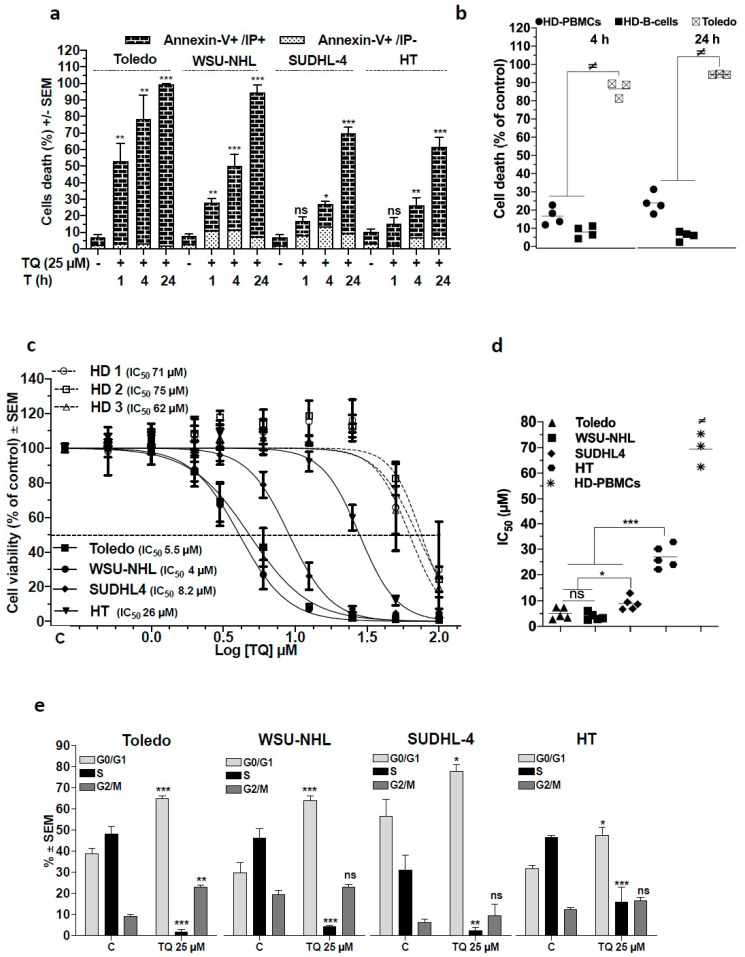
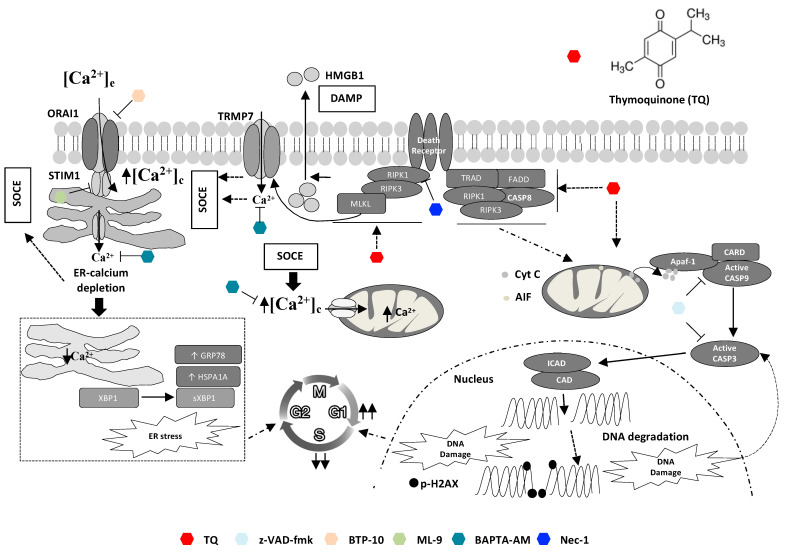
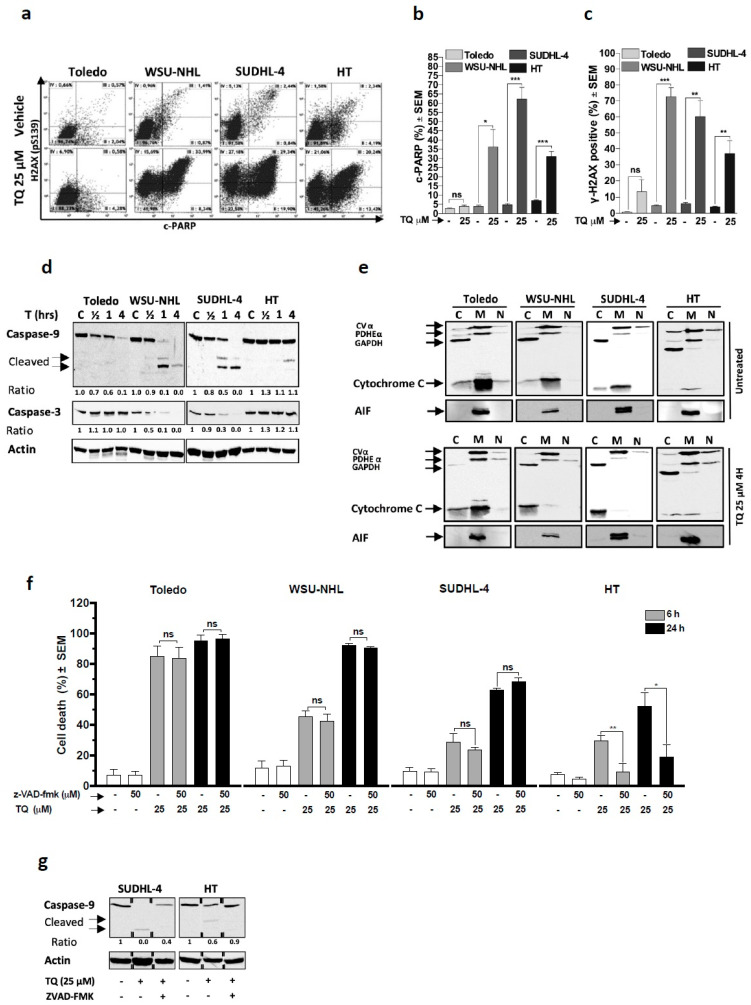
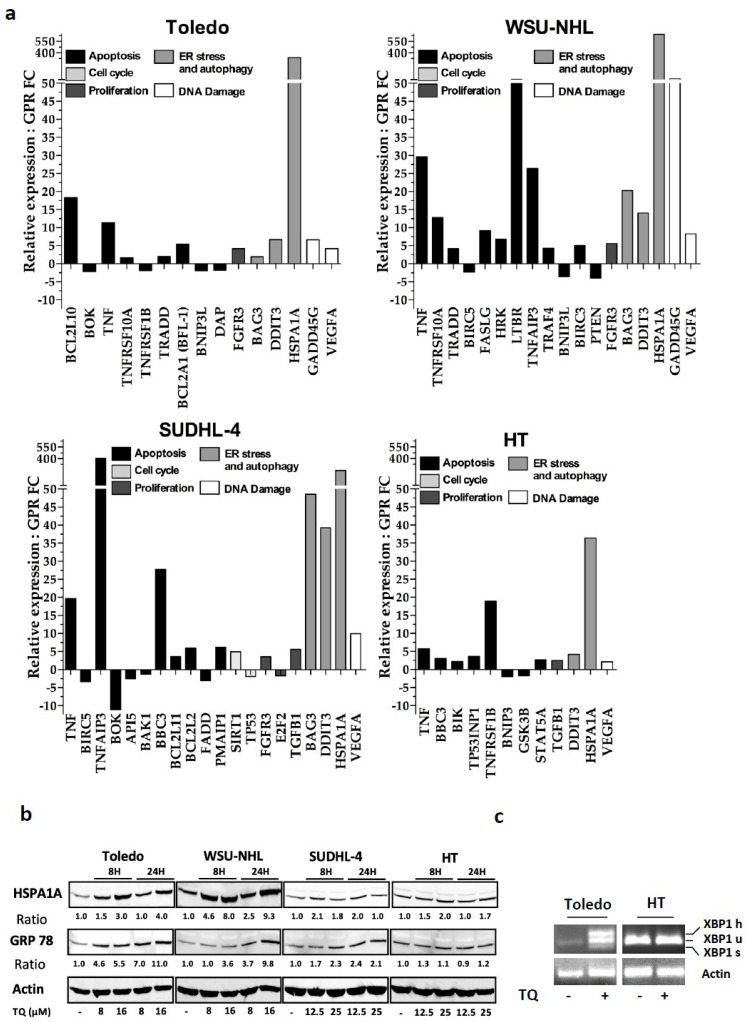
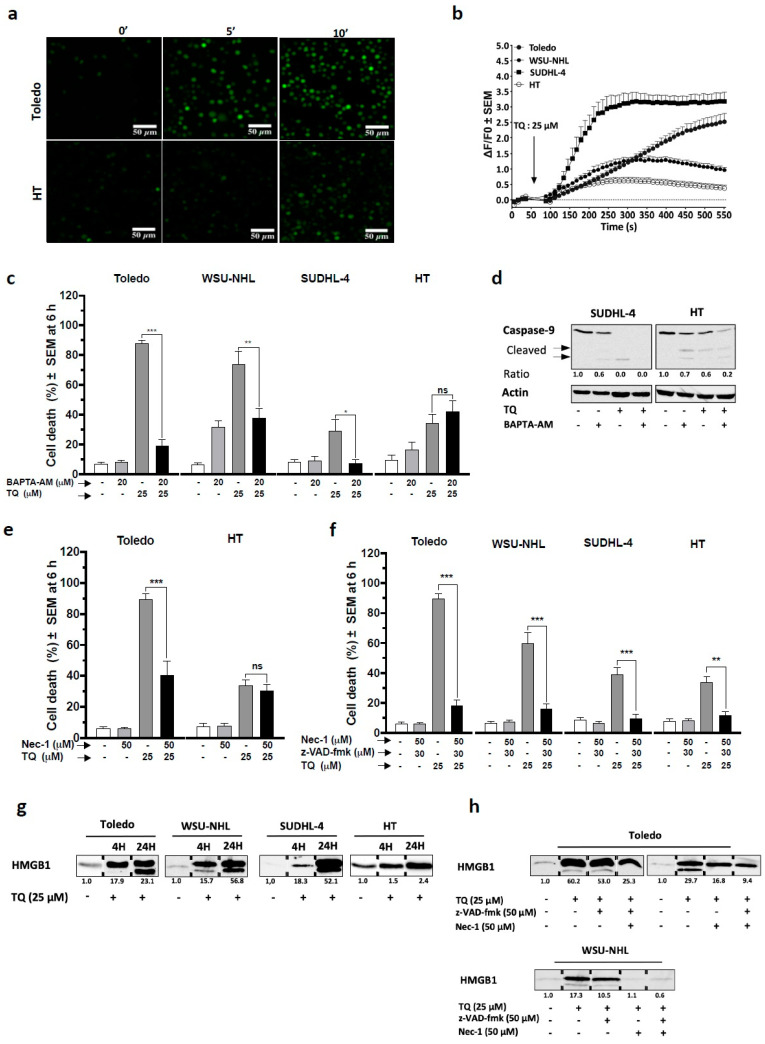
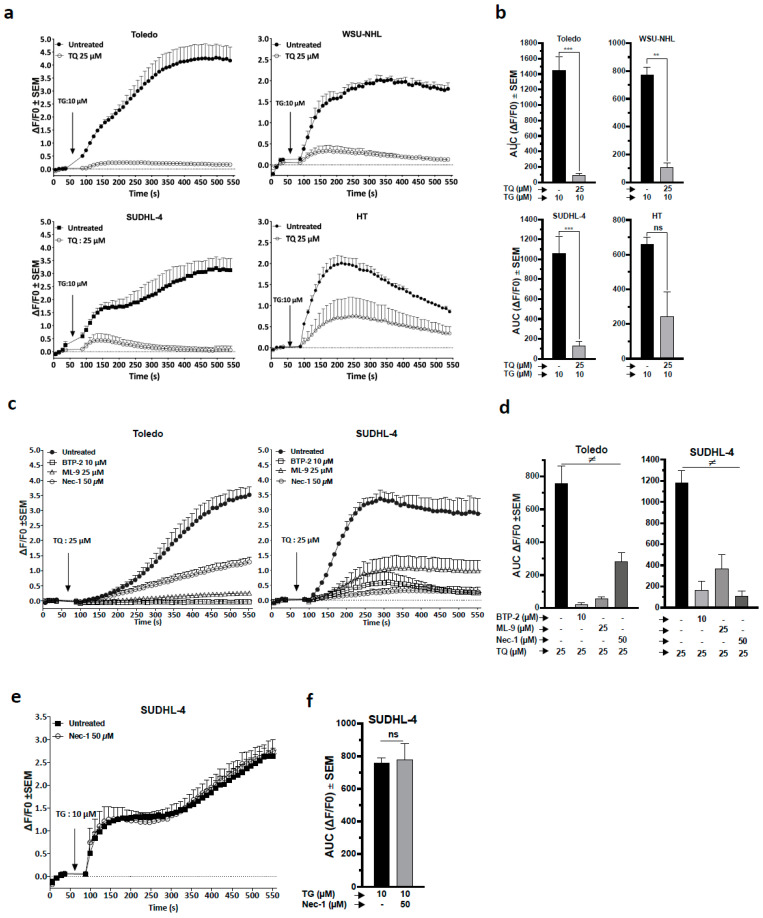
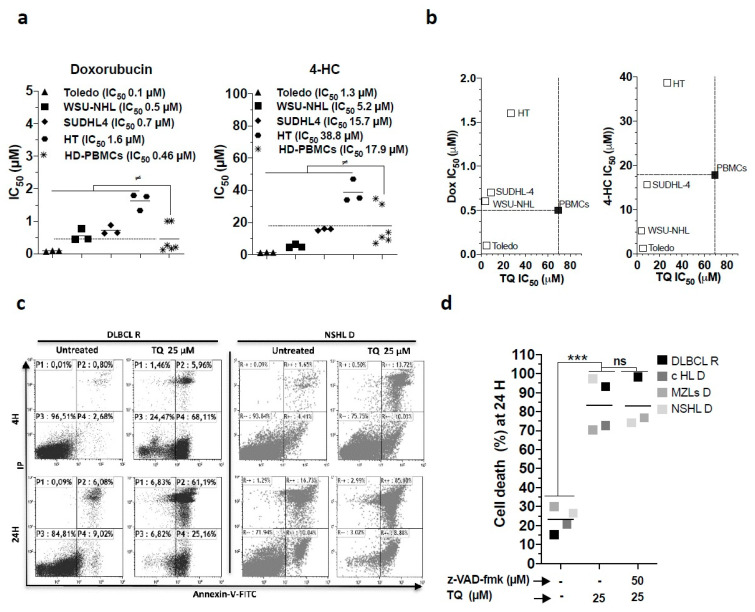
Targeting non-apoptotic modalities might be therapeutically promising in diffuse large B cell lymphoma (DLBCL) patients with compromised apoptotic pathways. Thymoquinone (TQ) has been reported to promote apoptosis in cancer cells, but little is known about its effect on non-apoptotic pathways. This work investigates TQ selectivity against DLBCL cell lines and the cell death mechanisms. TQ reduces cell viability and kills cell lines with minimal toxicity on normal hematological cells. Mechanistically, TQ promotes the mitochondrial caspase pathway and increases genotoxicity. However, insensitivity of most cell lines to caspase inhibition by z-VAD-fmk (benzyloxycarbonyl-Val-Ala-Asp-fluoromethyl ketone) pointed to a critical role of non-apoptotic signaling. In cells dying through non-apoptotic death, TQ increases endoplasmic reticulum (ER) stress markers and substantially increases cytosolic calcium ([Ca]) through ER calcium depletion and activation of store-operated calcium entry (SOCE). Chelation of [Ca], but not SOCE inhibitors, reduces TQ-induced non-apoptotic cell death, highlighting the critical role of calcium in a non-apoptotic effect of TQ. Investigations showed that TQ-induced [Ca] signaling is primarily initiated by necroptosis upstream to SOCE, and inhibition necroptosis by necrostatin-1 alone or with z-VAD-fmk blocks the cell death. Finally, TQ exhibits an improved selectivity profile over standard chemotherapy agents, suggesting a therapeutic relevance of the pro-necroptotic effect of TQ as a fail-safe mechanism for DLBCL therapies targeting apoptosis.
对于凋亡途径受损的弥漫性大B细胞淋巴瘤(DLBCL)患者,靶向非凋亡途径可能具有治疗前景。据报道,百里醌(TQ)可促进癌细胞凋亡,但对其在非凋亡途径中的作用知之甚少。这项工作研究了TQ对DLBCL细胞系的选择性及其细胞死亡机制。TQ可降低细胞活力并杀死细胞系,对正常血液细胞的毒性最小。从机制上讲,TQ促进线粒体半胱天冬酶途径并增加基因毒性。然而,大多数细胞系对z-VAD-fmk(苄氧羰基-Val-Ala-Asp-氟甲基酮)抑制半胱天冬酶不敏感,这表明非凋亡信号传导起关键作用。在通过非凋亡死亡的细胞中,TQ增加内质网(ER)应激标志物,并通过ER钙耗竭和储存操作钙内流(SOCE)的激活大幅增加胞质钙([Ca])。螯合[Ca],而不是SOCE抑制剂,可减少TQ诱导的非凋亡细胞死亡,突出了钙在TQ非凋亡效应中的关键作用。研究表明,TQ诱导的[Ca]信号主要由SOCE上游的坏死性凋亡启动,单独使用坏死性凋亡抑制剂-1或与z-VAD-fmk联合抑制坏死性凋亡可阻断细胞死亡。最后,与标准化疗药物相比,TQ表现出更好的选择性,这表明TQ的促坏死性凋亡效应作为DLBCL靶向凋亡治疗的一种故障安全机制具有治疗相关性。