Jiao Jingjing, Sanchez Jessica I, Thompson Erika J, Mao Xizeng, McCormick Joseph B, Fisher-Hoch Susan P, Futreal P Andrew, Zhang Jianhua, Beretta Laura
Department of Molecular and Cellular Oncology, The University of Texas MD Anderson Cancer Center, Houston, TX 77030, USA.
Department of Genetics, The University of Texas MD Anderson Cancer Center, Houston, TX 77030, USA.
Int J Mol Sci. 2021 Jul 10;22(14):7411. doi: 10.3390/ijms22147411.
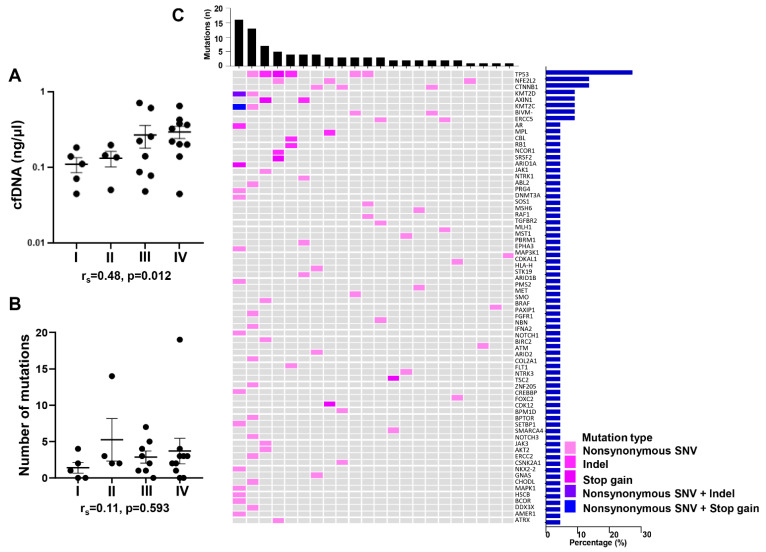
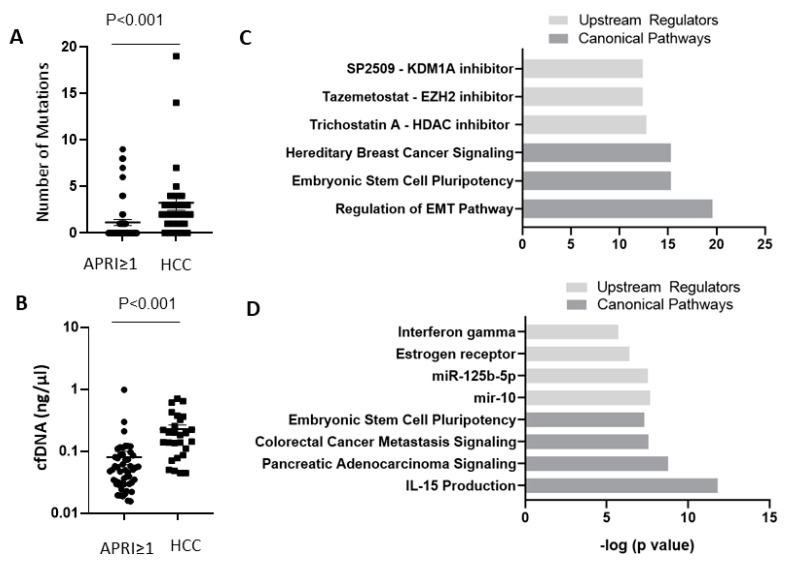
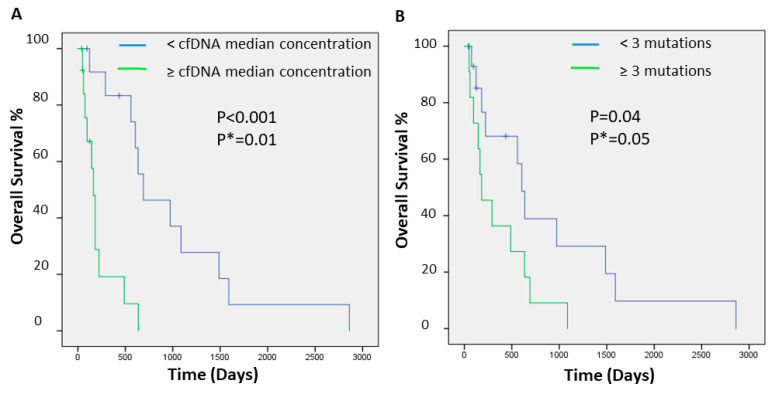
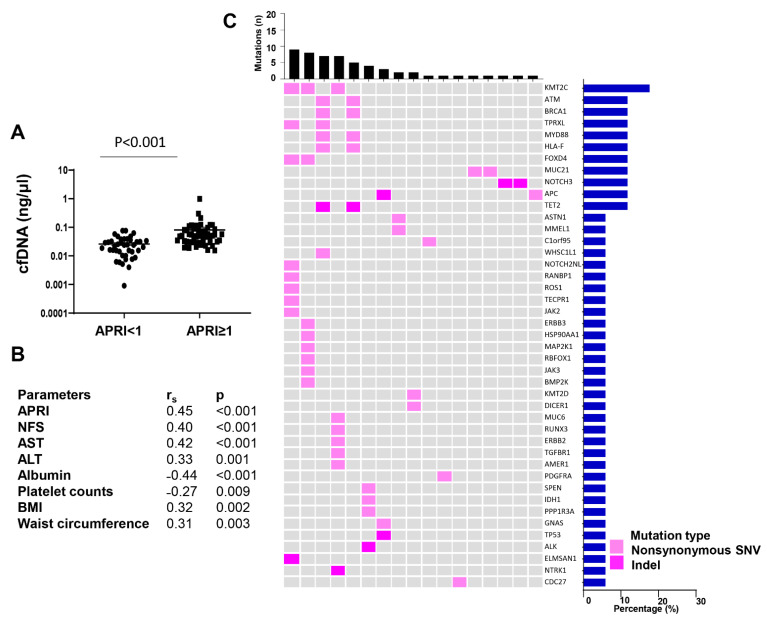
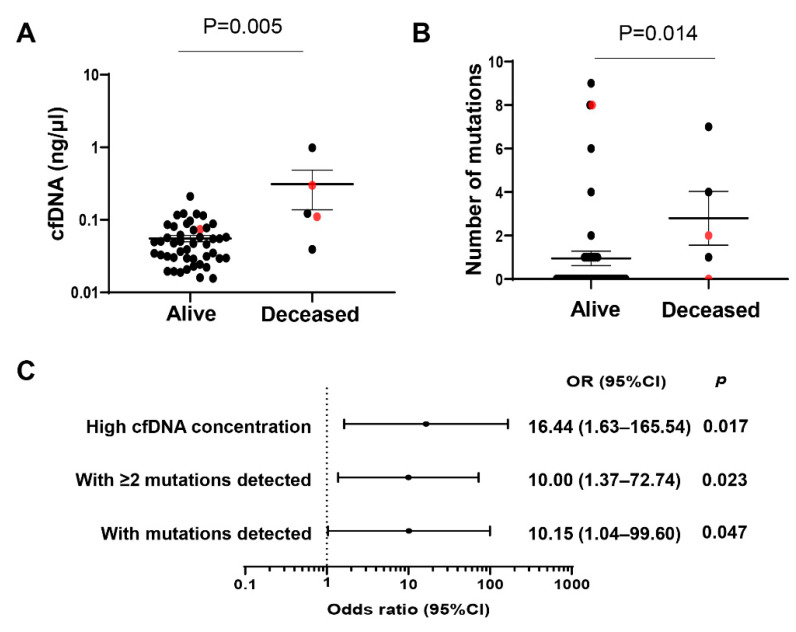
Hispanics are disproportionally affected by liver fibrosis and hepatocellular carcinoma (HCC). Advanced liver fibrosis is a major risk factor for HCC development. We aimed at identifying somatic mutations in plasma cell-free DNA (cfDNA) of Hispanics with HCC and Hispanics with advanced liver fibrosis but no HCC. Targeted sequencing of over 262 cancer-associated genes identified nonsynonymous mutations in 22 of the 27 HCC patients. Mutations were detected in known HCC-associated genes (e.g., CTNNB1, TP53, NFE2L2, and ARID1A). No difference in cfDNA concentrations was observed between patients with mutations and those without detectable mutations. HCC patients with higher cfDNA concentrations or higher number of mutations had a shorter overall survival ( < 0.001 and = 0.045). Nonsynonymous mutations were also identified in 17 of the 51 subjects with advanced liver fibrosis. KMT2C was the most commonly mutated gene. Nine genes were mutated in both subjects with advanced fibrosis and HCC patients. Again, no significant difference in cfDNA concentrations was observed between subjects with mutations and those without detectable mutations. Furthermore, higher cfDNA concentrations and higher number of mutations correlated with a death outcome in subjects with advanced fibrosis. In conclusion, cfDNA features are promising non-invasive markers for HCC risk prediction and overall survival.
西班牙裔人群受肝纤维化和肝细胞癌(HCC)的影响尤为严重。晚期肝纤维化是HCC发生的主要危险因素。我们旨在鉴定HCC西班牙裔患者以及患有晚期肝纤维化但无HCC的西班牙裔患者的血浆游离DNA(cfDNA)中的体细胞突变。对262个以上癌症相关基因进行靶向测序,在27例HCC患者中的22例中鉴定出非同义突变。在已知的HCC相关基因(如CTNNB1、TP53、NFE2L2和ARID1A)中检测到突变。在有突变的患者和未检测到突变的患者之间,未观察到cfDNA浓度的差异。cfDNA浓度较高或突变数量较多的HCC患者总生存期较短(<0.001和=0.045)。在51例晚期肝纤维化患者中的17例中也鉴定出非同义突变。KMT2C是最常发生突变的基因。在晚期纤维化患者和HCC患者中均有9个基因发生突变。同样,在有突变的患者和未检测到突变的患者之间,未观察到cfDNA浓度的显著差异。此外,较高的cfDNA浓度和较多的突变数量与晚期纤维化患者的死亡结局相关。总之,cfDNA特征是用于HCC风险预测和总生存期的有前景的非侵入性标志物。