Department of Chemistry, College of Sciences, United Arabs Emirates University, Al Ain 15551, United Arab Emirates.
Department of Biology, College of Sciences, United Arabs Emirates University, Al Ain 15551, United Arab Emirates.
Int J Mol Sci. 2021 Jul 18;22(14):7671. doi: 10.3390/ijms22147671.
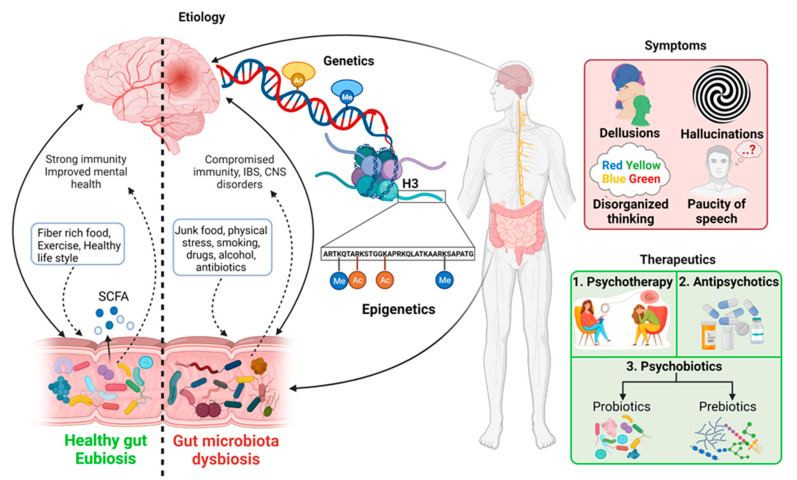
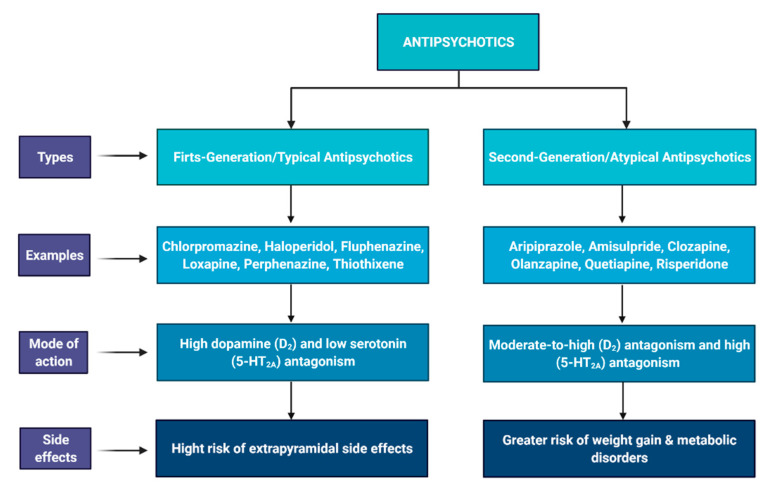
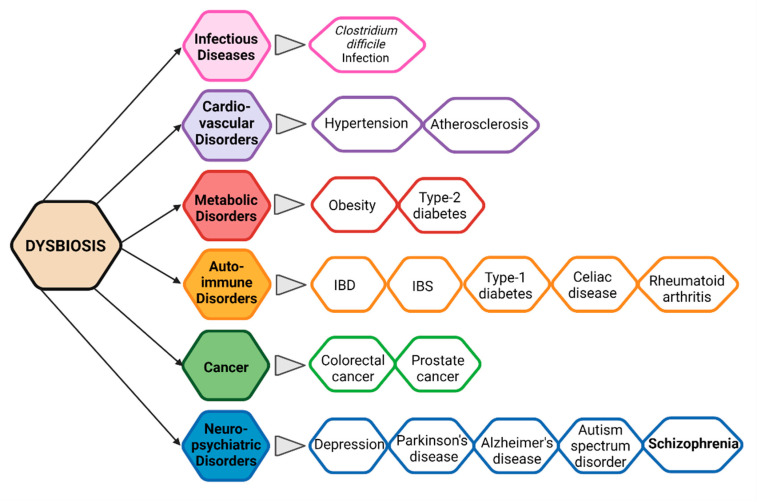
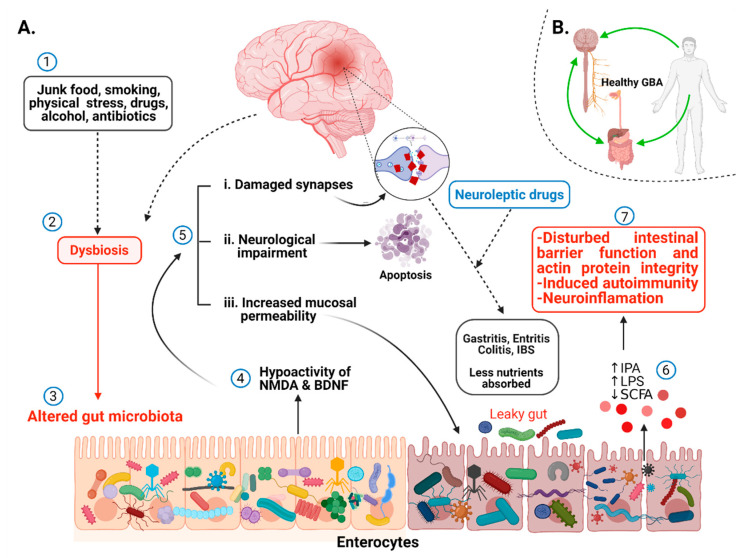
Schizophrenia is a chronic, heterogeneous neurodevelopmental disorder that has complex symptoms and uncertain etiology. Mounting evidence indicates the involvement of genetics and epigenetic disturbances, alteration in gut microbiome, immune system abnormalities, and environmental influence in the disease, but a single root cause and mechanism involved has yet to be conclusively determined. Consequently, the identification of diagnostic markers and the development of psychotic drugs for the treatment of schizophrenia faces a high failure rate. This article surveys the etiology of schizophrenia with a particular focus on gut microbiota regulation and the microbial signaling system that correlates with the brain through the vagus nerve, enteric nervous system, immune system, and production of postbiotics. Gut microbially produced molecules may lay the groundwork for further investigations into the role of gut microbiota dysbiosis and the pathophysiology of schizophrenia. Current treatment of schizophrenia is limited to psychotherapy and antipsychotic drugs that have significant side effects. Therefore, alternative therapeutic options merit exploration. The use of psychobiotics alone or in combination with antipsychotics may promote the development of novel therapeutic strategies. In view of the individual gut microbiome structure and personalized response to antipsychotic drugs, a tailored and targeted manipulation of gut microbial diversity naturally by novel prebiotics (non-digestible fiber) may be a successful alternative therapeutic for the treatment of schizophrenia patients.
精神分裂症是一种慢性、异质性的神经发育障碍,具有复杂的症状和不确定的病因。越来越多的证据表明遗传和表观遗传紊乱、肠道微生物组改变、免疫系统异常以及环境影响都与该疾病有关,但尚未确定单一的根本原因和机制。因此,精神分裂症的诊断标志物的识别和精神药物的开发面临着高失败率。本文综述了精神分裂症的病因,特别关注了肠道微生物群的调节,以及通过迷走神经、肠神经系统、免疫系统和后生元产生与大脑相关的微生物信号系统。肠道微生物产生的分子可能为进一步研究肠道微生物群失调和精神分裂症的病理生理学奠定基础。目前精神分裂症的治疗仅限于心理治疗和抗精神病药物,但这些药物有显著的副作用。因此,值得探索替代治疗方案。单独使用或与抗精神病药物联合使用益生菌可能会促进新的治疗策略的发展。鉴于个体肠道微生物组结构和对抗精神病药物的个性化反应,通过新型益生元(不可消化纤维)对肠道微生物多样性进行有针对性的自然操纵,可能是治疗精神分裂症患者的一种成功的替代疗法。