Sánchez-Cardona Yesenia, Echeverri-Cuartas Claudia E, López Marta E Londoño, Moreno-Castellanos Natalia
Grupo de Investigación en Ingeniería Biomédica EIA (GIBEC), Programa de Ingeniería Biomédica, Escuela de Ciencias de la Vida, Universidad EIA, km 2 + 200 Vía al Aeropuerto José María Córdova, Envigado 055428, Colombia.
CINTROP, Department of Basic Sciences, Medicine School, Health Faculty, Universidad Industrial de Santander, Cra 27 calle 9, Bucaramanga 680002, Colombia.
Polymers (Basel). 2021 Jul 20;13(14):2372. doi: 10.3390/polym13142372.
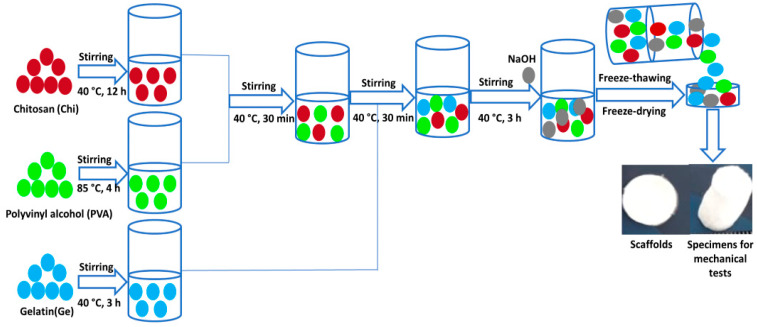
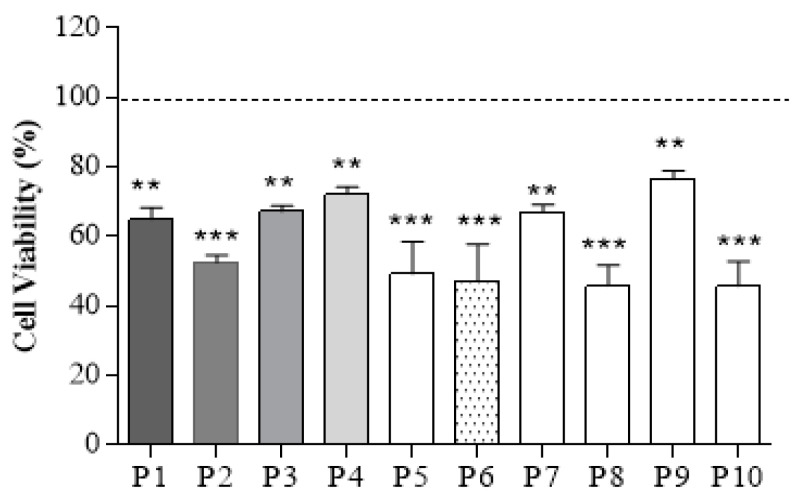
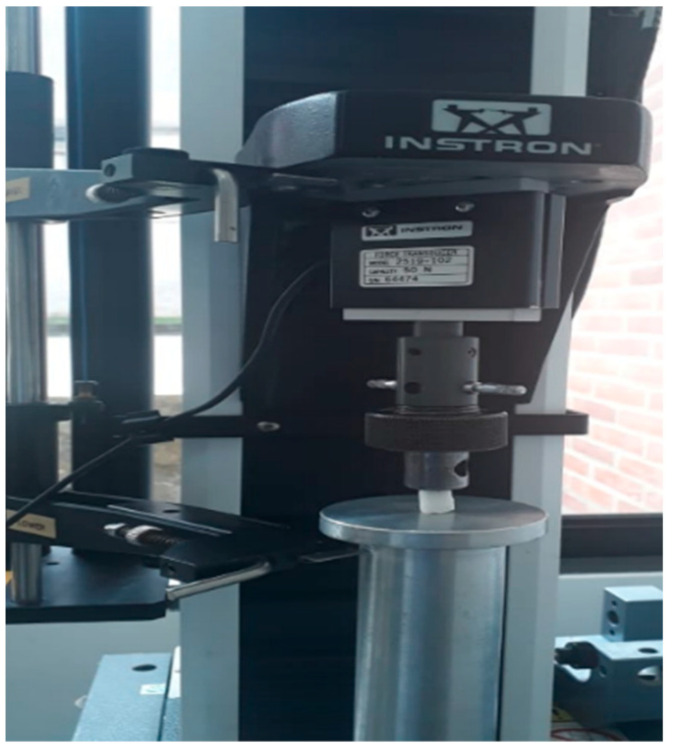
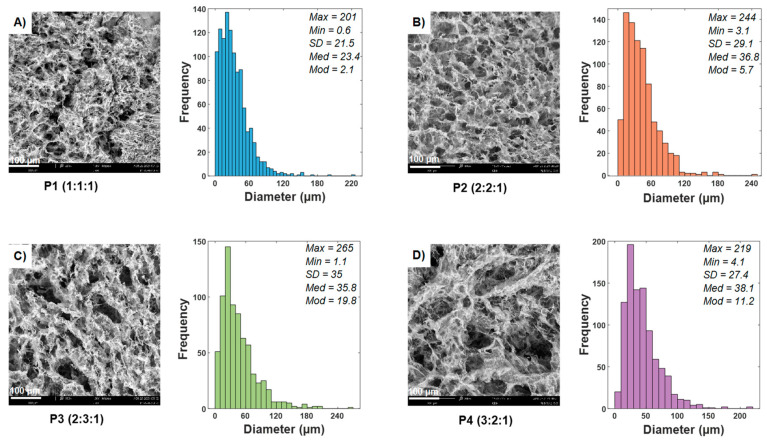
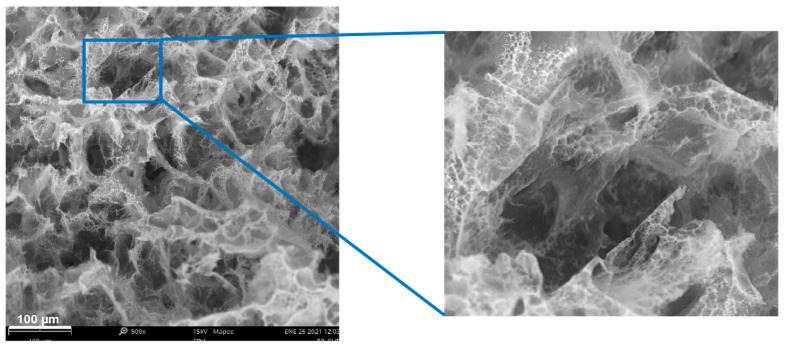
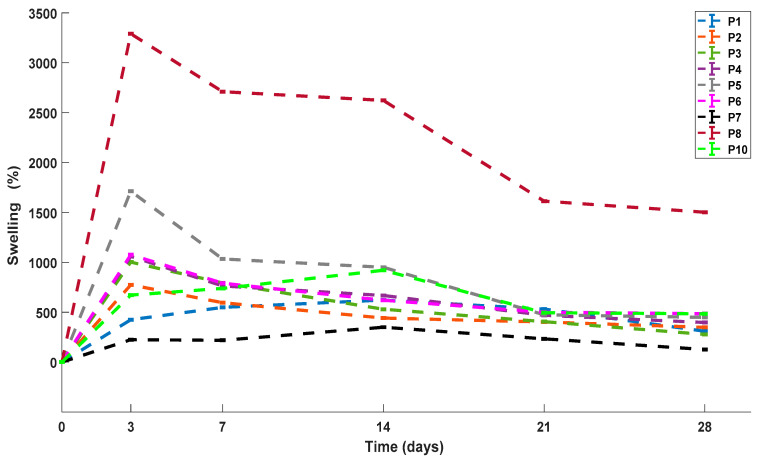
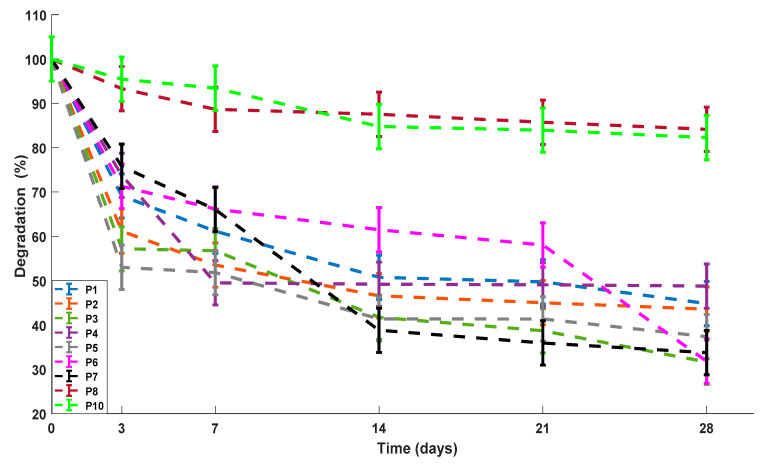
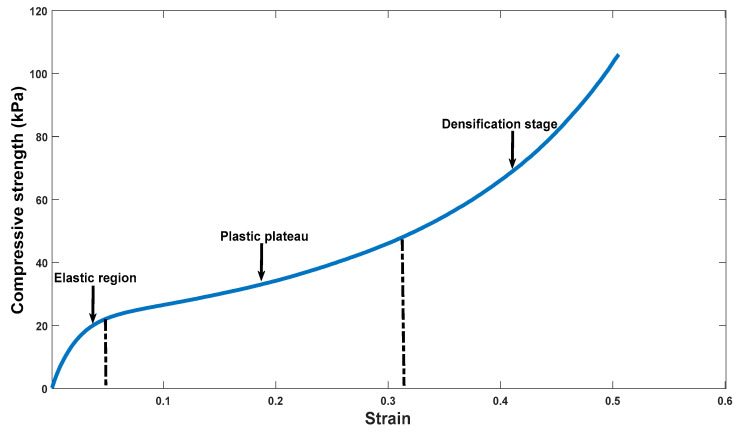
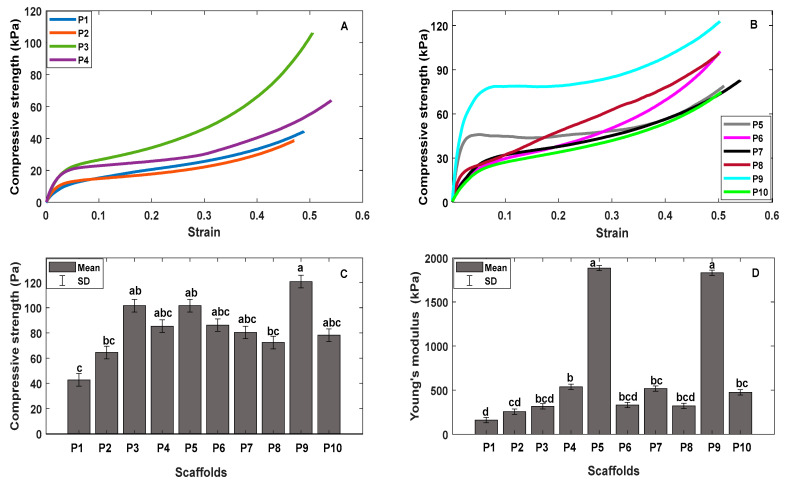
Chitosan scaffolds based on blending polymers are a common strategy used in tissue engineering. The objective of this study was evaluation the properties of scaffolds based on a ternary blend of chitosan (Chi), gelatin (Ge), and polyvinyl alcohol (PVA) (Chi/Ge/PVA), which were prepared by cycles of freeze-thawing and freeze-drying. It then was used for three-dimensional BRIN-BD11 beta-cells culturing. Weight ratios of Chi/Ge/PVA (1:1:1, 2:2:1, 2:3:1, and 3:2:1) were proposed and porosity, pore size, degradation, swelling rate, compressive strength, and cell viability analyzed. All ternary blend scaffolds structures are highly porous (with a porosity higher than 80%) and interconnected. The pore size distribution varied from 0.6 to 265 μm. Ternary blends scaffolds had controllable degradation rates compared to binary blend scaffolds, and an improved swelling capacity of the samples with increasing chitosan concentration was found. An increase in Young's modulus and compressive strength was observed with increasing gelatin concentration. The highest compressive strength reached 101.6 Pa. The MTT assay showed that the ternary blends scaffolds P3 and P4 supported cell viability better than the binary blend scaffold. Therefore, these results illustrated that ternary blends scaffolds P3 and P4 could provide a better environment for BRIN-BD11 cell proliferation.
基于聚合物共混的壳聚糖支架是组织工程中常用的策略。本研究的目的是评估基于壳聚糖(Chi)、明胶(Ge)和聚乙烯醇(PVA)(Chi/Ge/PVA)三元共混物的支架性能,这些支架通过冻融和冻干循环制备。然后将其用于三维BRIN-BD11β细胞培养。提出了Chi/Ge/PVA的重量比(1:1:1、2:2:1、2:3:1和3:2:1),并分析了孔隙率、孔径、降解、溶胀率、抗压强度和细胞活力。所有三元共混支架结构均具有高度多孔性(孔隙率高于80%)且相互连通。孔径分布在0.6至265μm之间。与二元共混支架相比,三元共混支架具有可控的降解速率,并且发现随着壳聚糖浓度的增加,样品的溶胀能力有所提高。随着明胶浓度的增加,杨氏模量和抗压强度也有所增加。最高抗压强度达到101.6Pa。MTT分析表明,三元共混支架P3和P4比二元共混支架更能支持细胞活力。因此,这些结果表明三元共混支架P3和P4可以为BRIN-BD11细胞增殖提供更好的环境。