
用于基于壳聚糖、聚乙烯醇和明胶的三元聚己内酯增强水凝胶的抗菌交联剂,用于组织工程
Antibacterial Crosslinker for Ternary PCL-Reinforced Hydrogels Based on Chitosan, Polyvinyl Alcohol, and Gelatin for Tissue Engineering.
作者信息
Del Angel-Sánchez Karina, Treviño-Pacheco Ana Victoria, Perales-Martínez Imperio Anel, Martínez-Romero Oscar, Olvera-Trejo Daniel, Elías-Zúñiga Alex
机构信息
Tecnologico de Monterrey, Institute of Advanced Materials for Sustainable Manufacturing, Ave. Eugenio Garza Sada 2501 Sur, Col. Tecnológico, Monterrey N.L., México City 64700, Mexico.
出版信息
Polymers (Basel). 2025 May 29;17(11):1520. doi: 10.3390/polym17111520.
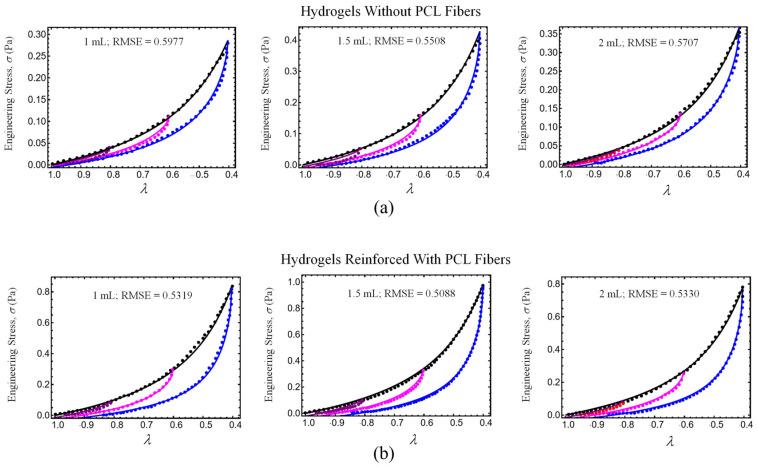
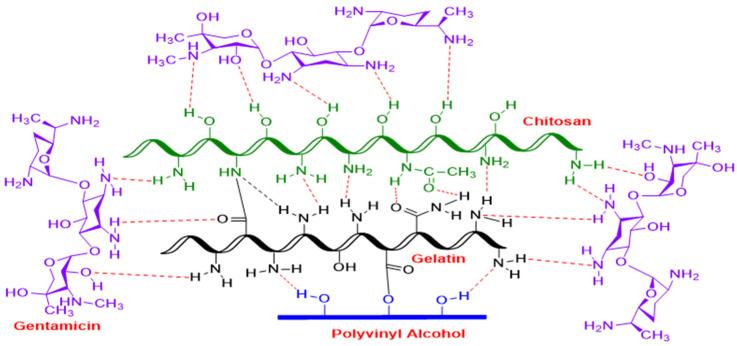
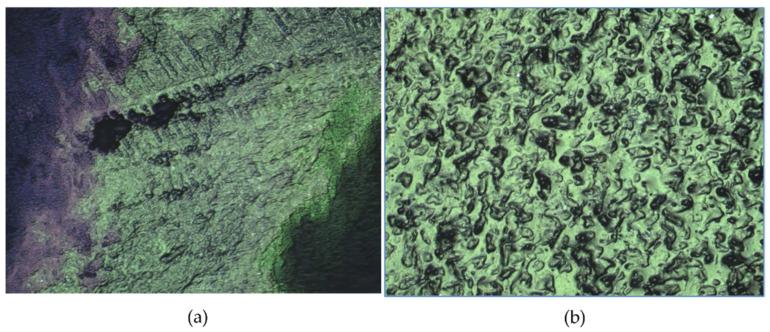
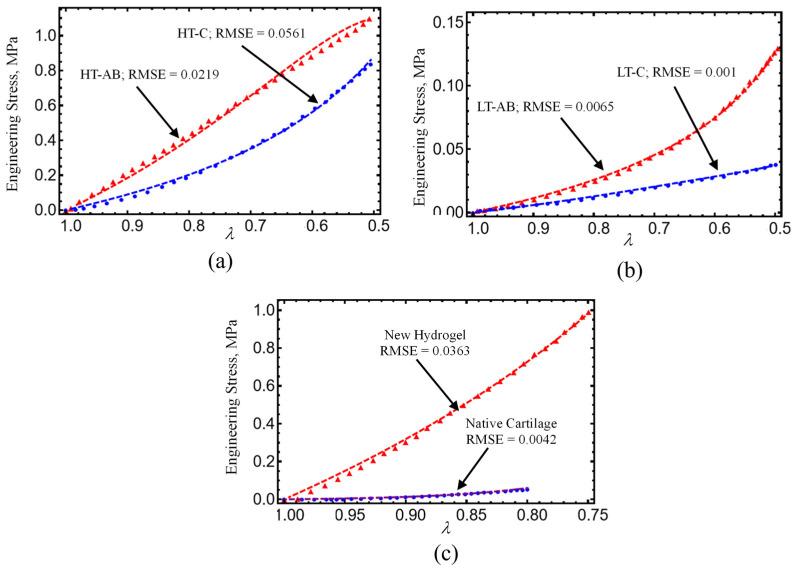
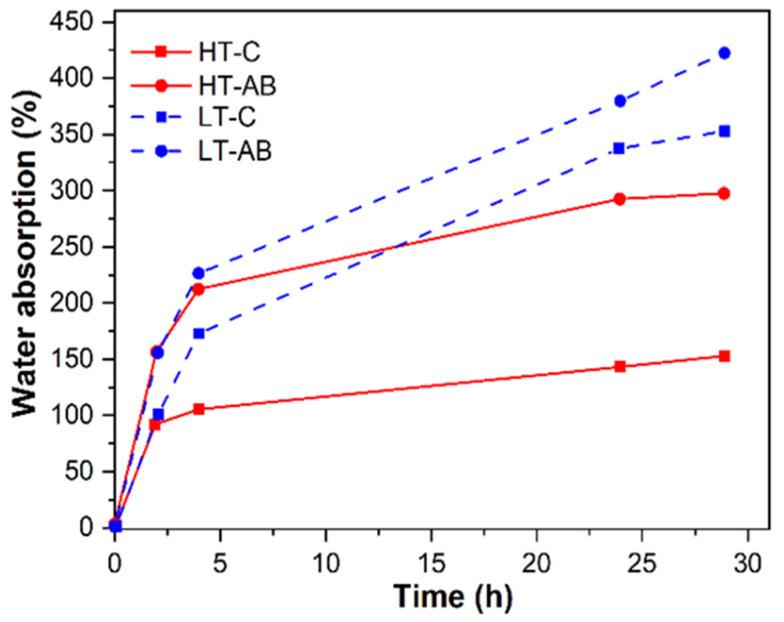
Current hydrogels used for cartilage tissue engineering often lack the mechanical strength and structural integrity required to mimic native human cartilage. This study addresses this limitation by developing reinforced hydrogels based on a ternary polymer blend of poly(vinyl) alcohol (PVA), gelatin (GL), and chitosan (CH), with gentamicin sulfate (GS) as an antimicrobial agent and a crosslinker. The hydrogels were produced using two crosslinking methods, the freeze/thaw and heated cycles, and reinforced with forcespun polycaprolactone (PCL) nanofiber to improve mechanical performance. Chemical characterization revealed that GS forms weak hydrogen bonds with the ternary polymers, leading to esterification with PVA, and covalent bonds are formed as the result of the free amino group (-NH) of chitosan that reacts with the carboxylic acid group (-COOH) of gelatin. SEM images help us to see how the hydrogels are reinforced with polycaprolactone (PCL) fibers produced via force spinning technology, while mechanical properties were evaluated via uniaxial tensile and compressive tests. Water retention measurements were performed to examine the crosslinking process's influence on the hydrogel's water retention, while the hydrogel surface roughness was obtained via confocal microscopy images. A constitutive model based on non-Gaussian strain energy density was introduced to predict experimental mechanical behavior data of the hydrogel, considering a non-monotonous softening function. Loading and unloading tests demonstrated that GS enhanced crosslinking without compromising water retention or biocompatibility because of the reaction between the free amino group of CH and the carboxylic group of gelatin. The PCL-reinforced PVA/GL/CH hydrogel shows strong potential for cartilage repair and tissue engineering applications.
目前用于软骨组织工程的水凝胶通常缺乏模拟天然人体软骨所需的机械强度和结构完整性。本研究通过开发基于聚乙烯醇(PVA)、明胶(GL)和壳聚糖(CH)的三元聚合物共混物的增强水凝胶来解决这一局限性,其中硫酸庆大霉素(GS)作为抗菌剂和交联剂。水凝胶采用冷冻/解冻和加热循环两种交联方法制备,并用强力纺丝聚己内酯(PCL)纳米纤维增强以提高机械性能。化学表征表明,GS与三元聚合物形成弱氢键,导致与PVA发生酯化反应,壳聚糖的游离氨基(-NH)与明胶的羧酸基团(-COOH)反应形成共价键。扫描电子显微镜图像帮助我们了解通过强力纺丝技术生产的聚己内酯(PCL)纤维如何增强水凝胶,同时通过单轴拉伸和压缩试验评估机械性能。进行保水测量以检查交联过程对水凝胶保水率的影响,而水凝胶表面粗糙度通过共聚焦显微镜图像获得。引入了基于非高斯应变能密度的本构模型来预测水凝胶的实验力学行为数据,考虑了非单调软化函数。加载和卸载试验表明,由于壳聚糖的游离氨基与明胶的羧基之间的反应,GS增强了交联而不影响保水率或生物相容性。PCL增强的PVA/GL/CH水凝胶在软骨修复和组织工程应用中显示出强大的潜力。








 Zotero 插件