Arino Julien, Boëlle Pierre-Yves, Milliken Evan, Portet Stéphanie
Department of Mathematics & Data Science Nexus, University of Manitoba, Winnipeg, Manitoba, Canada.
Sorbonne Université, Institut Pierre Louis d'Epidemiologie et de Santé Publique(IPLESP), France.
Infect Dis Model. 2021;6:875-897. doi: 10.1016/j.idm.2021.06.006. Epub 2021 Jul 11.
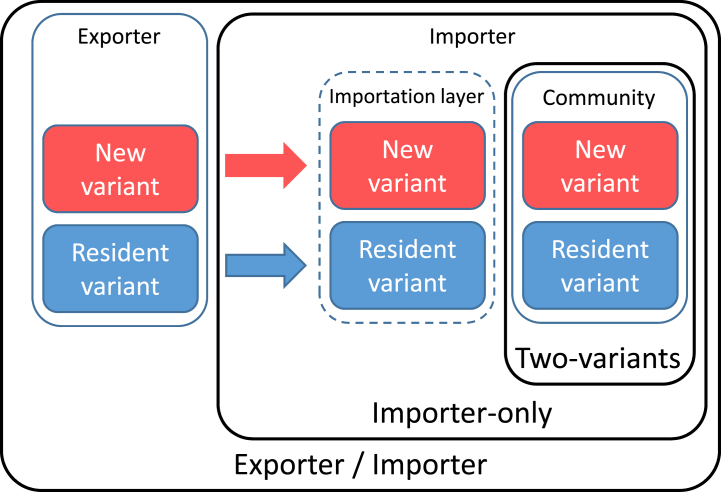
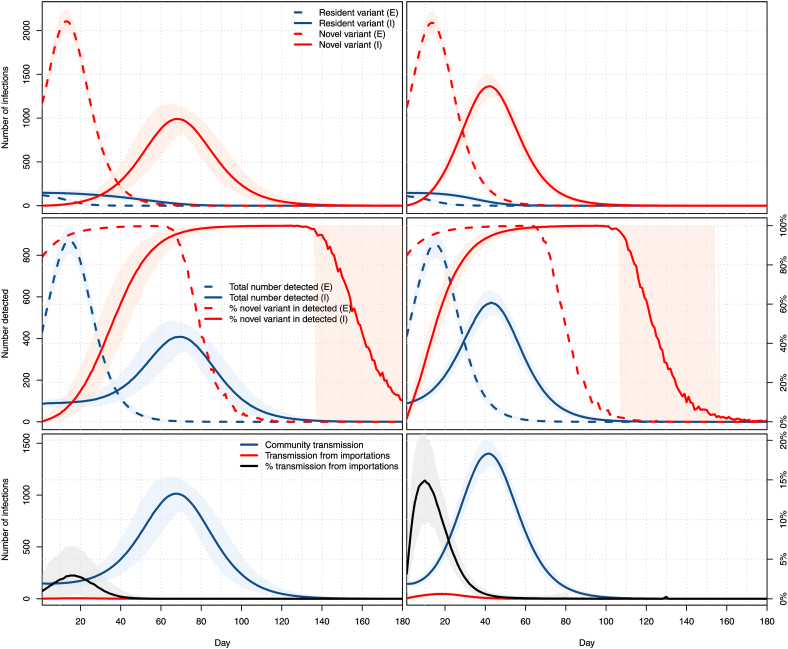
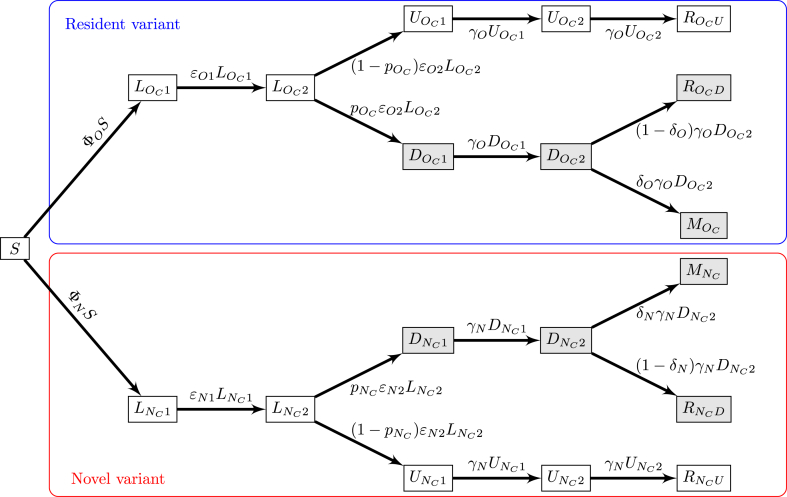
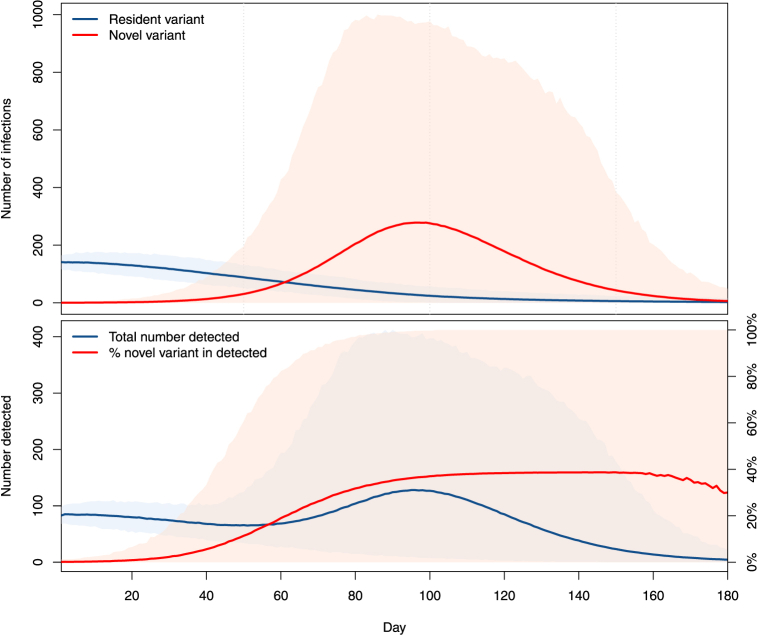
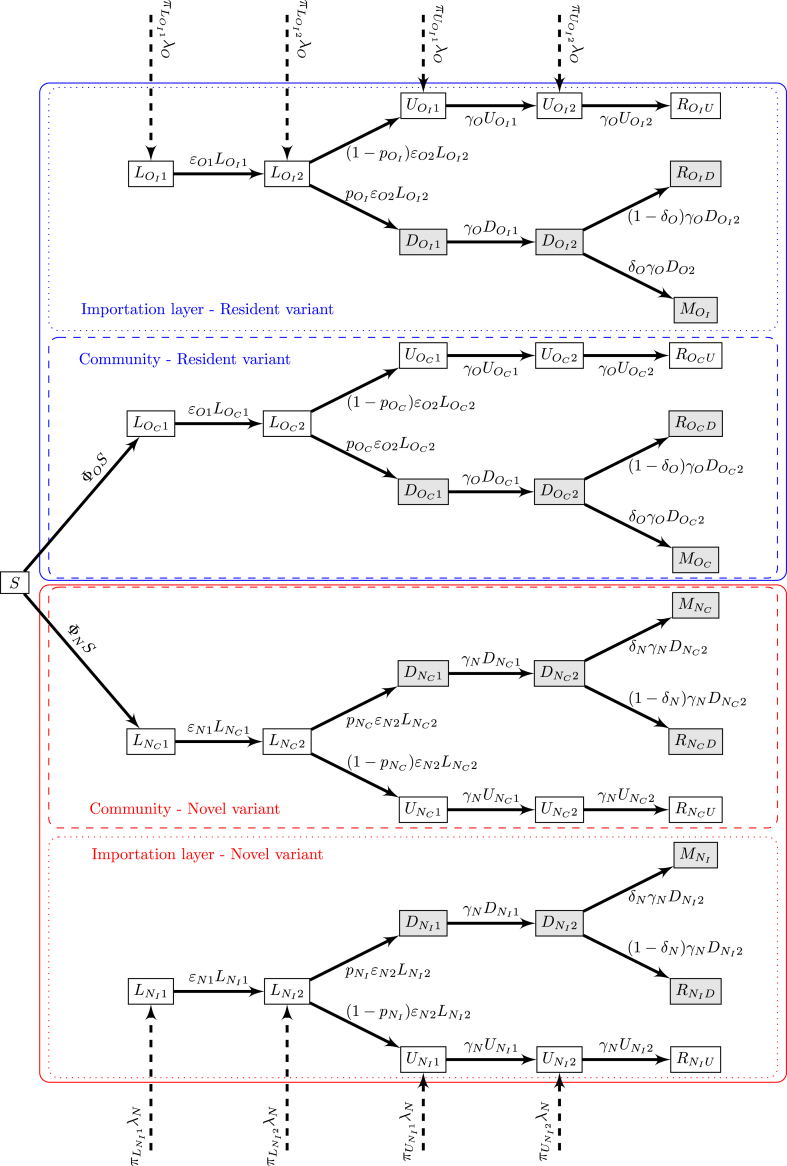
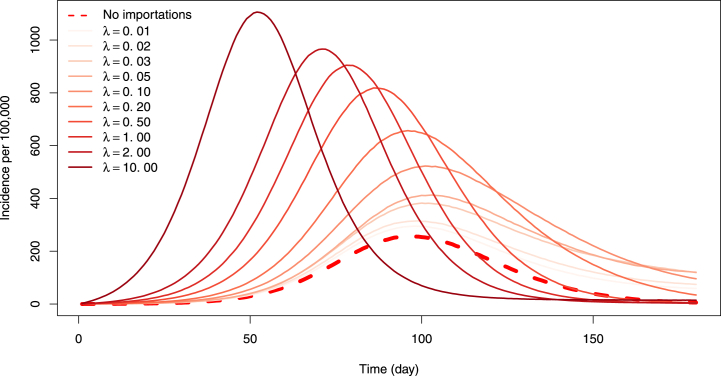
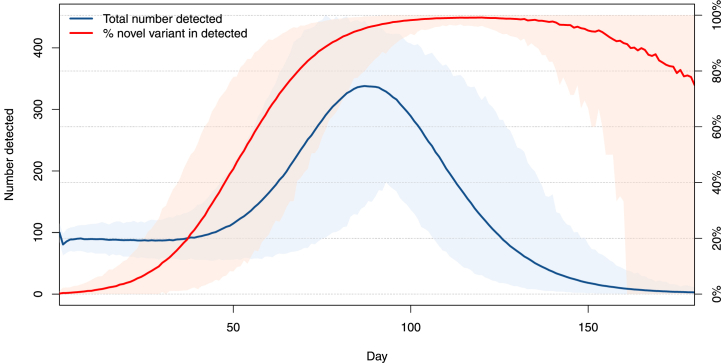
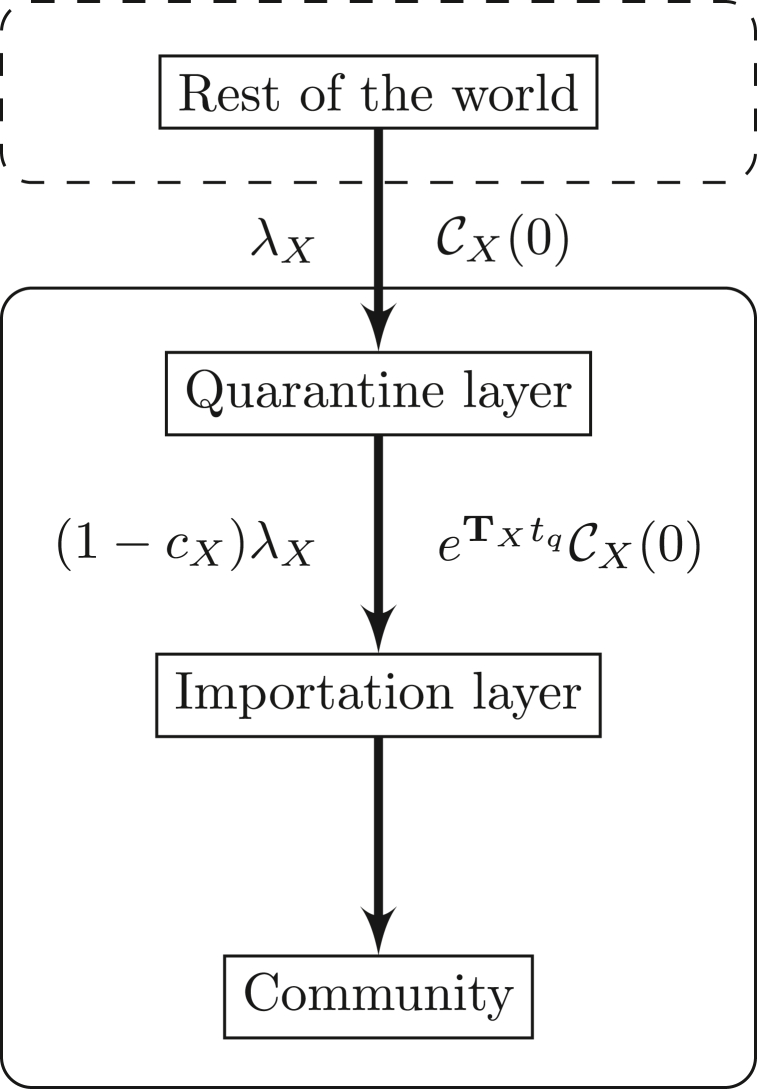
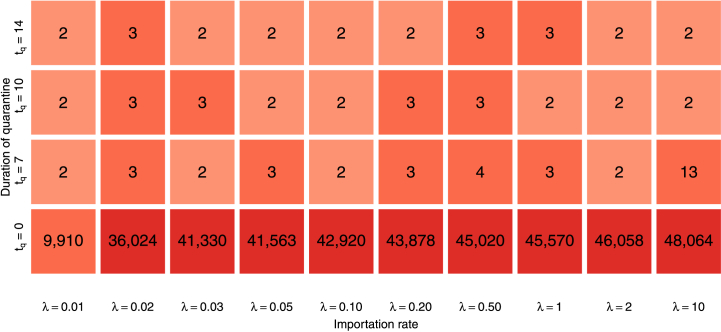
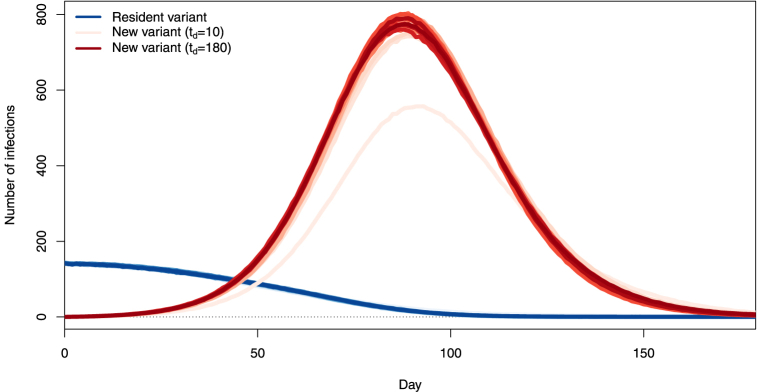
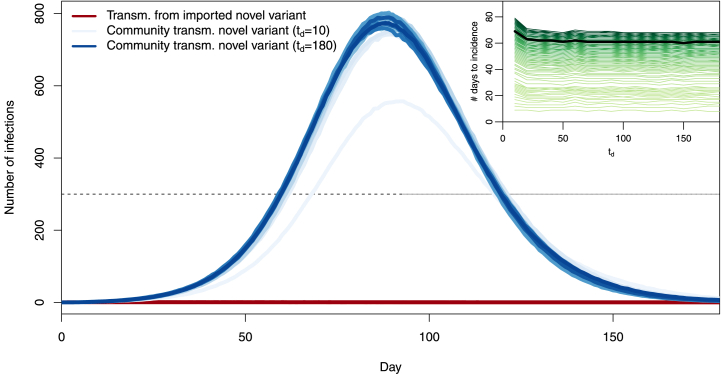
We consider models for the importation of a new variant COVID-19 strain in a location already seeing propagation of a resident variant. By distinguishing contaminations generated by imported cases from those originating in the community, we are able to evaluate the contribution of importations to the dynamics of the disease in a community. We find that after an initial seeding, the role of importations becomes marginal compared to that of community-based propagation. We also evaluate the role of two travel control measures, quarantine and travel interruptions. We conclude that quarantine is an efficacious way of lowering importation rates, while travel interruptions have the potential to delay the consequences of importations but need to be applied within a very tight time window following the initial emergence of the variant.
我们考虑了在一个已经出现本地毒株传播的地区引入新型新冠病毒变体的模型。通过区分输入病例产生的感染与社区内产生的感染,我们能够评估输入病例对社区疾病动态的影响。我们发现,在最初的传播之后,与基于社区的传播相比,输入病例的作用变得微不足道。我们还评估了两种旅行控制措施——检疫和旅行中断——的作用。我们得出结论,检疫是降低输入率的有效方法,而旅行中断有可能推迟输入病例的影响,但需要在变体首次出现后的非常短的时间窗口内实施。