Paul Flechsig Institute for Brain Research, University of Leipzig, Liebigstraße 19, 04103, Leipzig, Germany.
Department for Experimental Therapy, Universitätsklinikum Erlangen, and Preclinical Experimental Animal Center, Friedrich-Alexander-Universität Erlangen-Nürnberg, 91054, Erlangen, Germany.
Acta Neuropathol. 2021 Sep;142(3):399-421. doi: 10.1007/s00401-021-02349-5. Epub 2021 Jul 26.
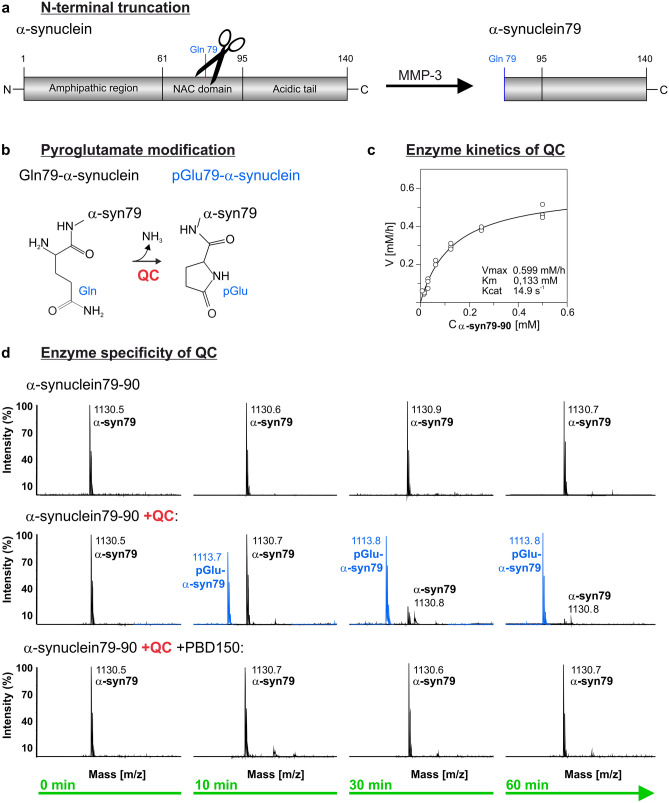
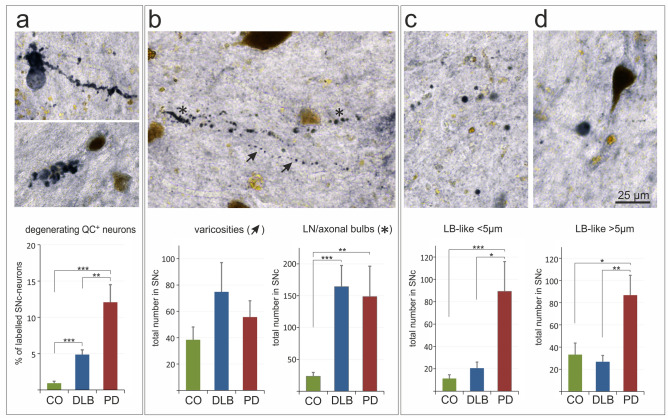
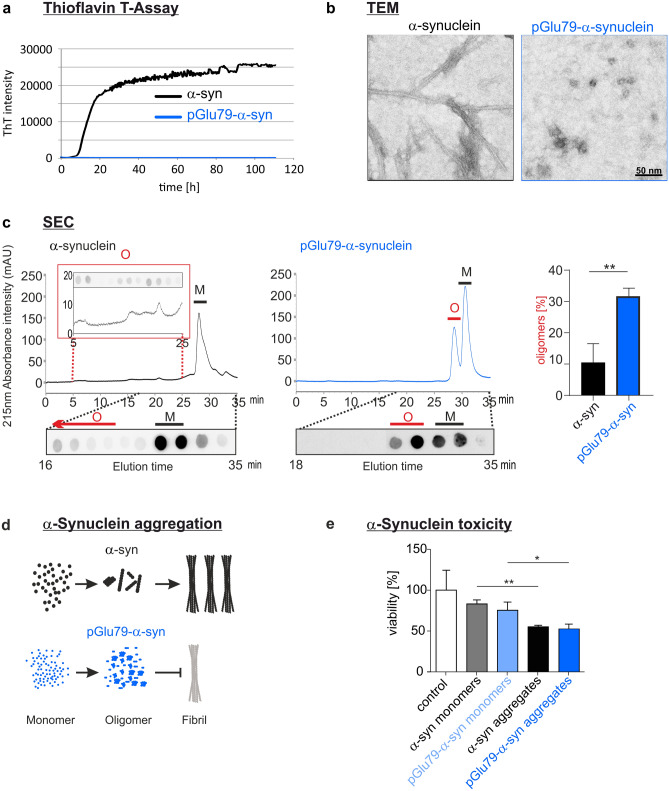
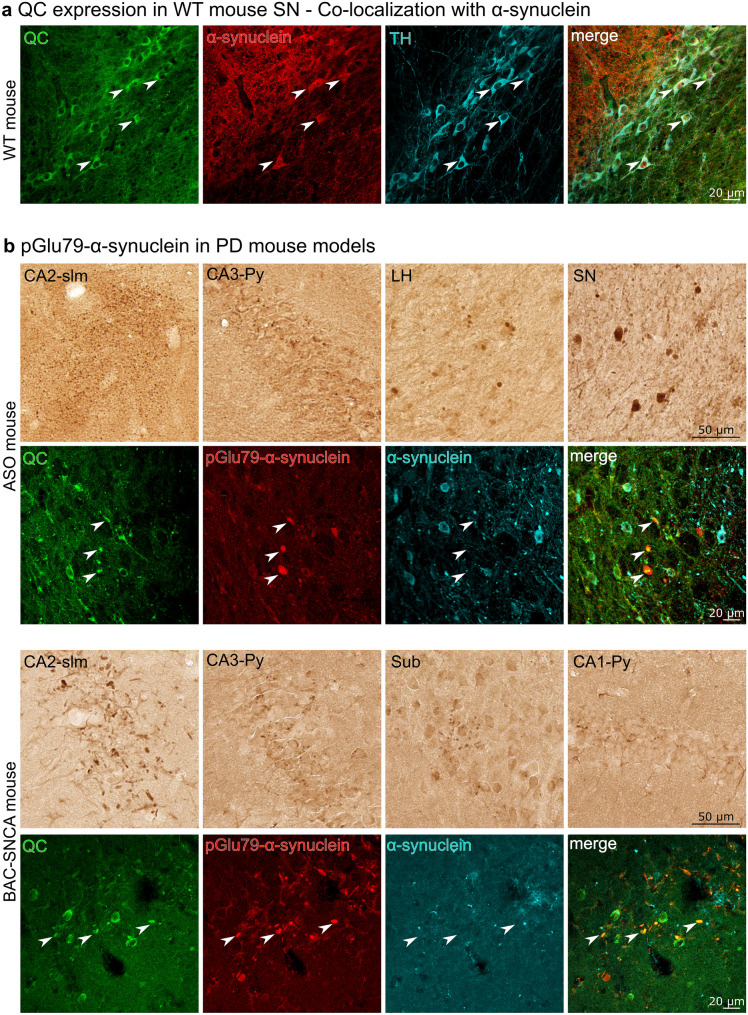
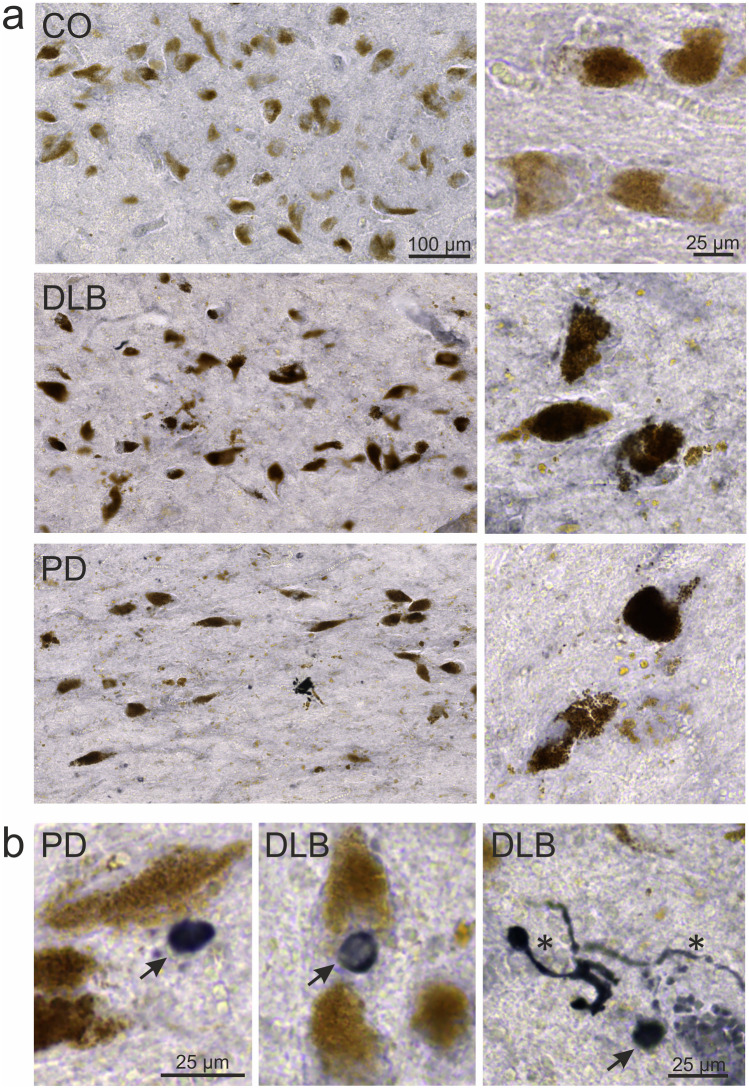
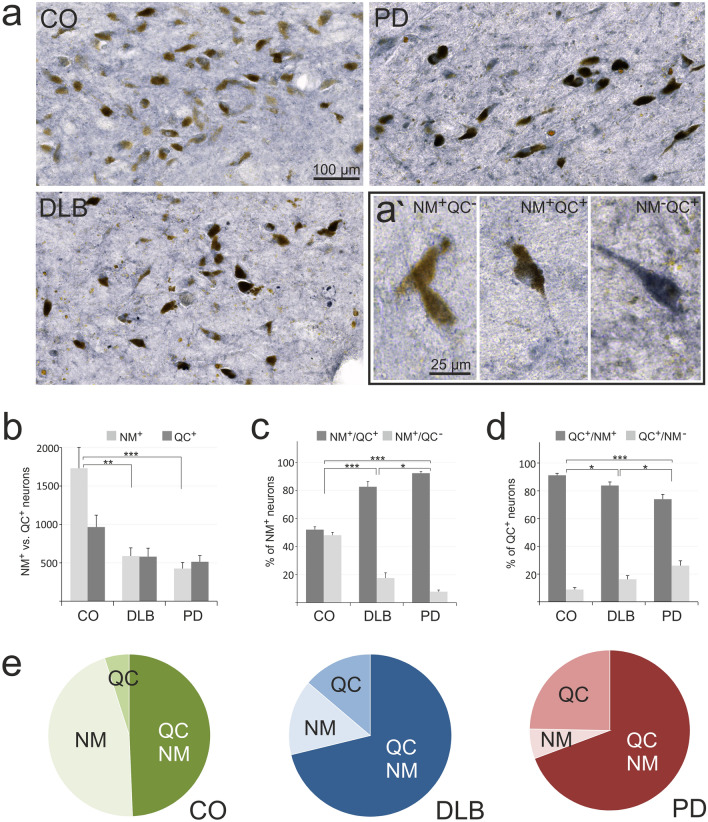
Parkinson's disease (PD) is a progressive neurodegenerative disorder that is neuropathologically characterized by degeneration of dopaminergic neurons of the substantia nigra (SN) and formation of Lewy bodies and Lewy neurites composed of aggregated α-synuclein. Proteolysis of α-synuclein by matrix metalloproteinases was shown to facilitate its aggregation and to affect cell viability. One of the proteolysed fragments, Gln79-α-synuclein, possesses a glutamine residue at its N-terminus. We argue that glutaminyl cyclase (QC) may catalyze the pyroglutamate (pGlu)79-α-synuclein formation and, thereby, contribute to enhanced aggregation and compromised degradation of α-synuclein in human synucleinopathies. Here, the kinetic characteristics of Gln79-α-synuclein conversion into the pGlu-form by QC are shown using enzymatic assays and mass spectrometry. Thioflavin T assays and electron microscopy demonstrated a decreased potential of pGlu79-α-synuclein to form fibrils. However, size exclusion chromatography and cell viability assays revealed an increased propensity of pGlu79-α-synuclein to form oligomeric aggregates with high neurotoxicity. In brains of wild-type mice, QC and α-synuclein were co-expressed by dopaminergic SN neurons. Using a specific antibody against the pGlu-modified neo-epitope of α-synuclein, pGlu79-α-synuclein aggregates were detected in association with QC in brains of two transgenic mouse lines with human α-synuclein overexpression. In human brain samples of PD and dementia with Lewy body subjects, pGlu79-α-synuclein was shown to be present in SN neurons, in a number of Lewy bodies and in dystrophic neurites. Importantly, there was a spatial co-occurrence of pGlu79-α-synuclein with the enzyme QC in the human SN complex and a defined association of QC with neuropathological structures. We conclude that QC catalyzes the formation of oligomer-prone pGlu79-α-synuclein in human synucleinopathies, which may-in analogy to pGlu-Aβ peptides in Alzheimer's disease-act as a seed for pathogenic protein aggregation.
帕金森病 (PD) 是一种进行性神经退行性疾病,其病理学特征是黑质 (SN) 中的多巴胺能神经元退化,以及由聚集的α-突触核蛋白组成的路易体和路易神经突的形成。基质金属蛋白酶对α-突触核蛋白的蛋白水解作用被证明有助于其聚集,并影响细胞活力。其中一个被蛋白水解的片段,即 Gln79-α-突触核蛋白,其 N 末端有一个谷氨酰胺残基。我们认为谷氨酰胺环化酶 (QC) 可能催化焦谷氨酸 (pGlu)79-α-突触核蛋白的形成,从而促进人类突触核蛋白病中α-突触核蛋白的聚集和降解受损。在这里,使用酶促测定和质谱法显示了 Gln79-α-突触核蛋白被 QC 转化为 pGlu 形式的动力学特征。硫黄素 T 测定和电子显微镜显示,pGlu79-α-突触核蛋白形成纤维的潜力降低。然而,尺寸排阻色谱和细胞活力测定显示,pGlu79-α-突触核蛋白形成具有高神经毒性的寡聚体聚集物的趋势增加。在野生型小鼠的大脑中,QC 和 α-突触核蛋白由多巴胺能 SN 神经元共同表达。使用针对α-突触核蛋白新表位的 pGlu 修饰特异性抗体,在两个过表达人α-突触核蛋白的转基因小鼠系的大脑中,与 QC 相关检测到 pGlu79-α-突触核蛋白聚集物。在帕金森病和路易体痴呆患者的人脑样本中,在 SN 神经元、许多路易体和退行性神经突中均检测到 pGlu79-α-突触核蛋白。重要的是,在人类 SN 复合体中,pGlu79-α-突触核蛋白与酶 QC 存在空间共定位,并且 QC 与神经病理学结构存在明确的关联。我们得出结论,QC 在人类突触核蛋白病中催化形成易于形成寡聚体的 pGlu79-α-突触核蛋白,这可能与阿尔茨海默病中的 pGlu-Aβ 肽类似,作为致病蛋白聚集的种子。