National Key Laboratory of Biochemical Engineering, Institute of Process Engineering, Chinese Academy of Sciences, Haidian District, Beijing 100190, China.
School of Chemical Engineering, University of Chinese Academy of Sciences, Beijing 100049, China.
Int J Mol Sci. 2020 Nov 17;21(22):8645. doi: 10.3390/ijms21228645.
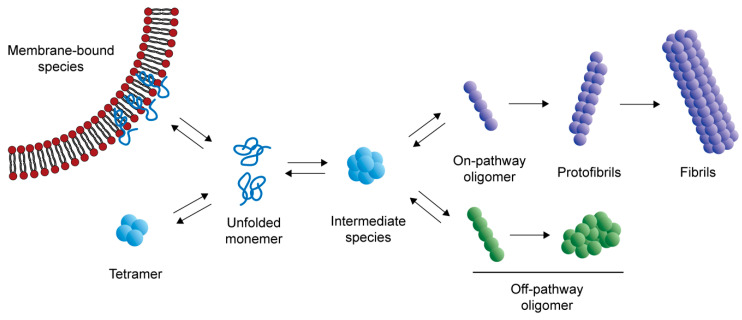
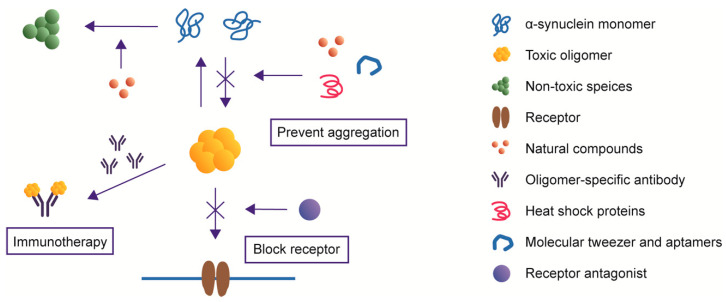
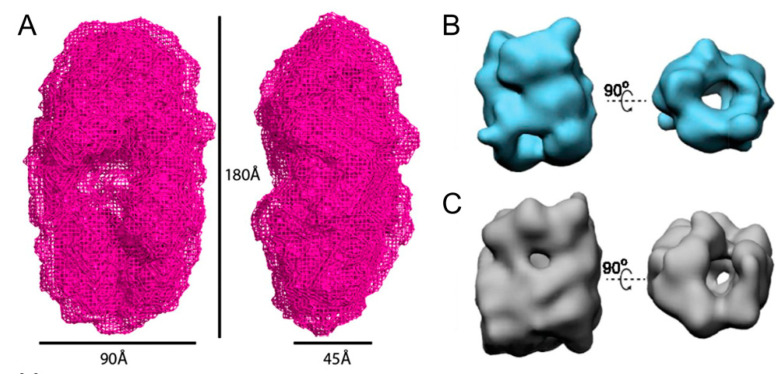
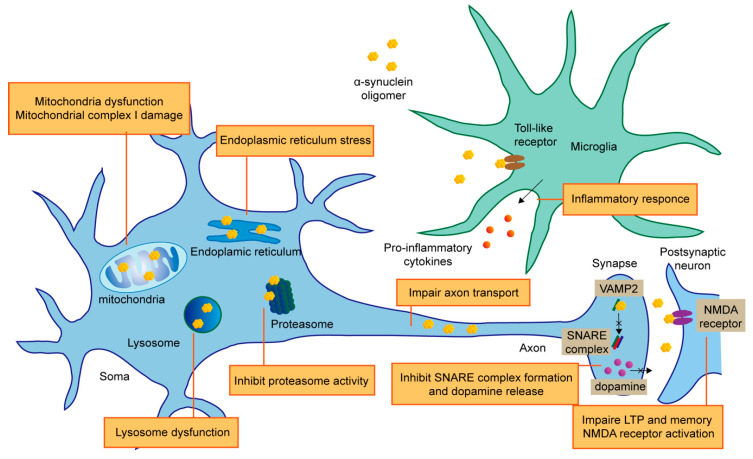
α-synuclein (α-syn) is a protein associated with the pathogenesis of Parkinson's disease (PD), the second most common neurodegeneration disease with no effective treatment. However, how α-syn drives the pathology of PD remains elusive. Recent studies suggest that α-syn oligomers are the primary cause of neurotoxicity and play a critical role in PD. In this review, we discuss the process of α-syn oligomers formation and the current understanding of the structures of oligomers. We also describe seed and propagation effects of oligomeric forms of α-syn. Then, we summarize the mechanism by which α-syn oligomers exert neurotoxicity and promote neurodegeneration, including mitochondrial dysfunction, endoplasmic reticulum stress, proteostasis dysregulation, synaptic impairment, cell apoptosis and neuroinflammation. Finally, we investigate treatment regimens targeting α-syn oligomers at present. Further research is needed to understand the structure and toxicity mechanism of different types of oligomers, so as to provide theoretical basis for the treatment of PD.
α-突触核蛋白(α-syn)是与帕金森病(PD)发病机制相关的一种蛋白质,PD 是第二常见的神经退行性疾病,目前尚无有效的治疗方法。然而,α-syn 如何驱动 PD 的发病机制仍不清楚。最近的研究表明,α-syn 寡聚体是神经毒性的主要原因,并在 PD 中发挥关键作用。在这篇综述中,我们讨论了 α-syn 寡聚体形成的过程以及目前对寡聚体结构的理解。我们还描述了 α-syn 寡聚体的种子和传播效应。然后,我们总结了 α-syn 寡聚体发挥神经毒性和促进神经退行性变的机制,包括线粒体功能障碍、内质网应激、蛋白质稳态失调、突触损伤、细胞凋亡和神经炎症。最后,我们研究了目前针对 α-syn 寡聚体的治疗方案。需要进一步研究以了解不同类型寡聚体的结构和毒性机制,为 PD 的治疗提供理论基础。