Department of Immunology, Laboratory Medical Immunology, Erasmus MC University Medical Center Rotterdam, Rotterdam, the Netherlands.
Department of Ophthalmology, Erasmus MC University Medical Center Rotterdam, Rotterdam, the Netherlands.
Acta Ophthalmol. 2022 Jun;100(4):403-413. doi: 10.1111/aos.14993. Epub 2021 Jul 28.
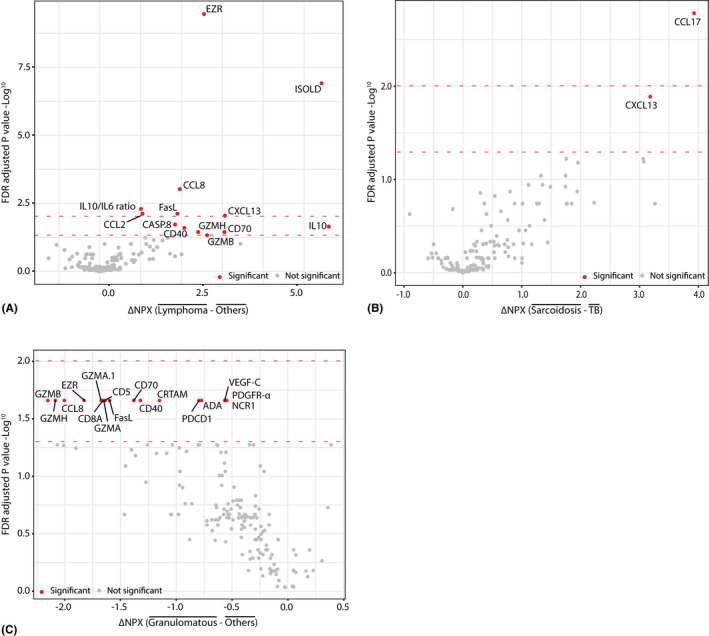
The vitreous proteome might provide an attractive gateway to discriminate between various uveitis aetiologies and gain novel insights into the underlying pathophysiological processes. Here, we investigated 180 vitreous proteins to discover novel biomarkers and broaden disease insights by comparing (1). primary vitreoretinal lymphoma ((P)VRL) versus other aetiologies, (2). sarcoid uveitis versus tuberculosis (TB)-associated uveitis and (3). granulomatous (sarcoid and TB) uveitis versus other aetiologies.
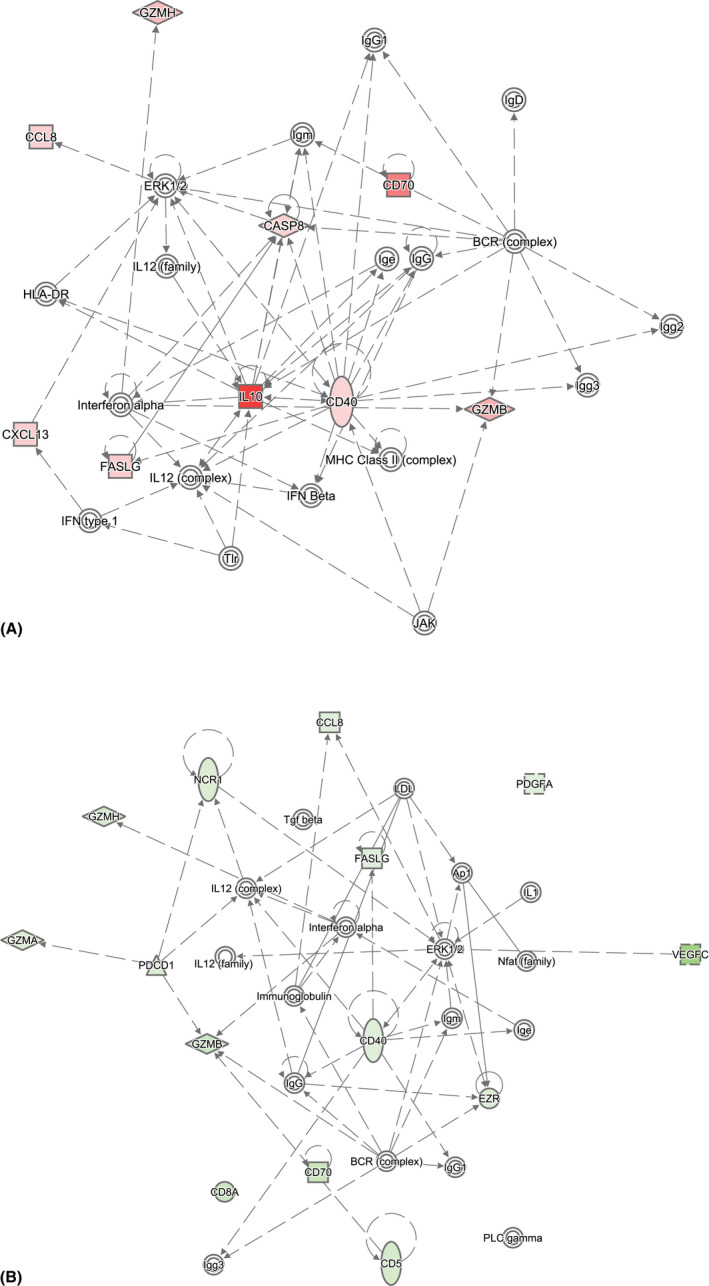
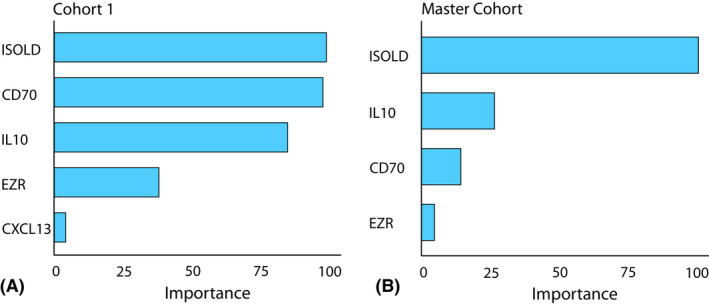
Vitreous protein levels were determined by proximity extension assay in 47 patients with intraocular inflammation and a prestudy diagnosis (cohort 1; training) and 22 patients with a blinded diagnosis (cohort 2; validation). Differentially expressed proteins identified by t-tests on cohort 1 were used to calculate Youden's indices. Pathway and network analysis was performed by ingenuity pathway analysis. A random forest classifier was trained to predict the diagnosis of blinded patients.
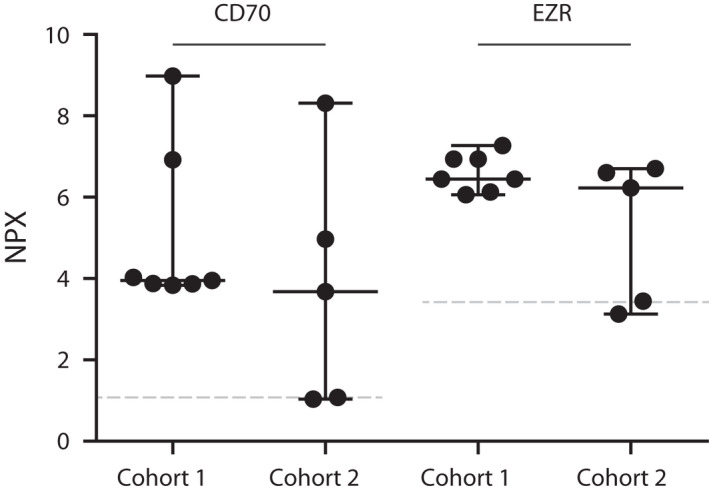
For (P)VRL stratification, the previously reported combined diagnostic value of IL-10 and IL-6 was confirmed. Additionally, CD70 was identified as potential novel marker for (P)VRL. However, the classifier trained on the entire cohort (cohort 1 and 2) relied primarily on the interleukin score for intraocular lymphoma diagnosis (ISOLD) or IL-10/IL-6 ratio and only showed a supportive role for CD70. Furthermore, sarcoid uveitis displayed increased levels of vitreous CCL17 as compared to TB-associated uveitis.
We underline the previously reported value of the ISOLD and the IL-10/IL-6 ratio for (P)VRL identification and present CD70 as a potentially valuable target for (P)VRL stratification. Finally, we also show that increased CCL17 levels might help to distinguish sarcoid uveitis from TB-associated uveitis.
玻璃体蛋白质组可能为鉴别各种葡萄膜炎病因并深入了解潜在的病理生理过程提供一个有吸引力的途径。在这里,我们通过比较 180 种玻璃体蛋白,来发现新的生物标志物,并扩大对疾病的认识,包括(1)原发性玻璃体视网膜淋巴瘤 (P)VRL 与其他病因的比较,(2)结节病性葡萄膜炎与结核 (TB) 相关性葡萄膜炎的比较,以及(3)肉芽肿性(结节病和 TB)葡萄膜炎与其他病因的比较。
采用邻近延伸检测法测定 47 例眼内炎症患者(队列 1;训练)和 22 例经盲法诊断患者(队列 2;验证)的玻璃体蛋白水平。采用 t 检验对队列 1 进行分析,以确定差异表达蛋白,并计算 Youden 指数。采用 ingenuity 通路分析进行通路和网络分析。利用随机森林分类器训练预测盲法患者的诊断。
对于(P)VRL 的分层,先前报道的 IL-10 和 IL-6 的联合诊断价值得到了证实。此外,CD70 被确定为(P)VRL 的潜在新标志物。然而,基于整个队列(队列 1 和 2)训练的分类器主要依赖于眼内淋巴瘤诊断的 IL-10/IL-6 比值(ISOLD)或 IL-10/IL-6 比值,仅对 CD70 起辅助作用。此外,与 TB 相关性葡萄膜炎相比,结节病性葡萄膜炎显示出更高的玻璃体 CCL17 水平。
我们强调了 ISOLD 和 IL-10/IL-6 比值在(P)VRL 识别中的先前报道的价值,并提出 CD70 可能是(P)VRL 分层的有价值的潜在目标。最后,我们还表明,CCL17 水平的升高可能有助于区分结节病性葡萄膜炎和 TB 相关性葡萄膜炎。