Cannarella Rossella, Crafa Andrea, La Vignera Sandro, Condorelli Rosita A, Calogero Aldo E
Department of Clinical and Experimental Medicine, University of Catania, Catania, Italy.
Endocr Connect. 2021 Aug 25;10(9):1006-1017. doi: 10.1530/EC-21-0252.
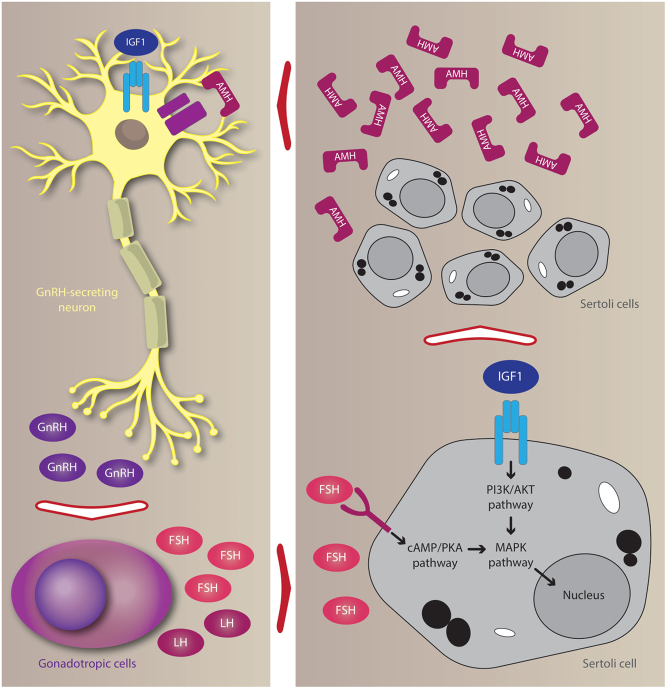
Animal studies suggest that insulin-like growth factor 1 (IGF1) may influence the function of the hypothalamus-pituitary-testicular axis, especially in childhood, but the evidence in humans is scanty. Laron syndrome, a human model of IGF1 deficiency, may help to solve this issue.
This systematic review aims to analyze puberty onset and progression, testicular volume, gonadotropin, and total testosterone serum levels, sperm parameters and fertility, and penile length in patients with Laron syndrome.
Specific keywords were used. All data on male patients with Laron syndrome were included.
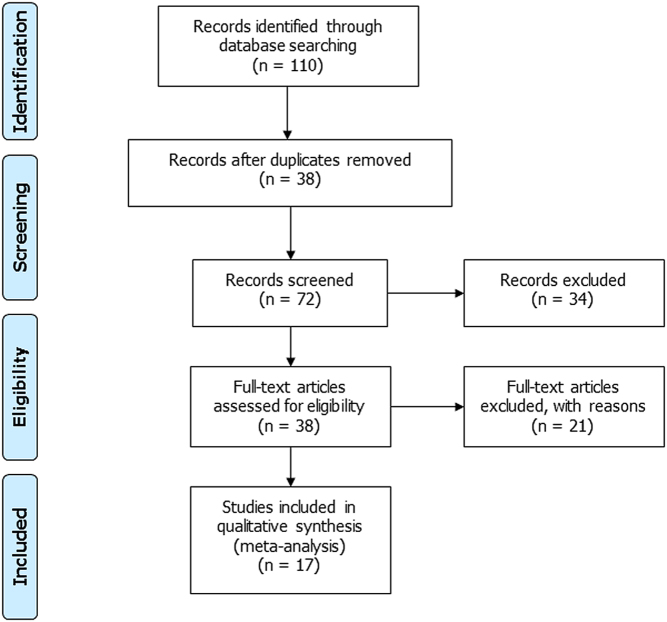
Seventeen articles matched the inclusion criteria and were entered in the analysis, for a total of 125 male patients. Puberty was absent in 8.9% and delayed in 35.6% of untreated patients of pubertal age. After onset, the duration of the pubertal process was prolonged in 76.9% of untreated patients. The growth spurt was absent in 52.6% and delayed in 31.6% of untreated patients. The testicular volume was small in the two patients who did not receive any treatment. Treatment with IGF1 increased gonadotropin and testosterone serum levels in five out of five patients of pubertal age. No effect was found in four out of four patients younger than 5 years. No study reported data on sperm parameters and fertility. Micropenis occurred in 67.2% of patients.
Delayed puberty is common in patients with Laron syndrome. The growth hormone-IGF1 axis may influence the time of puberty onset. Serum levels of IGF1 should be investigated in children with delayed puberty, scarce progression of testicular growth, and/or micropenis. IGF1 levels might be measured in children with delayed puberty, poor testicular growth, and/or micropenis.
动物研究表明,胰岛素样生长因子1(IGF1)可能影响下丘脑-垂体-睾丸轴的功能,尤其是在儿童期,但人类方面的证据不足。拉伦综合征是一种IGF1缺乏的人类模型,可能有助于解决这一问题。
本系统评价旨在分析拉伦综合征患者的青春期启动和进展、睾丸体积、促性腺激素、血清总睾酮水平、精子参数和生育能力以及阴茎长度。
使用了特定的关键词。纳入了所有关于男性拉伦综合征患者的数据。
17篇文章符合纳入标准并纳入分析,共125例男性患者。青春期年龄的未治疗患者中,8.9%无青春期,35.6%青春期延迟。青春期开始后,76.9%的未治疗患者青春期进程持续时间延长。52.6%的未治疗患者无生长突增,31.6%生长突增延迟。未接受任何治疗的两名患者睾丸体积小。青春期年龄的5例患者中有5例接受IGF1治疗后促性腺激素和睾酮血清水平升高。4例5岁以下患者中未发现有效果。没有研究报告精子参数和生育能力的数据。67.2%的患者出现小阴茎。
青春期延迟在拉伦综合征患者中很常见。生长激素-IGF1轴可能影响青春期启动时间。对于青春期延迟、睾丸生长进展缓慢和/或小阴茎的儿童,应研究其IGF1血清水平。对于青春期延迟、睾丸生长不良和/或小阴茎的儿童,可以测量IGF1水平。