School of Physical Education, Beijing Normal University, Beijing, China.
Department of Anesthesiology, Shanxi Bethune Hospital, Taiyuan, China.
Aging (Albany NY). 2021 Jul 29;13(14):18689-18700. doi: 10.18632/aging.203313.
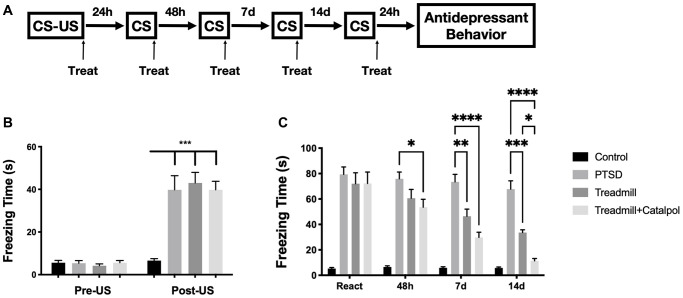
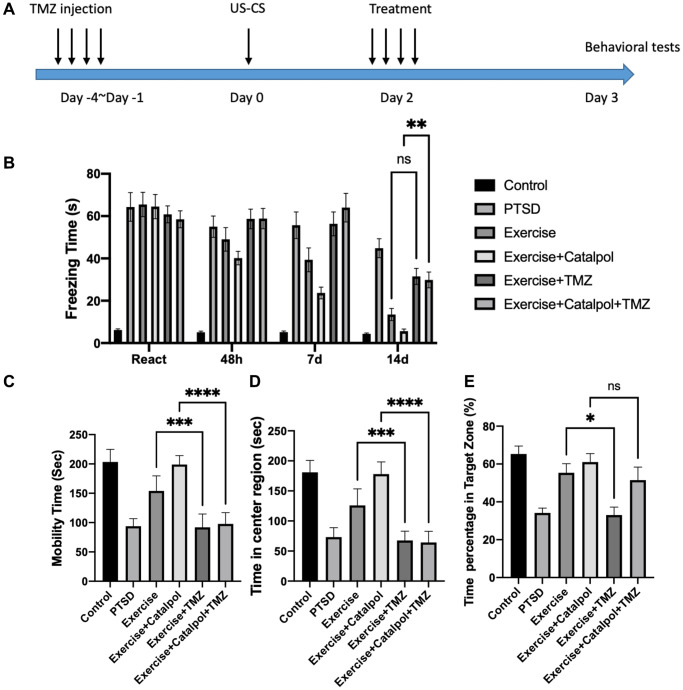
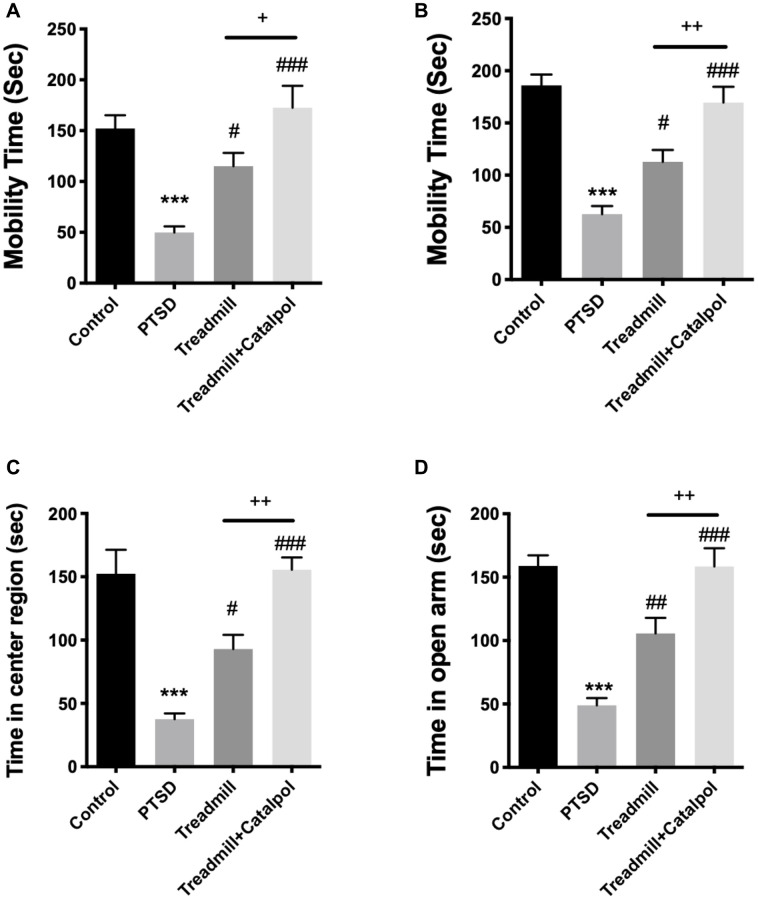
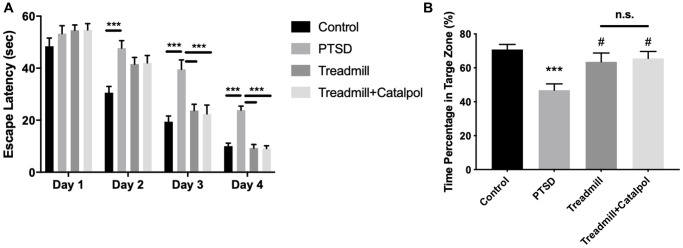
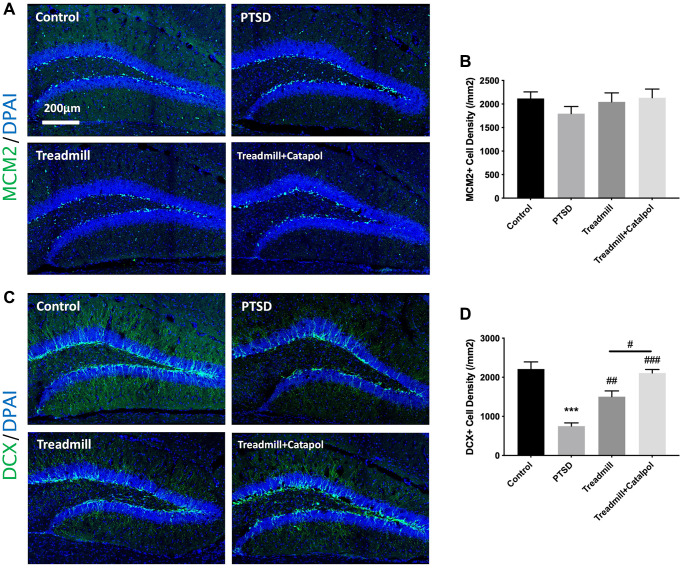
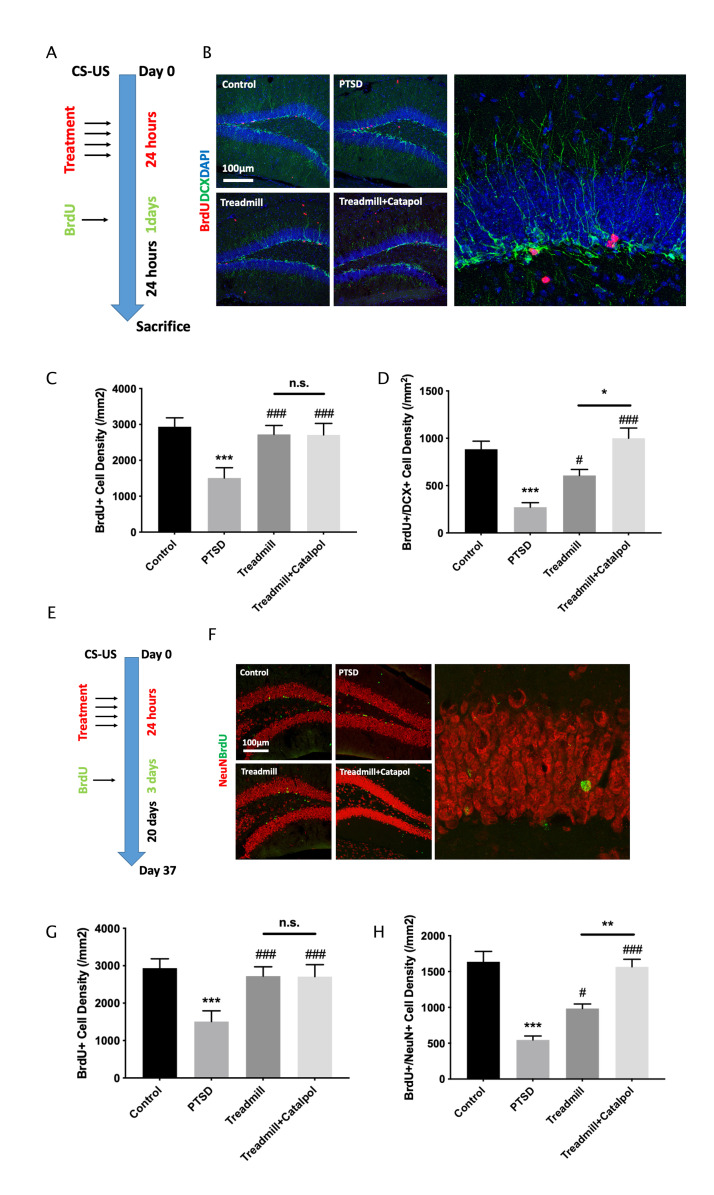
Post-traumatic stress disorder (PTSD) is a serious psychiatric disorder characterized by hyper-response to environmental cues as well as the associated depressive and cognitive dysfunctions. According to the key roles of hippocampus for cognitive and emotional regulation, improving hippocampal functions, particularly hippocampal neural plasticity, is the necessary pathway to attenuate the core symptoms of PTSD. The effects of the alternative therapies such as exercise and natural compounds to reduce PTSD symptoms and promote adult hippocampal neurogenesis have been widely demonstrated. However, what is the effect of combining the exercise with traditional Chinese medical compounds remains unknown. In current study, we evaluated the effects of catalpol, which showed the pro-neurogenic effects in previous report, in regulating exercise-mediated PTSD therapeutic effects. With behavioral tests, we found that catalpol treatment promoted the effects of exercise to reduce the response of mice to dangerous cues, and simultaneously enhanced the antidepressant and cognitive protection effects. Moreover, by immunofluorescence we identified that catalpol promoted exercise-mediated hippocampal neurogenesis by enhancing the neural differentiation and mature neuronal survive. We further found that the promote effects of catalpol to exercise-induced environmental hyper-response, antidepressant effects and cognitive protective effects were all compromised by blocking neurogenesis with temozolomide (TMZ). This result indicates that hippocampal neurogenesis is prerequisite for catalpol to promote exercise-mediated brain functional improvement in PTSD model. In conclusion, our research identified the new function of natural compounds catalpol to promote the exercise-mediated brain functional changes in PTSD model, which depend on its effect promoting adult hippocampal neurogenesis.
创伤后应激障碍(PTSD)是一种严重的精神疾病,其特征是对环境线索的过度反应以及相关的抑郁和认知功能障碍。根据海马体在认知和情绪调节中的关键作用,改善海马体功能,特别是海马体神经可塑性,是减轻 PTSD 核心症状的必要途径。运动和天然化合物等替代疗法对减轻 PTSD 症状和促进成年海马体神经发生的作用已得到广泛证明。然而,将运动与中药化合物相结合的效果如何仍不得而知。在目前的研究中,我们评估了梓醇的作用,梓醇在以前的报告中显示出具有促进神经发生的作用,以调节运动介导的 PTSD 治疗效果。通过行为测试,我们发现梓醇治疗促进了运动减少小鼠对危险线索的反应的作用,同时增强了抗抑郁和认知保护作用。此外,通过免疫荧光,我们发现梓醇通过增强神经分化和成熟神经元的存活来促进运动介导的海马体神经发生。我们进一步发现,用替莫唑胺(TMZ)阻断神经发生会削弱梓醇对运动诱导的环境过度反应、抗抑郁作用和认知保护作用的促进作用。这一结果表明,海马体神经发生是梓醇促进 PTSD 模型中运动介导的大脑功能改善的前提。总之,我们的研究确定了天然化合物梓醇促进 PTSD 模型中运动介导的大脑功能变化的新功能,这依赖于其促进成年海马体神经发生的作用。