Beijing Advanced Innovation Center for Structural Biology and Frontier Research Center for Biological Structure, Tsinghua-Peking Joint Center for Life Sciences, School of Life Sciences, Tsinghua University, Beijing 100084, China.
Peking University HuiLongGuan Clinical Medical School, Beijing Huilongguan Hospital, Beijing 100096, China.
Proc Natl Acad Sci U S A. 2021 Aug 3;118(31). doi: 10.1073/pnas.2105838118.
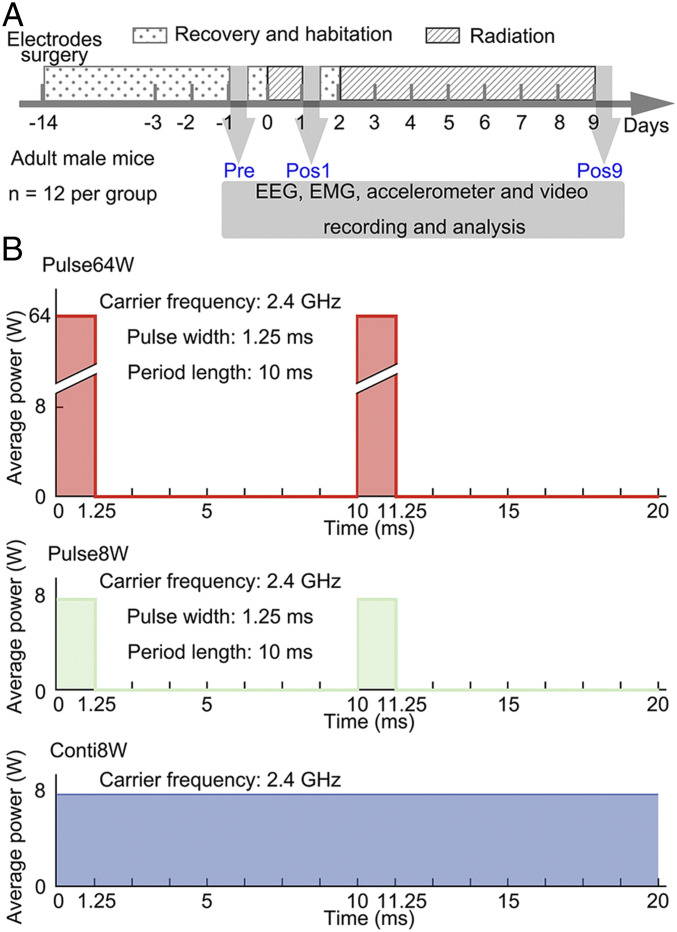
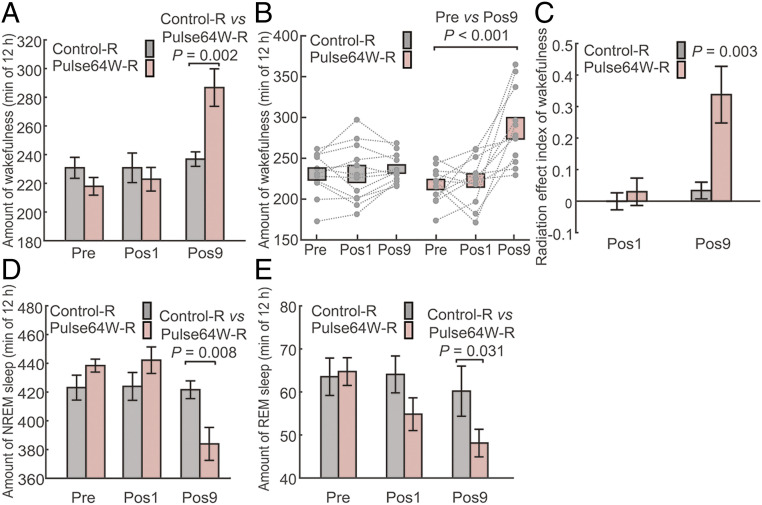
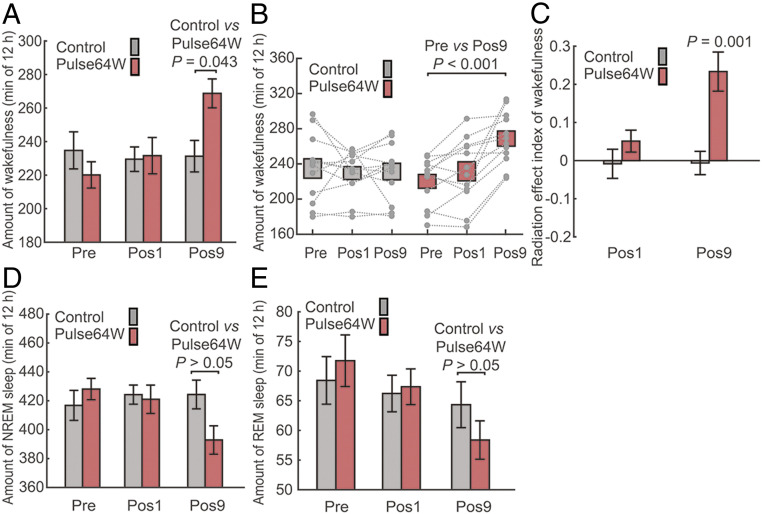
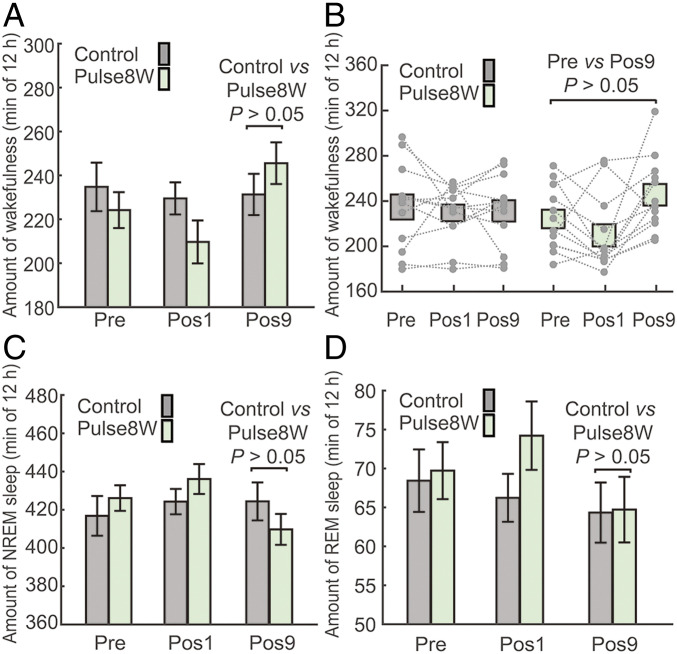
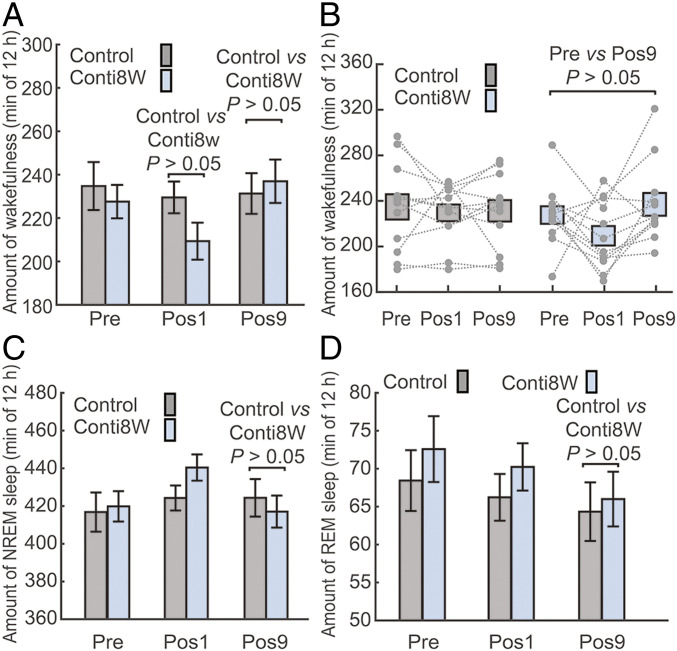
Electromagnetic radiation (EMR) in the environment has increased sharply in recent decades. The effect of environmental EMR on living organisms remains poorly characterized. Here, we report the impact of wireless-range EMR on the sleep architecture of mouse. Prolonged exposure to 2.4-GHz EMR modulated by 100-Hz square pulses at a nonthermal output level results in markedly increased time of wakefulness in mice. These mice display corresponding decreased time of nonrapid eye movement (NREM) and rapid eye movement (REM). In contrast, prolonged exposure to unmodulated 2.4-GHz EMR at the same time-averaged output level has little impact on mouse sleep. These observations identify alteration of sleep architecture in mice as a specific physiological response to prolonged wireless-range EMR exposure.
近年来,环境中的电磁辐射(EMR)急剧增加。环境 EMR 对生物体的影响仍未得到充分描述。在这里,我们报告了无线范围 EMR 对小鼠睡眠结构的影响。长时间暴露于以非热输出水平调制的 100-Hz 方波的 2.4-GHz EMR 会导致小鼠清醒时间明显增加。这些小鼠显示出相应的非快速眼动(NREM)和快速眼动(REM)时间减少。相比之下,长时间暴露于相同平均输出水平的未调制 2.4-GHz EMR 对小鼠睡眠几乎没有影响。这些观察结果表明,睡眠结构的改变是小鼠对长时间无线范围 EMR 暴露的特定生理反应。