Department of Histology and Embryology, Akdeniz University School of Medicine, Campus, 07070, Antalya, Turkey.
Sci Rep. 2021 Jul 30;11(1):15569. doi: 10.1038/s41598-021-95239-5.
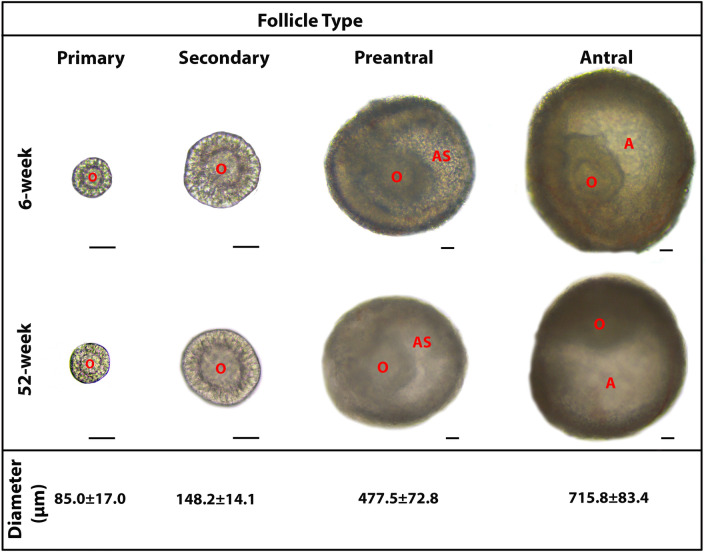
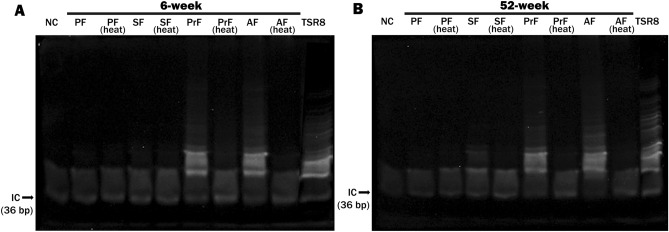
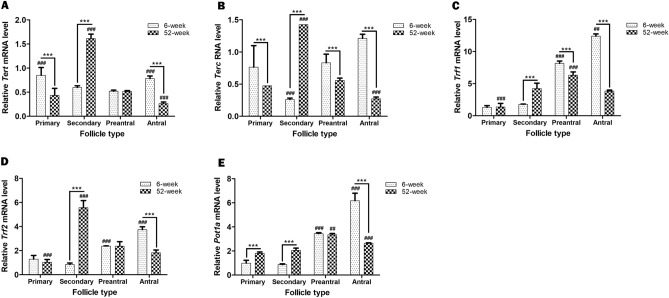
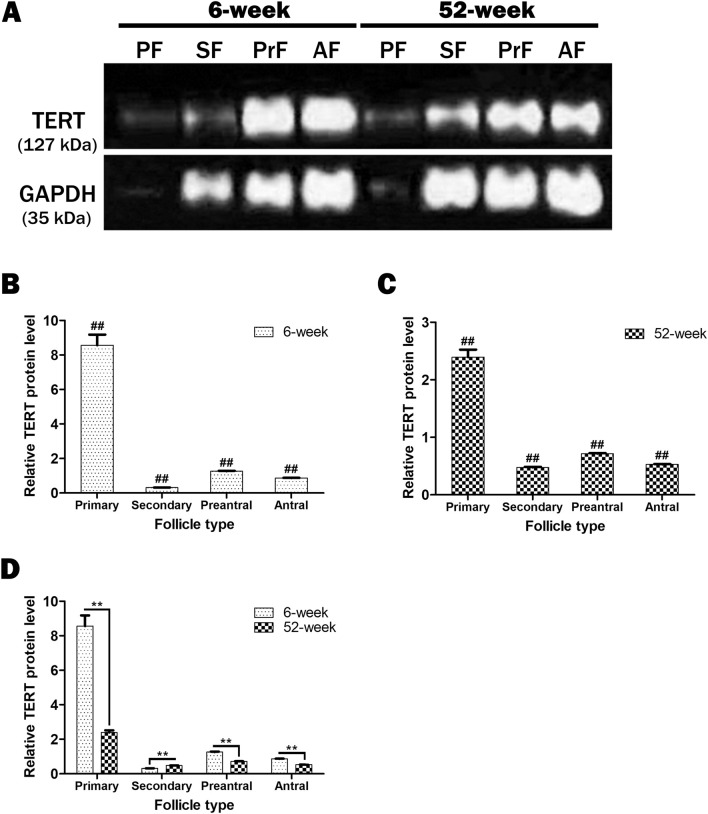
Telomeres cap the ends of eukaryotic chromosomes to maintain genomic stability and integrity during an organism's lifespan. The length of telomeres inevitably shortens due to DNA replication, genotoxic agents, and biological aging. A limited number of cell types, e.g., stem cells, germline cells, and early embryos can elongate shortened telomeres via the enzymatic action of telomerase, which is composed of telomerase reverse transcriptase (TERT) and telomerase RNA component (Terc). Additionally, telomere-associated proteins including telomeric repeat binding factor 1 (TRF1) and 2 (TRF2), as well as protection of telomeres 1a (POT1a), bind to telomeres to maintain their structural integrity and length. During ovarian aging in mammals, telomeres progressively shorten, accompanied by fertility loss; however, the molecular mechanism underlying this attrition during follicle development remains unclear. In this study, the primary, secondary, preantral, and antral follicles were obtained either from 6-week-old adult (n = 19) or 52-week-old aged (n = 12) mice. We revealed that the Tert, Terc, Trf1, Trf2, and Pot1a gene expression (P < 0.001) and TERT protein (P < 0.01) levels significantly decreased in certain ovarian follicles of the aged group when compared to those of the adult group. Also, telomerase activity exhibited remarkable changes in the follicles of both groups. Consequently, altered telomere-associated gene expression and reduced TERT protein levels in the follicles of aged mice may be a determinant of telomere shortening during ovarian aging, and infertility appearing in the later decades of reproductive lifespan. Further investigations are required to determine the molecular mechanisms underlying these alterations in the follicles during ovarian aging.
端粒位于真核染色体的末端,可在生物体的生命周期内维持基因组的稳定性和完整性。由于 DNA 复制、遗传毒性剂和生物衰老,端粒的长度不可避免地会缩短。少数细胞类型,例如干细胞、生殖细胞和早期胚胎,可以通过端粒酶的酶促作用延长缩短的端粒,端粒酶由端粒酶逆转录酶 (TERT) 和端粒酶 RNA 成分 (Terc) 组成。此外,端粒相关蛋白,包括端粒重复结合因子 1 (TRF1) 和 2 (TRF2),以及端粒保护蛋白 1a (POT1a),与端粒结合以维持其结构完整性和长度。在哺乳动物的卵巢衰老过程中,端粒逐渐缩短,伴随着生育能力丧失;然而,卵泡发育过程中端粒损耗的分子机制尚不清楚。在这项研究中,我们从 6 周龄成年(n = 19)或 52 周龄老年(n = 12)小鼠中分别获得了原始卵泡、次级卵泡、初级卵泡和腔前卵泡。我们发现,与成年组相比,老年组某些卵巢卵泡中的 Tert、Terc、Trf1、Trf2 和 Pot1a 基因表达(P < 0.001)和 TERT 蛋白(P < 0.01)水平显著降低。此外,两组卵泡中的端粒酶活性都发生了显著变化。因此,老年小鼠卵泡中端粒相关基因表达的改变和 TERT 蛋白水平的降低可能是卵巢衰老过程中端粒缩短和生殖寿命后期出现不孕的决定因素。需要进一步研究以确定卵巢衰老过程中卵泡中这些改变的分子机制。