Division of General Internal Medicine and Primary Care, Brigham and Women's Hospital, Boston, MA, USA; Harvard Medical School, Boston, MA, USA.
Division of General Internal Medicine and Primary Care, Brigham and Women's Hospital, Boston, MA, USA; Harvard Medical School, Boston, MA, USA; Department of Health Care Policy and Management, Harvard Chan School of Public Health, Boston, MA, USA.
Int J Med Inform. 2021 Sep;153:104540. doi: 10.1016/j.ijmedinf.2021.104540. Epub 2021 Jul 22.
Prior to COVID-19, levels of adoption of telehealth were low in the U.S., though they exploded during the pandemic. Following the pandemic, it will be critical to identify the characteristics that were associated with adoption of telehealth prior to the pandemic as key drivers of adoption and outside of a public health emergency.
We examined three data sources: The American Telemedicine Association's 2019 state telehealth analysis, the American Hospital Association's 2018 annual survey of acute care hospitals and its Information Technology Supplement. Telehealth adoption was measured through five telehealth categories. Independent variables included seven hospital characteristics and five reimbursement policies. After bivariate comparisons, we developed a multivariable model using logistic regression to assess characteristics associated with telehealth adoption.
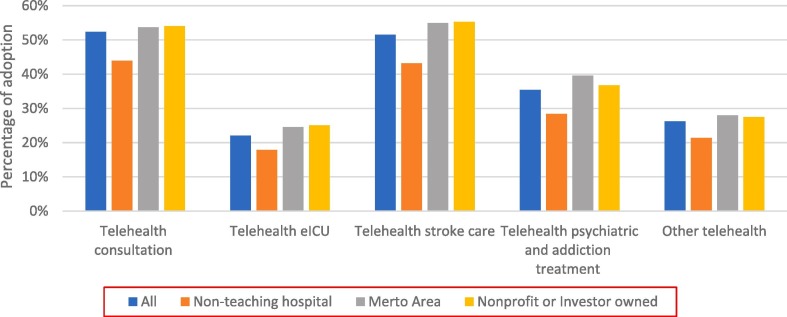
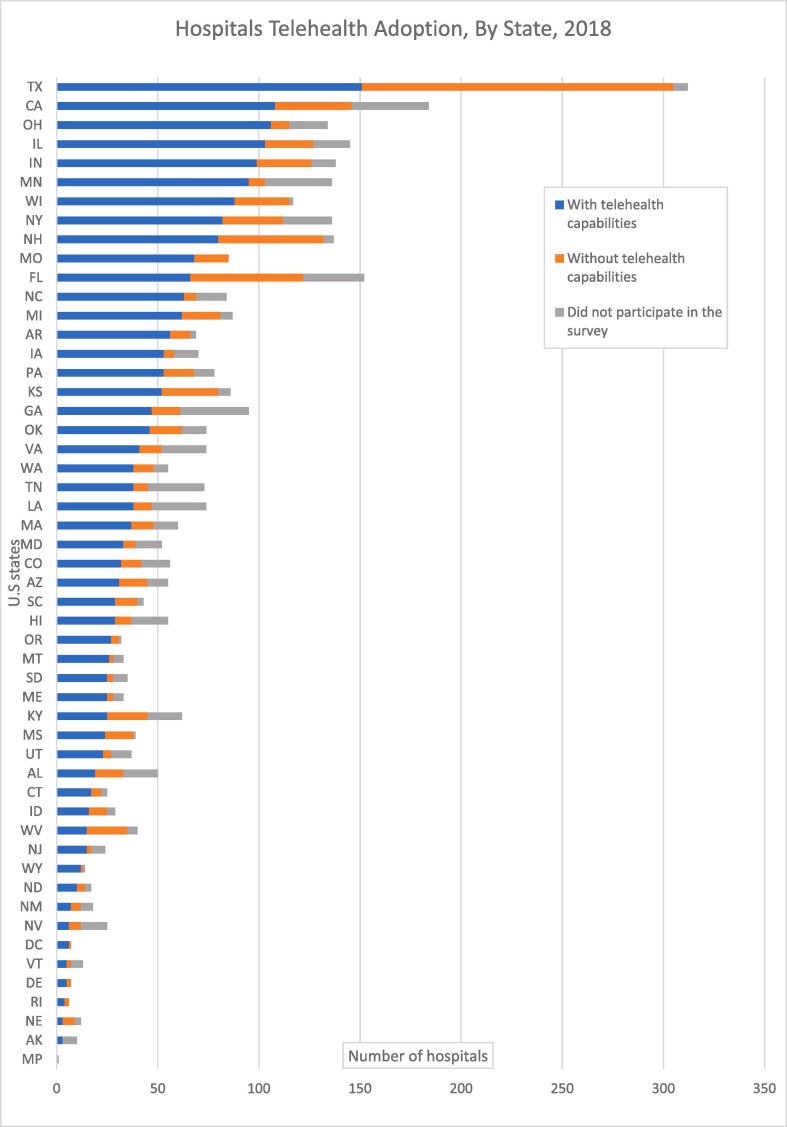
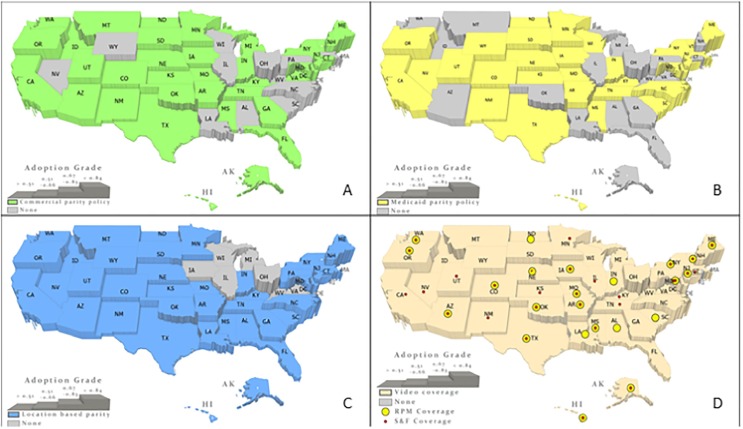
Among 2923 US hospitals, 73% had at least one telehealth capability. More than half of these hospitals invested in telehealth consultation services and stroke care. Non-profit hospitals, affiliated hospitals, major teaching hospitals, and hospitals located in micropolitan areas (those with 10-50,000 people) were more likely to adopt telehealth. In contrast, hospitals that lacked electronic clinical documentation, were unaffiliated with a hospital system, or were investor-owned had lower odds of adopting telehealth. None of the statewide policies were associated with adoption of telehealth.
Telehealth policy requires major revisions soon, and we suggest that these policies should be national rather than at the state level. Further steps as incentivizing rural hospitals for adopting interoperable systems and expanding RPM billing opportunities will help drive adoption, and promote equity.
在 COVID-19 之前,美国的远程医疗采用率较低,但在大流行期间却猛增。大流行之后,确定大流行前与远程医疗采用相关的特征将成为采用远程医疗的关键驱动因素,并且是在公共卫生紧急情况之外。
我们研究了三个数据源:美国远程医疗协会 2019 年的州远程医疗分析,美国医院协会 2018 年对急症医院的年度调查及其信息技术增刊。远程医疗的采用通过五个远程医疗类别进行衡量。自变量包括七个医院特征和五个报销政策。在进行了单变量比较之后,我们使用逻辑回归开发了一个多变量模型,以评估与远程医疗采用相关的特征。
在 2923 家美国医院中,有 73%的医院至少具有一种远程医疗能力。其中超过一半的医院投资于远程医疗咨询服务和中风护理。非营利性医院、附属医院、主要教学医院和位于大都市地区(人口在 10-50,000 人之间)的医院更有可能采用远程医疗。相比之下,缺乏电子临床文档、与医院系统没有关联或为投资者所有的医院采用远程医疗的可能性较低。没有任何全州范围的政策与远程医疗的采用相关。
远程医疗政策需要尽快进行重大修订,我们建议这些政策应该是国家性的,而不是州一级的。进一步采取措施鼓励农村医院采用互操作性系统并扩大远程医疗计费机会,将有助于推动采用并促进公平。