Chang Ben-Min, Keller Markus
Department of Horticulture, Irrigated Agriculture Research and Extension Center, Washington State University, Prosser, WA, USA.
Hortic Res. 2021 Aug 1;8(1):168. doi: 10.1038/s41438-021-00602-2.
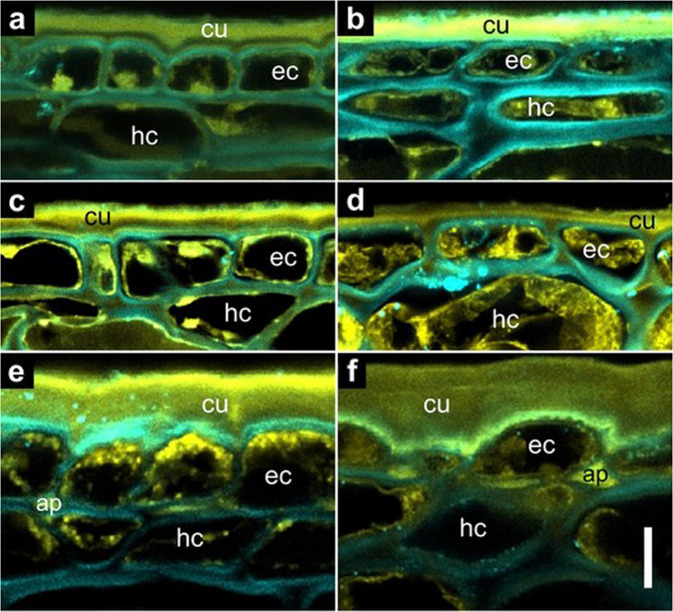
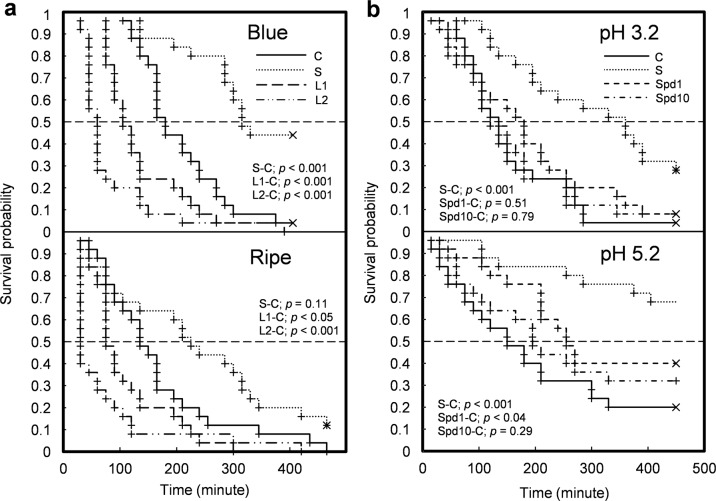
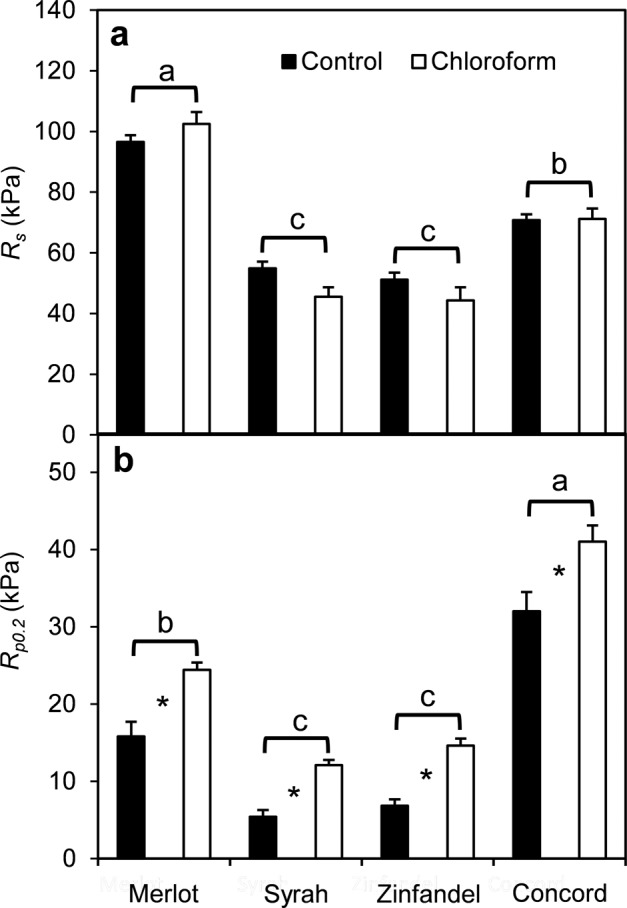
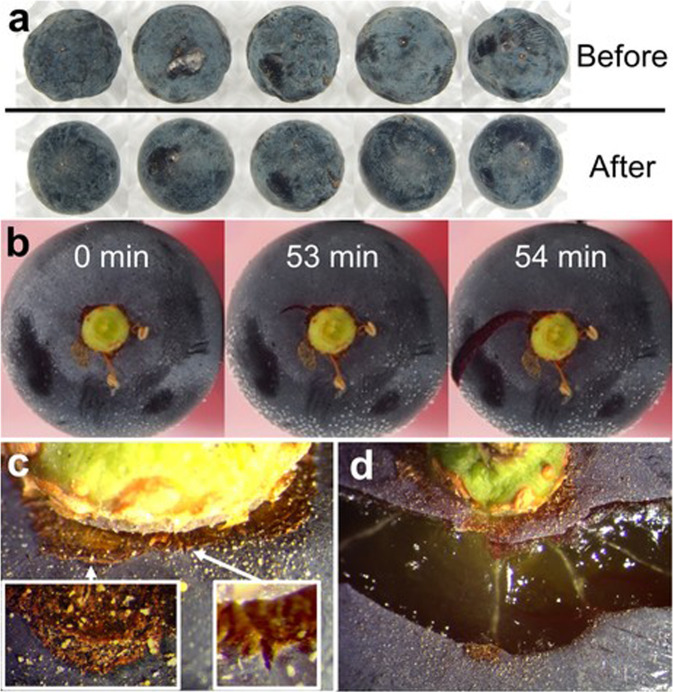
The skin protects a fruit from environmental stresses and supports the fruit's structure. Failure of the skin leads to fruit splitting and may compromise commercial production for fruit growers. The mechanical properties of the cuticle and skin cell walls might influence the splitting susceptibility of fleshy fruits. Thin shell theory and fracture mechanics were utilized in this study to target the potential factors contributing to splitting susceptibility. The study analyzed the structure of the cuticle and epidermis in ripening grape berries and examined the temporal dynamics of berry splitting. Cuticular waxes were partially removed, and skin cell walls were manipulated using wall stiffening and loosening solutions that altered reactions involving hydrogen peroxide. A more than twofold difference in cuticle thickness among grape cultivars did not account for their differences in splitting resistance. However, while removing predominantly epicuticular wax did not alter the berries' splitting resistance, their surface appearance and increasing yield strength following partial wax removal support the notion that cuticular waxes contribute to berry mechanical properties. Immersing berries in HO-based cell wall loosening solutions increased the splitting probability and accelerated berry splitting, whereas cell wall stiffening solutions decreased the splitting probability and delayed berry splitting. These results showed that both cuticle and skin cell walls contribute to the mechanical properties of grape berries and to their splitting resistance. The results also suggest that the two current explanations for fruit splitting, the critical turgor model and the zipper model, should be viewed as complementary rather than incompatible.
果皮保护果实免受环境压力影响,并支撑果实结构。果皮受损会导致果实开裂,可能会影响果农的商业生产。角质层和果皮细胞壁的机械性能可能会影响肉质果实的开裂敏感性。本研究利用薄壳理论和断裂力学来确定导致开裂敏感性的潜在因素。该研究分析了成熟葡萄浆果中角质层和表皮的结构,并研究了浆果开裂的时间动态。部分去除角质蜡,并使用改变涉及过氧化氢反应的细胞壁硬化和松弛溶液来处理果皮细胞壁。葡萄品种间角质层厚度两倍以上的差异并不能解释它们在抗裂性上的差异。然而,虽然主要去除表皮蜡不会改变浆果的抗裂性,但它们的表面外观以及部分蜡去除后增加的屈服强度支持了角质蜡有助于浆果机械性能的观点。将浆果浸泡在基于过氧化氢的细胞壁松弛溶液中会增加开裂概率并加速浆果开裂,而细胞壁硬化溶液则会降低开裂概率并延迟浆果开裂。这些结果表明,角质层和果皮细胞壁都对葡萄浆果的机械性能及其抗裂性有贡献。结果还表明,目前关于果实开裂的两种解释,即临界膨压模型和拉链模型,应被视为互补而非相互排斥的。